Connecting the dots: Housing cost- community economic development – JOBS! Part 1

The insufficient supply of housing at a range of affordable prices, especially for rental housing, has important negative impacts on local economic development. Housing costs and availability impacts adequate workforce availability. The causes of high housing costs are multiple but a few factors are controllable by local municipalities, counties and regions with the understanding and political will. Exclusionary housing development zoning regulations for example fall into that category. Housing supply constraints affect local employment opportunities and wage dynamics especially in areas where the degree of zoning regulation barriers are more severe.
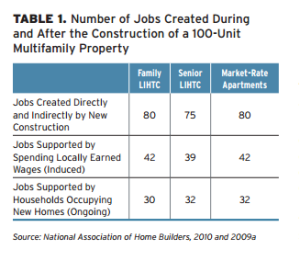
n1

It’s getting much tougher to find good jobs in areas with adequate affordable housing opportunities. Even when job markets improve, the absence of strong sustained real income growth means that for more and more communities, the relative cost of housing will continue to climb at the same time the availability of adequately affordable housing is decreasing.

Research shows (see, “The Role of Affordable Housing in Creating Jobs and Stimulating Local Economic Development: A Review of the Literature” Center for Housing Policy) that adequate affordable housing in communities has benefits extending beyond its occupants to the community at large. Without a sufficient supply of affordable housing, employers and entire regional economies can be at a competitive disadvantage because of their increased difficulty attracting and retaining workers.
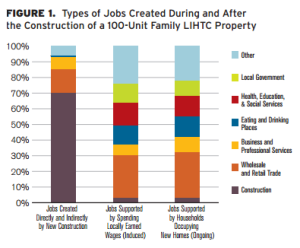
N2

The excellent study referenced above provides a clear discussion of this issue. The primary thesis of the study is that developing more affordable housing in communities creates jobs — both during construction and through new consumer spending after the homes have been occupied. The positive impacts of building affordable rental housing are on par with and in many respects exceed the impacts of developing comparable market-rate units.

The take away from this is that housing affordability, inclusive communities and vibrant economic development, are intertwined in substantial ways. Communities can positively change the dynamics with various policies including favoring appropriate density in zoning laws.


 

Refugees benefit our Country: Let’s build welcoming inclusive communities

Francis Picture
Abijah Manga (Francis) Social Media Outreach and Coordination Specialist, Intern at the Fair Housing Project/CVOEO

Even as Governors of some states are declaring their unfounded and fearful opposition to the resettlement of refugees from Syria in their states, Vermont continues to be welcoming, not only to Syrian refugees but for many others fleeing war, persecution and political or religious oppression. That is as it should be, not only for humanitarian reasons but because it is good for the nation, the states, communities and the world.

For more than twenty five years, the United States has offered assistance to refugees through the U.S office of refugee resettlement. Burlington, Vermont is one of the designated refugee resettlement communities. In recent years the number of refugees and immigrants coming from Africa, East and Central Asia to Vermont has significantly increased. Every year the U.S. Congress decides the number of refugees that will be admitted into the U.S. during the fiscal year. In 2014, the U.S government admitted a total of 58,238 refugees into the U.S and approximately 50% of the 58,238 or 29,219 admitted to the U.S fell below 20 years of age.

Process

Once refugees have been approved for admission to the U.S., refugee resettlement agencies (Vermont Refugee Resettlement Program (VRRP) for the state of Vermont) initially helps to resettle  the new refugees  including securing housing for them, and providing basic assistance with community orientation, medical screening, employment search services, English language instruction for those coming from non-English speaking countries as well as school orientation to the New Americans.

image 1Life has not been easy for these New Americans. The International Rescue Committee explains that numbers of refugee families have survived traumatic life events including years of political conflict, exposure to war-related violence and deprivation, and chaos in refugee camps. Potential risk factors encountered by refugee children and youth include separation from family members, lack of access to education and health care, recruitment into armed forces, sexual exploitation, the loss of home, and exposure to war-related trauma.

Additionally, refugee youth in the U.S. face further challenges such as new language acquisition, social isolation and alienation, social adjustment with peers, negative peer pressure, grief and bereavement, discrimination, cultural misunderstanding, and adjustment to a new educational system. According to the International Rescue Committee, “Associated psychosocial stress can hinder refugee children’s ability to learn English, perform adequately in school, and develop peer support networks”. Because of these challenges faced by New Americans, our efforts to create welcoming communities are all the more important.

Economic and cultural benefits to our state

Despite the challenges that New Americans have to overcome, they have proven to be outstanding achievers in educational advancement and demonstrate a strong work ethic. They are highly motivated to advance themselves and to contribute to their new communities in a positive way. In other words they are a plus to our communities not a negative.

image 23In Vermont we should keep in mind that we are losing population, especially younger people; the state has a declining population which is growing older and at the same time it has the 4th lowest unemployment rate in the country at 3.6 percent. So, many local companies are tapping into the refugee labor pool. Refugees contribute much to the workforce. At the same time, although this is foremost a humanitarian gesture, admitting more refugees can also be a boon for businesses and local economies, particularly in smaller states with labor shortages. There is an interesting recent article to read from PRI about “Vermont businesses” that focuses on a Burlington industry example in particular. New Americans are also market consumers for our local businesses and tax payers – both income taxes and sales taxes – as well as property tax payers as they begin to own real property.

Given both the benefits to our communities and to the refugees themselves of having open welcoming and inclusive communities, we need to continue to welcome and embrace the diversity and economic dynamism that New Americans bring for the good of all concerned.

New Rental Development: nationally the cost is slanted upward

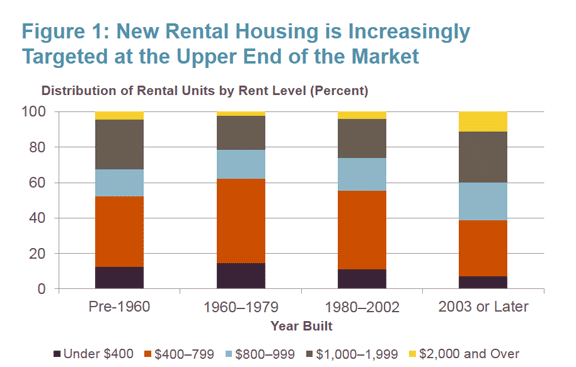
A higher percentage of people are renting their homes in the U.S. than has been the case for many decades. The market is responding with more rental housing development – but there is a big glitch – too much of that new rental housing now being developed is on the high end of the affordability spectrum.

This article: “Surge in New Rental Construction Fails to Meet Need for Low-Cost Housing,”   by Irene Lew, at the Harvard Joint Center for Housing Studies, offers a thorough and informative analysis of the current situation – which is not a good one for moderate to low income people in our communities.

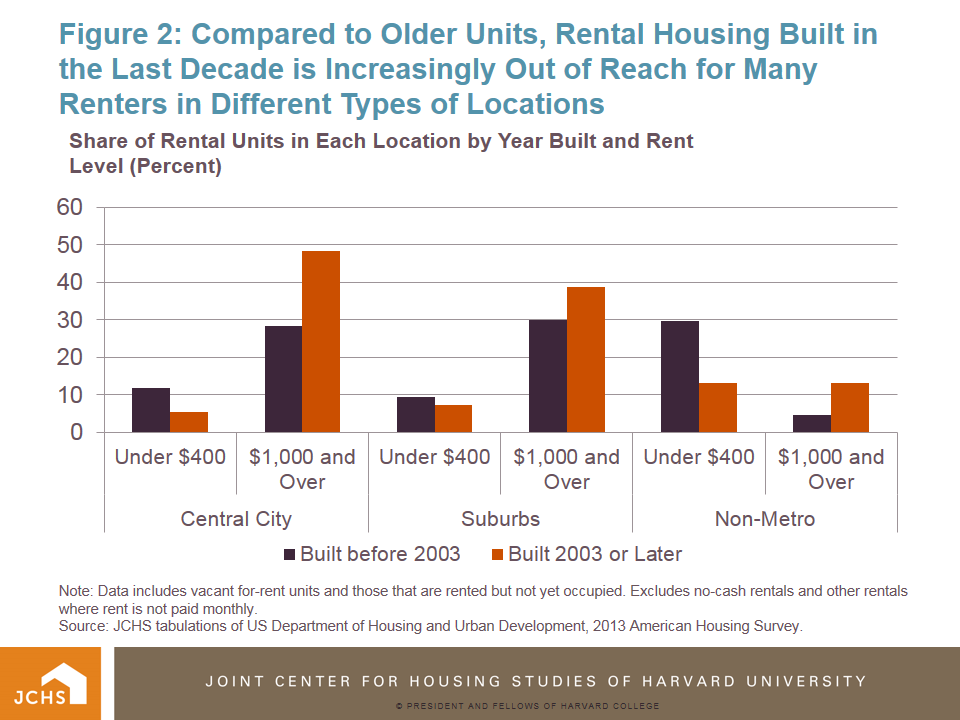
DownwardSlidingRentalAffordability…the housing affordability crisis has shown little signs of abating in recent years, as renter incomes continue to lag behind rising housing costs. Though there has been a ramp-up in rental housing construction, much of this new housing is intended for renters at the upper end of the income spectrum…

Note: Data includes vacant for-rent units and those that are rented but not yet occupied. Excludes no-cash rentals and other rentals where rent is not paid monthly. Source: JCHS tabulations of US Department of Housing and Urban Development, 2013 American Housing Survey.
Note: Data includes vacant for-rent units and those that are rented but not yet occupied. Excludes no-cash rentals and other rentals where rent is not paid monthly.
Source: JCHS tabulations of US Department of Housing and Urban Development, 2013 American Housing Survey.

Old planning “rules of thumb”: they ain’t necessarily so…

The Thriving Communities’ blog page, now being without our former outstanding “Blogger in Chief,” Tim Johnson, will be frequently sharing links to articles we think are valuable and interesting but often accompanied by less of our own commentary and critique than Tim offered in past months. Today’s share focuses on some old transportation planning “rules of thumb” and points out the need for some major changes of thinking in that realm. We think many of you who are interested generally in thriving, inclusive communities and how we should plan for them will be interested in this article: “Our old planning rules of thumb are ‘all thumbs’”  by Joe Cortright.

Following are some excerpts from the article:

“Old rule of thumb #3: We should require “enough” off-street parking for every use

“As Donald Shoup has shown, parking requirements spelled out in zoning codes—often based on formidably inaccurate estimates … lead to a situation where every business’s parking lot is sized for the peak hour of the peak day of the year (holiday shopping season at the Mall, example). Not only does this produce more parking than is needed the rest of the year, it turns out that parking “requirements” grossly overstate demand even in peak periods, and especially for urban uses where more people arrive by other means, and park for shorter periods of time. The product of this rule of thumb is that parking

The wider the lanes, the easier it is to speed. Credit: Pier-Luc Bergeron, Flickr.

is over-supplied, destinations are further apart than they would otherwise be, and walking, transit and cycling are non –functional.”

“New rule of thumb #1: Closer is better”

“Having more different destinations close at hand facilitates a wide range of mode choices, especially walking and cycling. Mixing uses, which is often anathema under traditional zoning codes turns out to be desirable for consumers and expeditious for transportation.”

Housing as a Vaccine

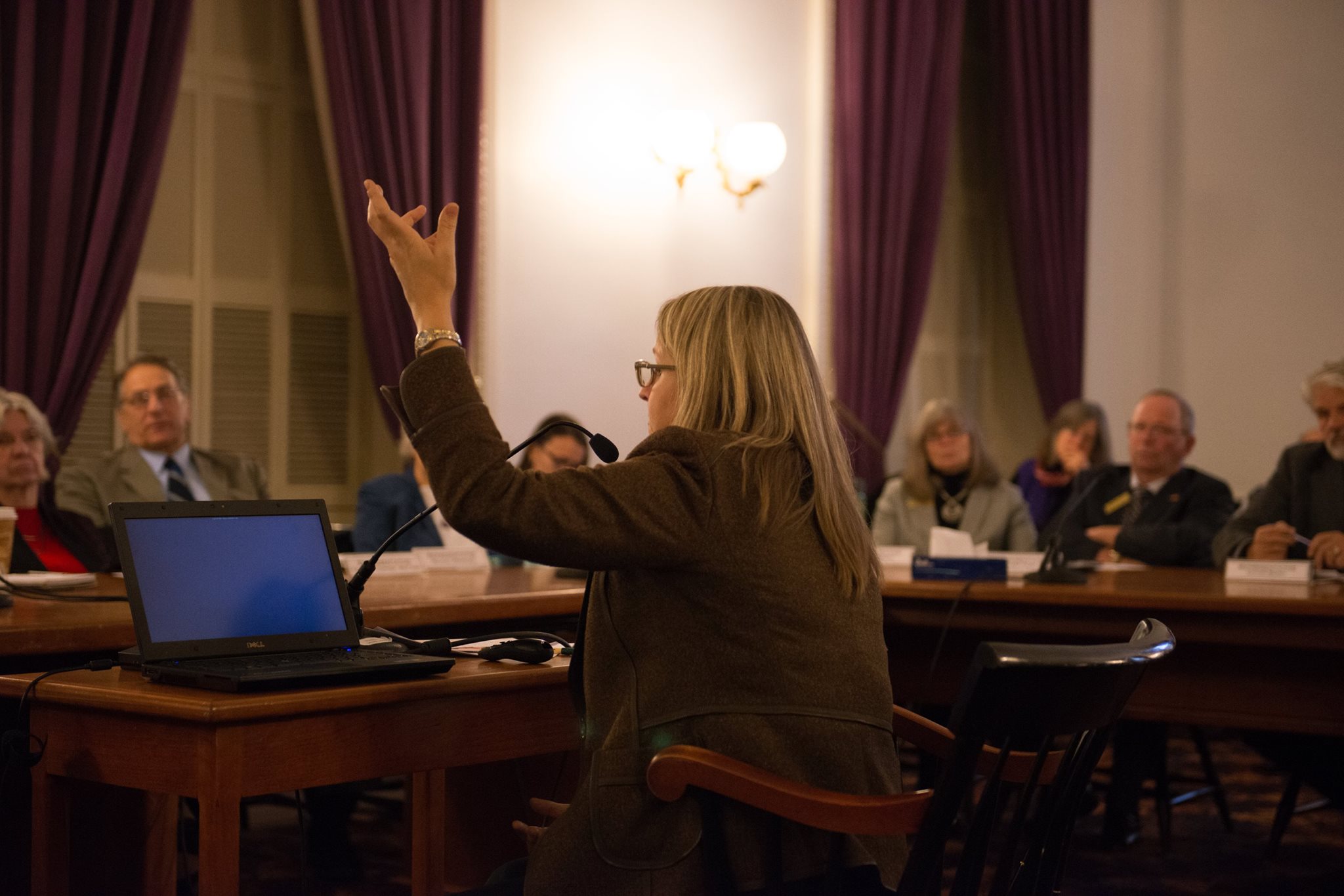
The 2016 Homelessness Awareness Day and Vigil was held at the Vermont State House in Montpelier on January 7th. Two House committees Housing, General and Military Affairs and Human Services had a joint hearing on homelessness, taking testimony on housing and homelessness issues. A number of other hearings regarding homelessness happened in the building during the course of the day.

sample

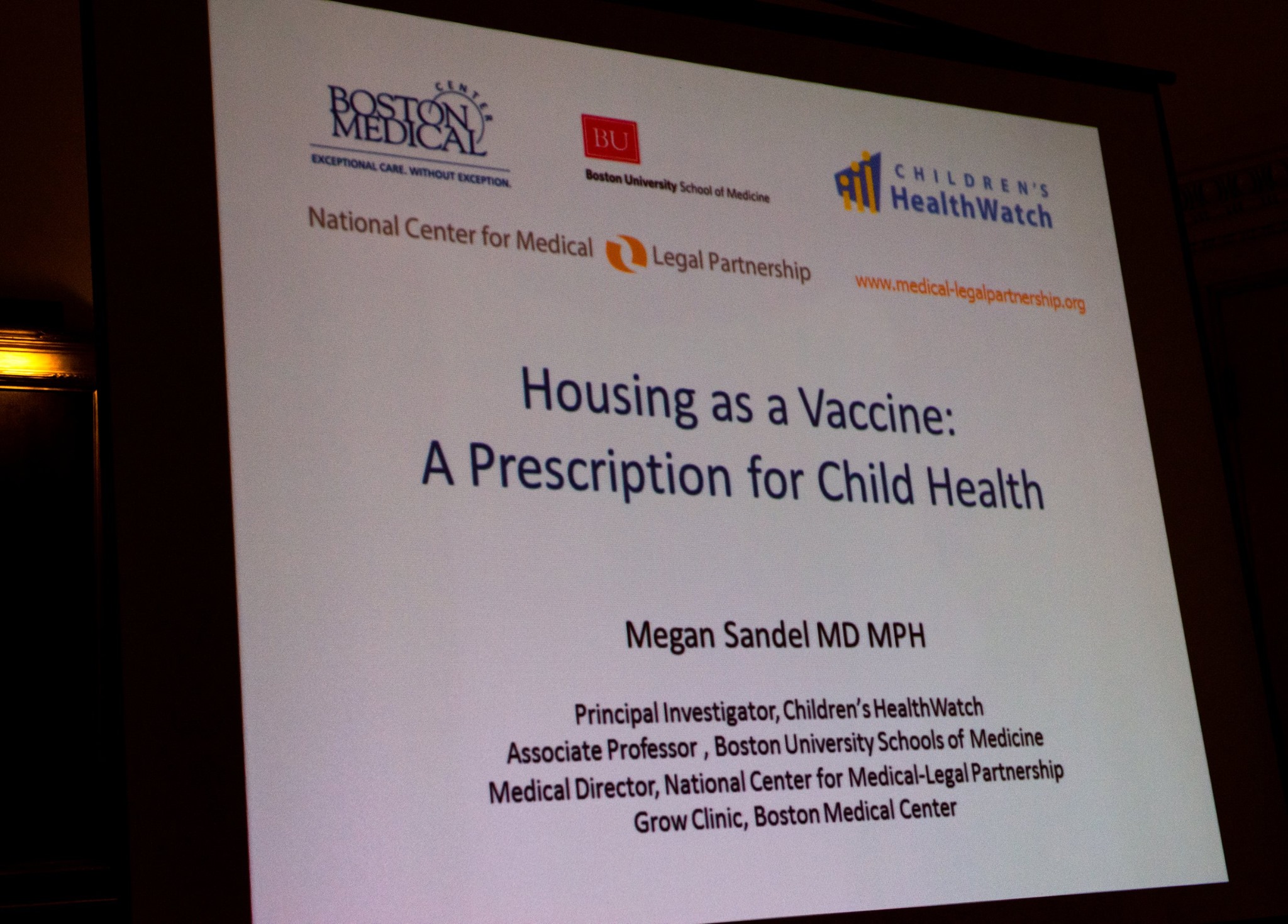
Opening the hearing was nationally recognized pediatrician Dr. Megan Sandel (principal investigator on Children’s Health Watch,  Associate professor at Boston University’s School of Medicine,  and Medical director, at  the National Center for Medical-Legal Partnership at Boston Medical Center), who has done path-breaking work on the effects of housing insecurity and homelessness on children. She gave a brilliant presentation on “Housing as a Vaccine: A Prescription for Child Health.”

At that hearing, Representatives and attending members of the public also heard from Vermont homeless service providers Linda Ryan (Director of Samaritan House) and Sara Kobylenski (Executive Director of Upper Valley Haven) on the latest trends and some recommended solutions to end or decrease homelessness in Vermont.

At Noon, community members, legislative leaders, administration officials, and advocates took the State House steps for a vigil to remember our friends and neighbors who died without homes, and to bring awareness of the struggles of those still searching for safe and secure housing. U.S. Senator Patrick Leahy and other legislative representatives and advocates joined and spoke at the vigil.

How can Housing be a Vaccine?

Dr. Megan presented data to support her thesis that housing can be protective for health. The quality, stability and affordability are important determinants to heath of all people. That means improving housing can provide multiple benefits. According to Dr. Megan, timing and duration of housing insecurity matter greatly to a child’s health. By increasing availability, affordability, and quality of housing, the health effect of housing insecurity can be decreased. Dr. Megan also provided specific evidence regarding housing quality and children’s health. For example, developmental issues, worsening asthma and other conditions have been tied to specific housing conditions such as pests, mold, tobacco smoke, lead exposure and so forth, and tied to long term effect with poor health outcomes.

sample 1

According to Children’s Health Watch, “unstable housing, hunger and health are linked” because evidence shows that being behind on rent is strongly associated with negative health outcomes such as high risk of child food insecurity, children and mothers who are more likely in fair or poor health, children who are more likely at risk for development delay, mothers who are more likely experiencing depressive symptoms. Research conducted by the National Housing Conference from Children’s Healthwatch illustrates that there is no safe level of homelessness. The timing (pre-natal, post-natal) and duration of homelessness (more or less than six month) compound the risk of harmful childhood health outcomes. The younger and longer a child experiences homelessness, the greater the cumulative toll of negative health outcomes, which can have lifelong effects on the child, the family, and the community.

Several community representatives spoke in support of increasing housing affordability by targeting more public funding to support housing affordability and housing stability and adding to state housing directed funds with a $2 per night fee on hotel, motel and inn stays.


And another thing

This is the last grant-funded post, so we’ll try to keep it snappy, not sappy. What do we know about housing, anyway? Not a lot, but a good deal more than when we signed on to this gig 10 months ago.

For what they’re worth, we’ll leave you with a gratuitous thought and an anti-climactic ranking.endgame1

Housing can’t simply be left to the private market, any more than health care or education. It’s time for people to accept that resolving the housing-affordability crisis will require significant new governmental investment; and alleviating the socioeconomic and racial segregation that continue to stand in the way of fair housing choice, all across the country, will require concerted government intervention. Why shouldn’t the right to decent housing and fair housing choice be a public policy priority commensurate with the right to health care or the right to receive an education?

Rankings abound at New Year, so here’s one with an ancillary question: Rent or buy? 504 counties around the country are listed in order of rental affordability — that is, the percentage of local median income that’s required to pay median rent of three-bedroom apartment in that county. Also listed is the affordability percentage of a median priced home. Compare the percentages to see whether it’s more affordable to rent or buy.

No. 1 in rental affordability (or unaffordability) is Honolulu, at 73 percent. Buy. No. 505 is Huntsville, Ala., at 23 percent. Buy.

You can get  to the Excel table by clicking here.

The only Vermont county in the table is Chittenden (listed as Burlington/South Burlington). Sorry, Bellows Falls, Bennington, et al, but that’s the way of these national surveys.

Burlington/South Burlington comes in at No. 152 in rental affordability, at 40 percent. Buying affordability: 46 percent. The recommendation: Rent.

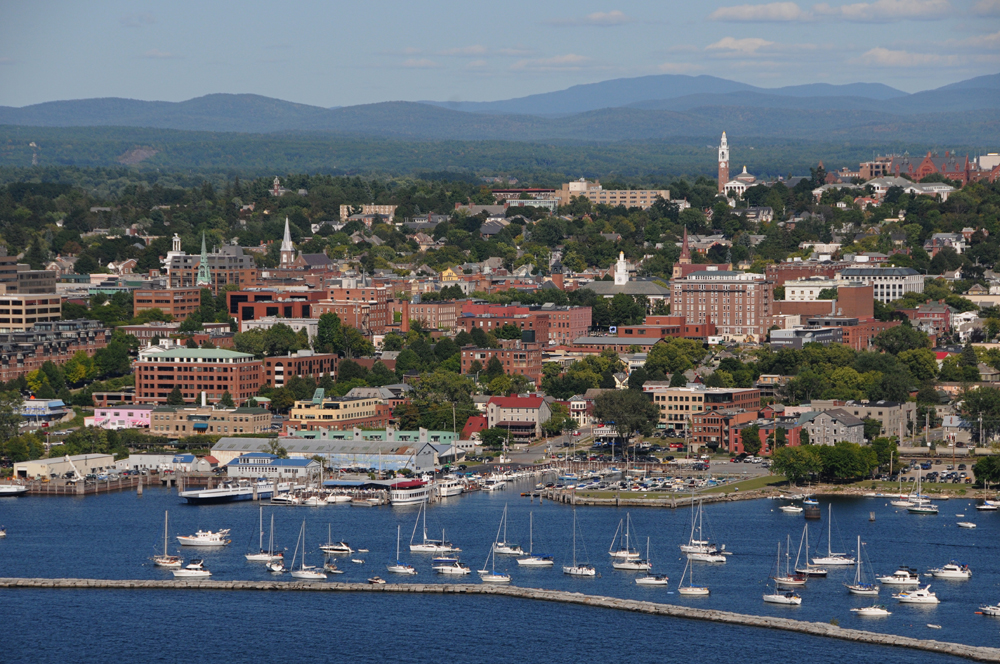
Lake Champlain Burlington, Vermont.
 

That’s despite the fact that, according to the table, the cost of a 3 BR apartment in Burlington/South Burlington went up 12.2 percent in the last year.

Sounds a little high to us (so much for the 3.3 percent figure we’ve been hearing) but again, what do we know?

Could be worse.

Bullish on mobile homes

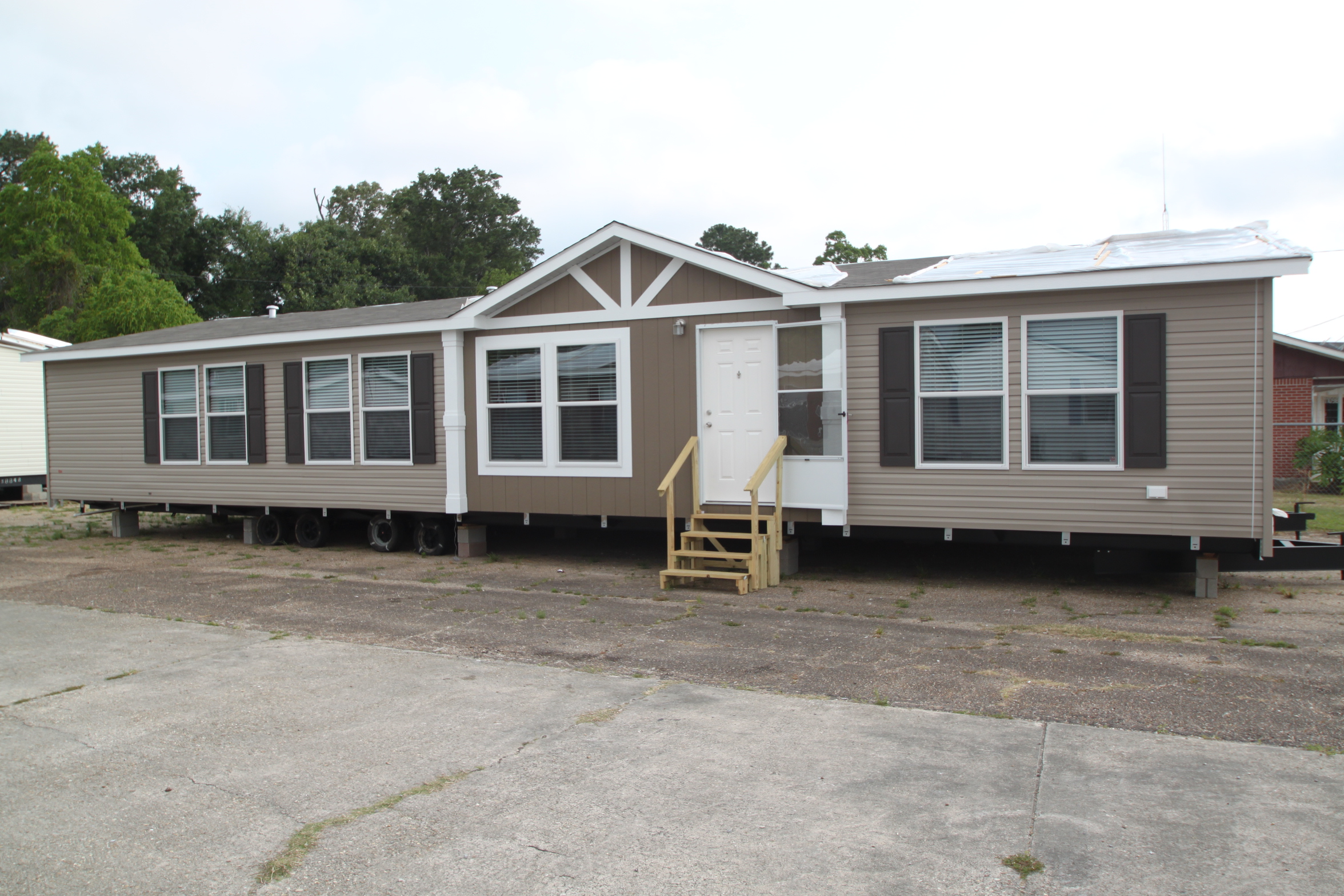
It seems that the wide-ranging portfolio of Warren Buffett, investment sage and one of the world’s richest men, includes a mobile-home empire that’s coming under fair-housing scrutiny.buffett1

That’s Clayton Homes Inc., the leading maker of mobile homes, which Buffett’s Berkshire Hathaway bought in 2003. A Clayton affiliate is also the leading lender to purchasers of mobile homes.

Now comes an investigative series by the Seattle Times, the Center for Public Integrity and BuzzFeed alleging exploitative lending to minorities, not to mention racist employment practices. One of the key predatory-lending allegations is summed up by this sentence, the series’ third article published the other day:

“The company’s in-house lender, Vanderbilt Mortgage, charges minority borrowers substantially higher rates, on average than their white counter parts. In fact, federal data shows that Vanderbilt typically charges black people who make over $75,000 a year slightly more than white people who make only $35,000.”

To this and the series’ accusations launched beginning in April, Clayton issued a “categorical” denial in a press release dated Dec. 26, stating, among other things:

“(I)n 2015, for borrowers with credit scores less than 600 who chose to purchase a home-only placed on private land, and borrowed less than $50,000, the average note rate from Vanderbilt was the same for white and non-white borrowers. For borrowers with credit scores greater than 720, the note rate for non-white borrowers was 0.07 percent less than for white borrowers.”

Buffett stands by the company and told shareholders this past spring that he “makes no apologies whatsoever for Clayton’s lending terms.”buffett2

Most of the alleged depredations highlighted in the articles have taken place in the south and on native American reservations in the Southwest. Clayton does have a presence in Vermont. The company’s website lists two sales outlets in the state – in Montpelier and White River Junction – out of more than a thousand dealerships nationwide.

If the series’ allegations have legs, one might expect they’ll prompt a federal investigation or a reverse-redlining lawsuit of the sort that was lodged against Wells Fargo for preying on minority home-buyers in Baltimore and Memphis in the years leading up to the housing bust. 

Not so easy

A key goal of affirmatively furthering fair housing (AFFH), as it’s envisioned playing out around the country, is to break up concentrations of poverty and to promote socioeconomic and racial integration. That means ensuring opportunities for lower-income people and racial minorities to live in wealthier, “high opportunity” neighborhoods with access to jobs, goods schools and public services.

Two ways to facilitate those opportunities:

  • Promote regional mobility among people with Section 8 vouchers, enabling them to leave high-poverty areas and move into more well-to-do communities. This can require increasing their housing allowance so that they can afford higher suburban rents.
  • Build affordable, multifamily rental housing in those same, heretofor exclusive neighborhoods.

Both of these approaches deserve consideration around here, as Vermonters contemplate how to make their communities more socioeconomically inclusive. Meanwhile, it’s interesting to see how they’ve played out in an entirely different environment: metropolitan Baltimore.Baltimore1

First, some background: Baltimore has a long history of racial segregation (click here for a trenchant account), and in the mid-1990s, the Department of Housing and Urban Development was sued by city residents (Thompson vs. HUD) for its failure to eliminate segregation in public housing. In 2005, a federal judge found that HUD had violated the Fair Housing Act by maintaining existing patterns of impoverishment and segregation in the city and by failing to achieve “significant desegregation” in the Baltimore region.

Seven years later, a court-approved settlement resolved the case in a way that anticipated the AFFH rule that HUD issued this past summer.

The settlement called on HUD to continue the Baltimore Mobility Program, begun in 2003 in an earlier settlement phase. The program has provided housing vouchers to more than 2,600 families to move out of poor, segregated neighborhoods and into areas with populations that are less than 10 percent impoverished and less than 30 percent black. The program provides counseling before and after the move and has received high marks from evaluators who cite improved educational and employment outcomes for beneficiaries. A similar regional program is underway in Chicago.

The settlement also called for affordable-housing development in these “high-opportunity” suburban communities – 300 units a year through 2020. To make this happen, HUD was to provide new financial incentives for developers.

Here is where the story takes a dispiriting turn. Three years later, not a single developer has applied for the incentives. No affordable housing projects are even in the pipeline. That’s according to an eye-opening story the other day in the Baltimore Sun.Baltimore2

So, what happened? Why haven’t developers shown any interest? HUD had no explanation, according to the story, which suggested that perhaps the program hadn’t been well-enough publicized: a prominent builder of affordable housing admitted he didn’t even know about the incentives. Could it be that they weren’t generous enough?

Whatever the reason, the Baltimore experience reflects how difficult it can be to introduce affordable housing to privileged enclaves. No one should underestimate the AFFH challenge.

Something out of nothing

Here’s an intriguing strategy for revitalizing moribund downtowns that doesn’t cost anything and bypasses political machinations:  renew3 It’s called “Renew,” and it was first employed in the decaying Australian city of Newcastle several years ago — with notable success.

The basic idea is to install artists or craftspeople in vacant storefronts and let them work, market, or exhibit in exchange for their paying the utility bills. renew1 In other words, let them dress the places up and draw people in… until the spaces are commercially leased, at which point the artisans have 30 days to vacate. A nonprofit organization facilitates these pop-ups.

Renew Newcastle spread to other cities, gave rise to Renew Australia, and was the subject of an article in The New Republic earlier this month, “Hacking the City: A New Model for Urban Renewal.” There’s no reason, the article suggests, why “Renew” couldn’t work in American cities, and not just big ones. Renew’s creator, Marcus Westbury, offers an aphorism – “Activity creates activity, and decay creates decay” — that would seem to apply anywhere. Even in small-town Vermont, where vacant storefronts are a common sight in many municipal centers — St. Johnsbury or Barre, Springfield or Rutland. Eastern Avenue in St. Johnsbury, for example, has a stretch of empty, eye-averting properties that could theoretically — with a Renew-style makeover — become a destination.

What does any of this have to do with housing? A downtown commercial/cultural revival might produce a hub of burgeoning activity where all sorts of people might want to live, thus drawing housing developers to a municipality they might otherwise be inclined to avoid.

https://www.youtube.com/watch?v=6n0ADYyy28w

A little holiday cheer

  • Portland, Ore., has come up with a new funding source for affordable housing: tourists! Sunflower on fence The city council has voted to dedicate a share of the tax on Airbnb-type rentals to the city’s Housing Investment Fund — $1.2 million a year. That’s a drop in the bucket in a city where the affordable housing shortfall amounts to about 24,000 units, but it’s better than nothing.
  • Jackson Hole officialdom has agreed to consider a plan that would dial back commercial growth in favor of housing, with density bonuses offered for workforce housing. A citizen campaign bearing slogans like “Housing not hotels” apparently got a receptive hearing.
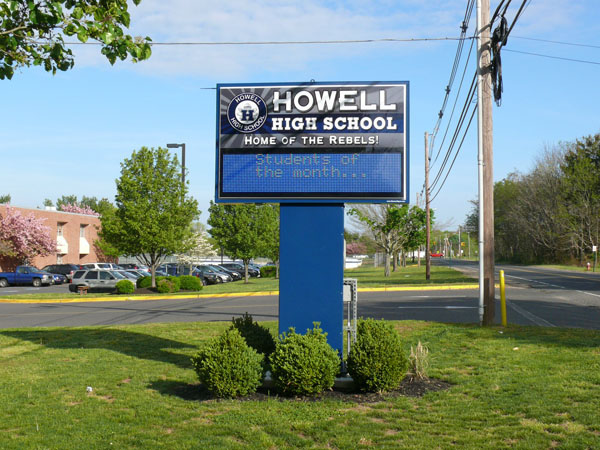
  • The Republican leadership of Howell, N.J., is backing an affordable housing project despite, and in the face of, some unusually ugly civic opposition — in a state where support for affordable housing is typically associated with Democrats.howell1 This profile of courage, in the Atlantic, includes a fine summary of the tortuous (and torturous) fate of affordable housing in New Jersey after the landmark Mount Laurel decisions. Another example of how good intentions and a supportive legal infrastructure are not enough.
  • The “recapitalization” of Freddie Mac and Fannie Mae, as proposed by two economists, would direct a flood of new money to the states for affordable housing via the Housing Trust Fund and the Capital Magnet Fund.fanniemae Vermont would get $4.6 million a year for affordable housing for 20 years under this scheme. Sounds great, but whether this proposal has any legs is an open question. Some members of Congress would just as soon do away with Freddie Mac and Fannie Mae altogether.
  •  A community of 15 tiny houses is scheduled to open later this month in Seattle to provide transitional quarters for homeless people. Granted, this isn’t exactly cheerful news, but at least it’s different.