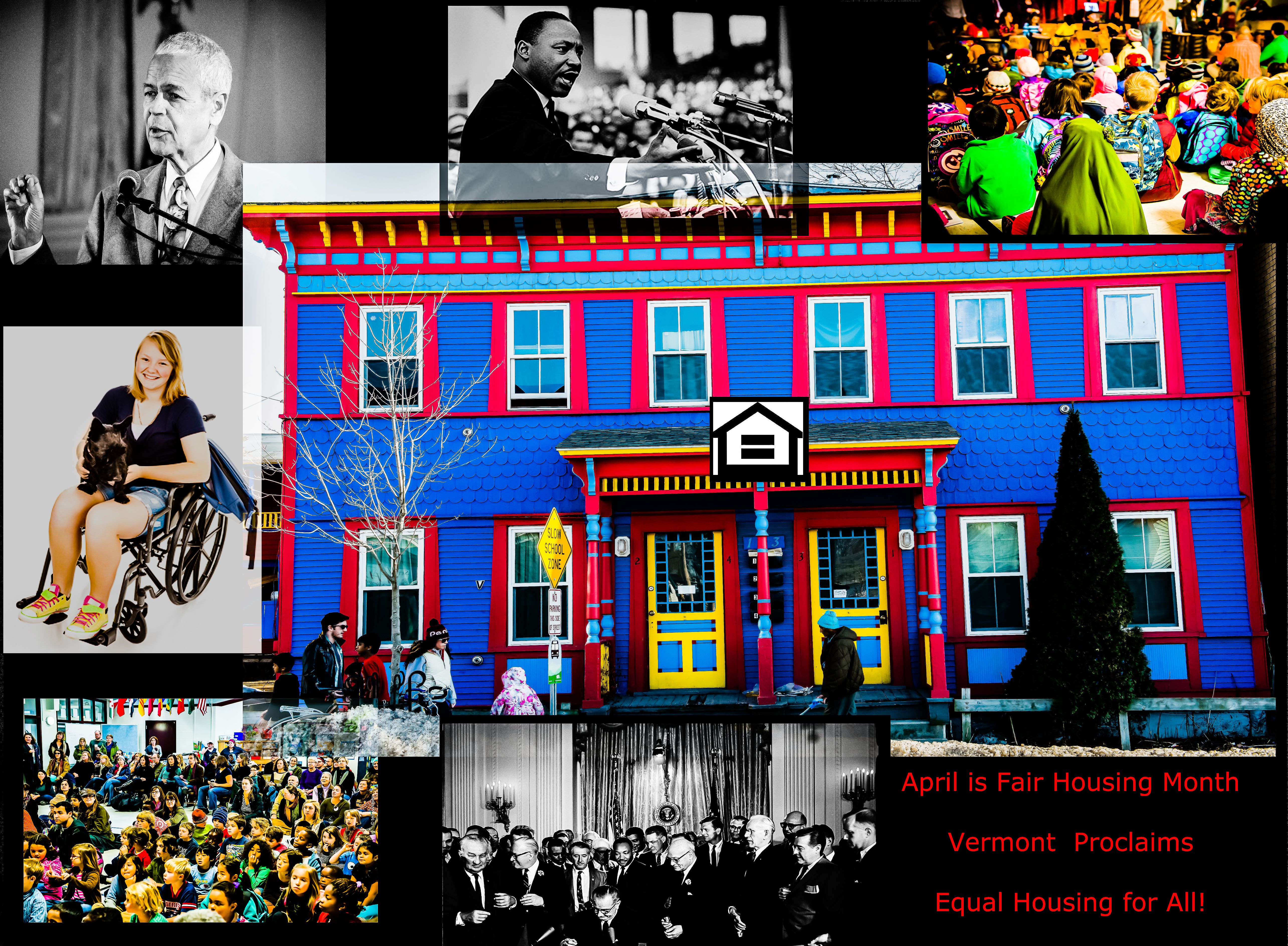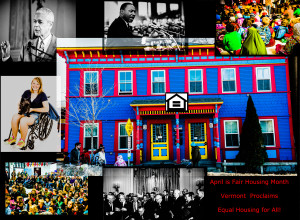
April Fair Housing Month Activities in Burlington Vermont

Tell your friends, family and coworkers to participate. Some April activities will no doubt be happening in other states as well.

Be sure you scroll down using the scroll bar on the right of the text box to see both pages.

If you have questions write FHP@CVOEO.ORG

[pdf-embedder url=”https://www.thrivingcommunitiesvt.org/wp-content/uploads/2017/03/fair-housing-april2017-burlington-calendar1-2.pdf”]

What is Fair Housing Month about? HUD explains.

Getting a head start on April in March –

Note: All the content below in this post is taken from a web site maintained by the U.S. Department of Housing and Urban Development.

In April, we come together as a community and a nation to celebrate the anniversary of the passing of the Fair Housing Act and recommit to that goal which inspired us in the aftermath of Rev. Dr. Martin Luther King Jr’s assassination in 1968: to eliminate housing discrimination and create equal opportunity in every community.

Fundamentally, fair housing means that every person can live free. This means that our communities are open and welcoming, free from housing discrimination and hostility. But this also means that each one of us, regardless of race, color, religion, national origin, sex, familial status, and disability, has access to neighborhoods of opportunity, where our children can attend quality schools, our environment allows us to be healthy, and [for us to grow] opportunities and self-sufficiency.

…commitment to fair housing is a living commitment, one that reflects the needs of America today and prepares us for a future of true integration.

History of Fair Housing –

On April 11, 1968, President Lyndon Johnson signed the Civil Rights Act of 1968, which was meant as a follow-up to the Civil Rights Act of 1964. The 1968 act expanded on previous acts and prohibited discrimination concerning the sale, rental, and financing of housing based on race, religion, national origin, sex, (and as amended) handicap and family status. Title VIII of the Act is also known as the Fair Housing Act (of 1968).

The enactment of the federal Fair Housing Act on April 11, 1968 came only after a long and difficult journey. From 1966-1967, Congress regularly considered the fair housing bill, but failed to garner a strong enough majority for its passage. However, when the Rev. Dr. Martin Luther King, Jr. was assassinated on April 4, 1968, President Lyndon Johnson utilized this national tragedy to urge for the bill’s speedy Congressional approval. Since the 1966 open housing marches in Chicago, Dr. King’s name had been closely associated with the fair housing legislation. President Johnson viewed the Act as a fitting memorial to the man’s life work, and wished to have the Act passed prior to Dr. King’s funeral in Atlanta.

Another significant issue during this time period was the growing casualty list from Vietnam. The deaths in Vietnam fell heaviest upon young, poor African-American and Hispanic infantrymen. However, on the home front, these men’s families could not purchase or rent homes in certain residential developments on account of their race or national origin. Specialized organizations like the NAACP, the GI Forum and the National Committee Against Discrimination In Housing lobbied hard for the Senate to pass the Fair Housing Act and remedy this inequity. Senators Edward Brooke and Edward Kennedy of Massachusetts argued deeply for the passage of this legislation. In particular, Senator Brooke, the first African-American ever to be elected to the Senate by popular vote, spoke personally of his return from World War II and inability to provide a home of his choice for his new family because of his race.

With the cities rioting after Dr. King’s assassination, and destruction mounting in every part of the United States, the words of President Johnson and Congressional leaders rang the Bell of Reason for the House of Representatives, who subsequently passed the Fair Housing Act. Without debate, the Senate followed the House in its passage of the Act, which President Johnson then signed into law.

The power to appoint the first officials administering the Act fell upon President Johnson’s successor, Richard Nixon. President Nixon tapped then Governor of Michigan, George Romney, for the post of Secretary of Housing and Urban Development. While serving as Governor, Secretary Romney had successfully campaigned for ratification of a state constitutional provision that prohibited discrimination in housing. President Nixon also appointed Samuel Simmons as the first Assistant Secretary for Equal Housing Opportunity.

When April 1969 arrived, HUD could not wait to celebrate the Act’s 1st Anniversary. Within that inaugural year, HUD completed the Title VIII Field Operations Handbook, and instituted a formalized complaint process. In truly festive fashion, HUD hosted a gala event in the Grand Ballroom of New York’s Plaza Hotel. From across the nation, advocates and politicians shared in this marvelous evening, including one of the organizations that started it all — the National Committee Against Discrimination In Housing.

In subsequent years, the tradition of celebrating Fair Housing Month grew larger and larger. Governors began to issue proclamations that designated April as “Fair Housing Month,” and schools across the country sponsored poster and essay contests that focused upon fair housing issues. Regional winners from these contests often enjoyed trips to Washington, DC for events with HUD and their Congressional representatives.

Under former Secretaries James T. Lynn and Carla Hills, with the cooperation of the National Association of Homebuilders, National Association of Realtors, and the American Advertising Council these groups adopted fair housing as their theme and provided “free” billboard space throughout the nation. These large 20-foot by 14-foot billboards placed the fair housing message in neighborhoods, industrial centers, agrarian regions and urban cores. Every region also had its own celebrations, meetings, dinners, contests and radio-television shows that featured HUD, state and private fair housing experts and officials. These celebrations continue the spirit behind the original passage of the Act, and are remembered fondly by those who were there from the beginning.

U.S. Department of Housing and Urban Development
 

Fighting Community Opposition in the Age of…Opposition

From the “Shelterforce Blog”, “Rooflines”

Posted in Shelterforce by Amy Clark on December 14, 2016

http://www.rooflines.org/4710/fighting_community_opposition_in_the_age_ofopposition/ via  @Shelterforce

On Nov, 8, voters across the country heard the affordable housing call and approved numerous state and local housing funding measures that will make it possible for more of our neighbors to live in safe, healthy, and affordable homes. This was a real achievement in housing advocacy, but the work is far from over. Developers, local governments, and advocates must now move to convince the neighbors of proposed housing developments to accept more affordable homes into their communities.

The election that brought over 37 affordable housing measures to the ballot in eight states also elevated toxic rhetoric about people of color and other populations. The public discourse has changed, and that’s likely to affect our efforts to build support for affordable housing development and counter community opposition. Here’s what you may hear about affordable housing in your community, and how to prepare for it:

Racial animus. In the wake of the election, there have been many reports of hate-based harassment and intimidation across the country. An offending segment of our population feels newly empowered to use racist language in all types of situations. While racism and fear of difference have always been, at the very least, an undercurrent of some forms of community opposition, in recent years it’s largely been implied, not overt. You may see an uptick in overt racism in siting conversations.

What to do? While it would be satisfying—and, arguably, right—to call out racist language directly when you hear it, research tells us that this is likely to backfire, causing the speaker to defensively double-down on the prejudiced belief. Instead, a study this year found that “a short conversation encouraging actively taking the perspective of others can markedly reduce prejudice.” It argues for holding small-group conversations and facilitators trained to listen and find common ground.

Misinformation. You’ve likely heard much about the success of fake news during the presidential campaign. Misinformation this election cycle may have had a distinctive rightward bent, but don’t pat yourself on the back if you lean left. All of us are susceptible to information that confirms what we already believe, regardless of its factual accuracy. Don’t be surprised to see an increase in the misinformation about your work being posted online and handed around in anonymous flyers around the neighborhoods where you work.

What to do? Don’t write up a “frequently asked questions” page correcting the lies being told about your work. By emphasizing the misinformation—even when you later correct it—you’re just driving it deeper into peoples’ consciousness. Instead, first tell your truth (“Our apartments increase neighborhood safety.”), then signpost the misinformation and explain the motive behind it (“There is a myth circulating that affordable housing increases crime, promoted by a small new neighborhood group formed to fight our proposal.”), and finally give a brief, clear alternative explanation, repeated in graphics if possible (“In fact, by starting a neighborhood watch program and installing security cameras, we’ve helped create a 13 percent decrease in property crime in another neighborhood where we work. We want to work with you to have a similar positive impact here.”).

Ideological conflict. Research into persistent opposition to affordable housing has shown that spatial ideology—an individual’s set of beliefs around who can live in and use a particular place, and who has the right to participate in decision-making about a place—can be predictive of opposition to, or support of, affordable housing. The recent push to disenfranchise groups of Americans through voter ID laws and other restrictions is an example of a narrow conception of spatial rights, and the electoral contest was rife with rhetoric supporting a conscribed idea of to whom America truly belongs. Opposition may now more frequently focus on delegitimizing prospective low-income residents, perhaps as “not American” or simply “not from here.”

What to do? Unfortunately, ideology might be hard-wired, and thus addressing spatial ideology head-on might not be effective. At the same time, there are likely to be people in your community who believe lower-income people have an equal right to live in a place. Find these potential supporters by emphasizing the values of diversity and inclusion, and give this group a clear way to take action and vocalize support of your work.

Distrust of institutional authority. The success of populist presidential candidates from both parties points to, among other things, Americans’ growing distrust of institutions. Whether it’s in banks, the news media, or government itself, people across the political spectrum have lost faith. Unfortunately, affordable housing development connects to all sorts of things many of our neighbors have come to doubt: taxation, finance systems and entities, and zoning, just to name a few.

What to do? First, people who have lost trust will hear a developer mention “partnering with the government” and translate that into an attempt to paper over a profit-making arrangement. Step away from the marketing talk and use plain language to explain what you do, and why it is successful. Second, reframe the role of these perceived-suspect institutions. A new paper from Enterprise Community Partners and the FrameWorks Institute recommends that we help people understand the role of government in affordable housing by explaining, “the role of systems in shaping outcomes for people and … communities,” and by, “zooming out” to tell broader stories that explain the impact of housing issues on an entire community. You know your work is about more than simply units; help others understand this too.

Countering community opposition has never been easy, and I hope to hear that these predictions have not come true, but even if they do, our work can have a long-term impact on decreasing bias. There is evidence that white people living in diverse neighborhoods “endorsed fewer negative stereotypes, and [feel] closer to Blacks as a group.” When we create diverse, inclusive communities, we help decrease prejudice and division. That’s something truly worth fighting for.


“Housing Doesn’t Filter, Neighborhoods Do” by Rick Jacobus

Posted by Rick Jacobus on November 4, 2016 on the “Rooflines, the Shelter Force Blog”
Read the full article (part 1) on the Rooflines, Shelter Force Blog:  http://tinyurl.com/jacobus-filterDown

“There has been a renewed interest in the role that the real estate market can play in solving our growing affordable housing crisis. For decades “affordable housing” has been the near exclusive domain of the public sector, but the crisis has reached the point where we are now calling for all hands on deck. Can private capital, private development companies, and market-rate housing developments help make housing affordable for everyone?”

“Housing advocates tend to agree that we need to supplement market-rate luxury development with subsidized affordable housing, but rarely do we ask the market to provide housing for people further down the income ladder. This dichotomy of new market-rate housing only for the rich and new affordable housing only for the poor has become the de facto housing strategy in most American cities. We can do better.”

White House Housing Development Toolkit

Executive Summary from the White House Housing Development Toolkit: September, 2016

[FYI Please note this toolkit was issued under President Obama’s administration.]

“Locally-constructed barriers to new housing development include beneficial environmental protections, but also laws plainly designed to exclude multifamily or affordable housing. Local policies acting as barriers to housing supply include land use  restrictions that make developable land much more costly than it is inherently, zoning restrictions, off street parking requirements, arbitrary or antiquated preservation regulations, residential conversion restrictions, and unnecessarily slow permitting processes. The accumulation of these barriers has reduced the ability of many housing markets to respond to growing demand.”whitehouse-housing_development_toolkit-f-2_page_01

Read it all here> http://tinyurl.com/WhiteHouseDevpToolKit 23 pages easy reading.

Reform land use, promote shared growth of new housing

– San Francisco Chronicle  http://www.sfchronicle.com/opinion/openforum/article/Reform-land-use-promote-shared-growth-of-new-9283703.php

By Jason Furman | September 25, 2016 | Updated: September 25, 2016 8:34pm

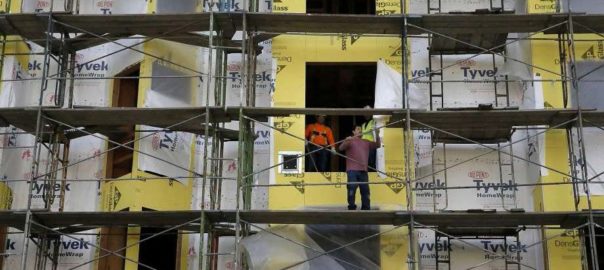
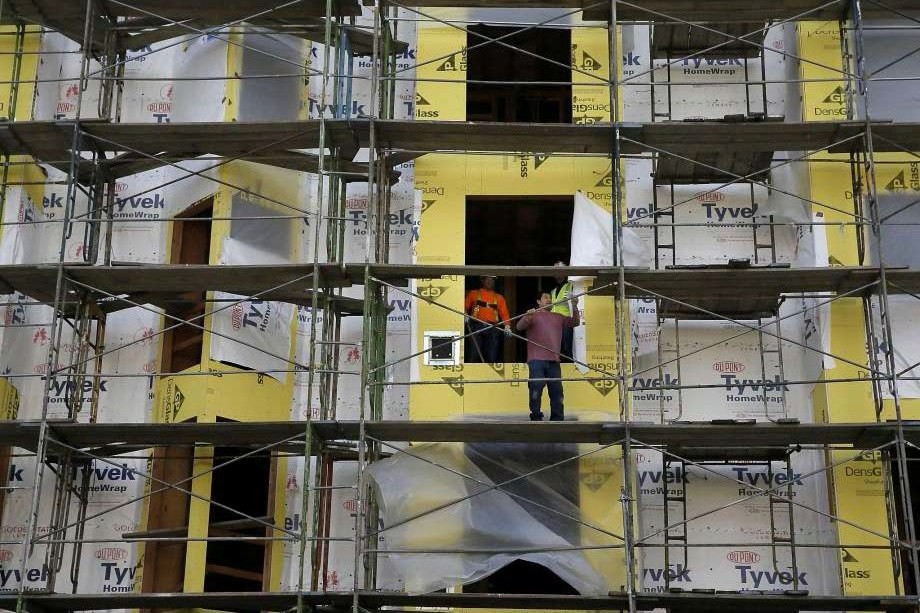
housing-constructionpicturePhoto: Michael Macor, The Chronicle

When certain government policies — like minimum lot sizes, off-street parking requirements, height limits, prohibitions on multifamily housing, or unnecessarily lengthy permitting processes — restrict the supply of housing, fewer units are available and the price rises.

It is no secret that cities like San Francisco, New York and Washington, D.C., face challenges in the availability and cost of housing. But policymakers and economists have increasingly recognized both the role that certain inappropriate land use restrictions play in raising housing costs — not just in major cities but across the country — and the opportunity for modernizing these regulations to promote shared growth.

Basic economic theory predicts that when the supply of a good is constrained, its price rises and the quantity available falls. In this respect, the market for housing is no different: When certain government policies — like minimum lot sizes, off-street parking requirements, height limits, prohibitions on multifamily housing, or unnecessarily lengthy permitting processes — restrict the supply of housing, fewer units are available and the price rises. On the other hand, more efficient policies can promote availability and affordability of housing, regional economic development, transportation options and socioeconomic diversity.

Research suggests that local barriers have become more restrictive in recent decades. One way to measure this is comparing the sale price of houses with construction costs. This gap typically reflects the cost of buying land — which increases with tighter land use restrictions. Indeed, the gap has increased in the past two decades: House prices from 2010 to 2013 were 56 percent higher than construction costs, a 23 percentage-point crease over the average gap during the 1990s.

Of course, many land use regulations can have benefits for communities. Environmental reasons in some localities may make it appropriate to limit high-density or multiuse development. Similarly, health and safety concerns — such as an area’s air traffic patterns, viability of its water supply, or its geologic stability — may merit height and lot size restrictions.

But in other cases, barriers to housing development can allow a small number of individuals to enjoy the benefits of living in a community while excluding many others, limiting diversity and economic mobility.

This upward pressure on house prices may also undermine the market forces that typically determine patterns of housing construction, leading to mismatches between household needs and available housing.

Improving land use policies can also create benefits for the U.S. economy as a whole. High- productivity cities offer higher-income jobs than low-productivity cities and often attract workers who move from other cities, naturally bringing more resources to productive areas of the country. But when unnecessary barriers restrict the supply of housing and costs increase, then workers — particularly lower-income workers who would benefit the most — are less able to move.

All told, this means slower economic growth: Some researchers have estimated that GDP could have been almost 10 percent higher in 2009 if workers and capital freely moved so that the distribution of wages across cities was the same as in 1964.

On the other hand, smarter land use and housing policy can promote both growth and equity. While most land use policies are appropriately made at the state and local level, the federal government can also play a role in encouraging smart land use regulations. Today, the Obama administration is releasing a new toolkit at http://bit.ly/2d4dVAc that highlights best practices that localities have employed — including streamlining permitting processes, eliminating off-street parking requirements, reducing minimum lot sizes, and enacting high-density and multifamily zoning policies — to reduce overly burdensome land use restrictions and promote mobility and economic growth.

Reforming land use policies can have important benefits for local residents and the nation as a whole, not only raising economic growth, but ensuring that its benefits are widely shared among all Americans.

Jason Furman is the chairman of the White House Council of Economic Advisers.

New HUD AFFH rule – the Good & Some Devils in Details

Okay dear readers, this is a wonky article but for those of you interested in HUD’s Affirmatively Furthering Fair Housing rule it is a good read. (Ted Wimpey)

The Devils in the Details: Key Issues in Implementing the New AFFH Rule

 by Dan Immergluck and Mindy Kao Rooflines post on July 5, 2016

“For most of the Fair Housing Act’s history, its requirement to “Affirmatively Further Fair Housing” has been largely dormant. With the advent of the new AFFH rules in July 2015, however, there is some promise that this provision might be taken more seriously.”

http://tinyurl.com/AFFH-rule-FHA-DetailDevils  Link to ROOFLINES, the Shelterforce Blog,


Building Homes Together, in Chittenden County Vermont

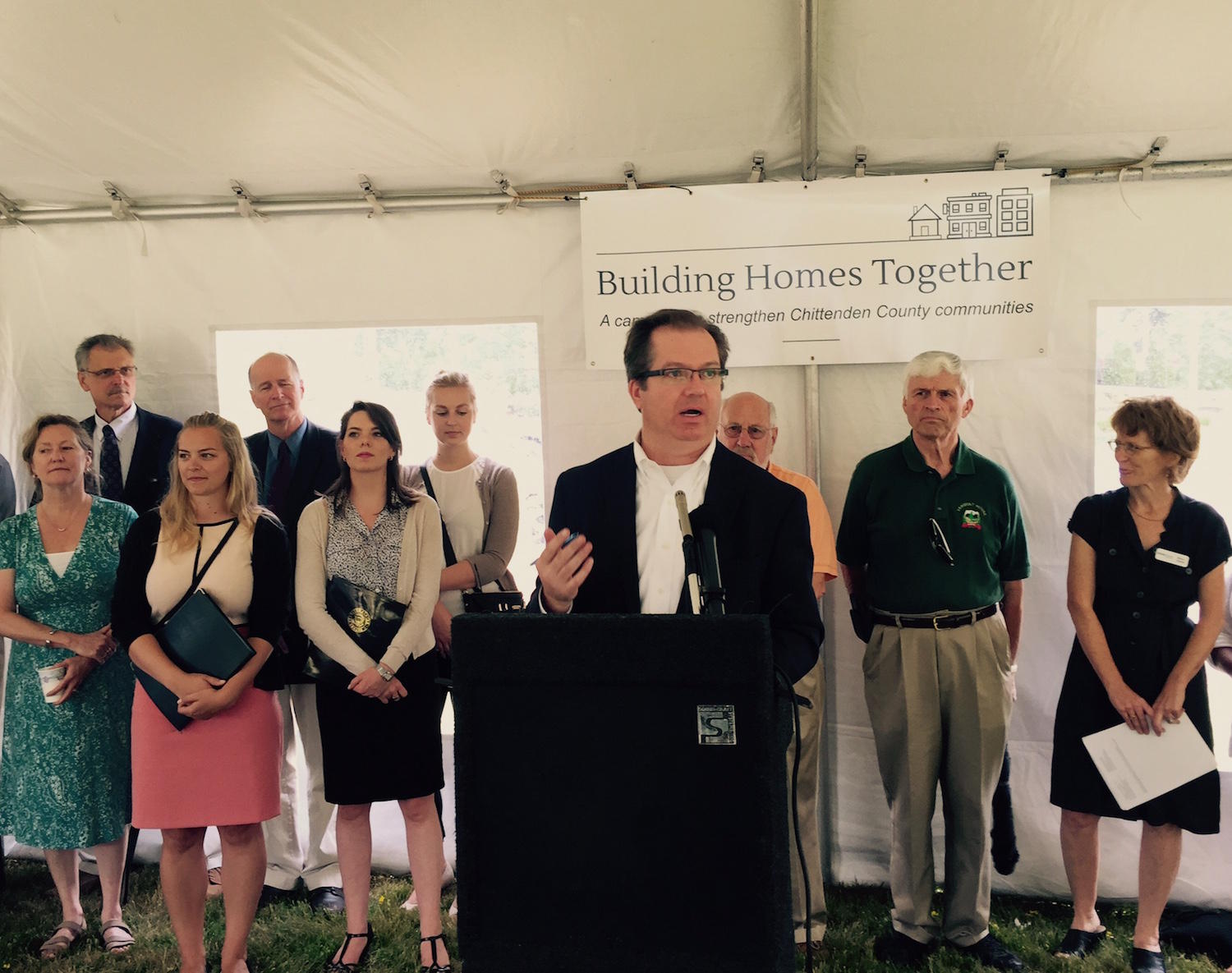
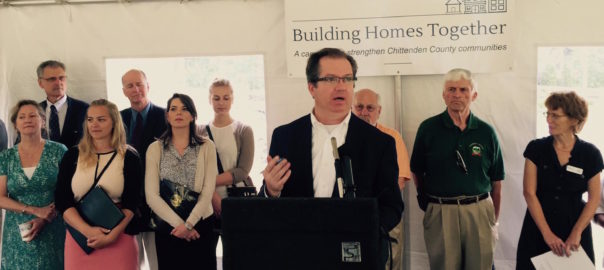
 Charlie Baker, executive director of the Chittenden County Regional Planning Commission, is part of a new coalition that will try to bring about the construction of 3,500 housing units in Chittenden county over the next five years. Peter Hirschfield / VPR

Charlie Baker, executive director of the Chittenden County Regional Planning Commission, is part of a new coalition that will try to bring about the construction of 3,500 housing units in Chittenden county over the next five years.
Peter Hirschfield / VPR

Chittenden County, Vermont:  The Champlain Housing Trust, Housing Vermont, and the Chittenden County Regional Planning Commission are currently undergoing a coordinated campaign to increase the housing supply in Chittenden County. This campaign is called Building Homes Together.

BuildingHomesTogether-Logo

A press conference was held on June 27, 2016 to announce this campaign, which sets a target of 3,500 new homes created in the next five years.

Individuals, businesses or organizations that wish to sign on and participate in the campaign are encouraged to by sending an email to Chris Donnelly at chris@champlainhousingtrust.org.

* Frequently Asked Questions (“Don’t we have enough housing now?”)

Q: The vacancy rate was 3.0% in December 2015 (reported by Allen & Brooks), so haven’t we already reached our goal?

A: No. The 3.0% figure relates to just a point in time. We look at a long-term vacancy rate to avoid using numbers that could be skewed by new housing just opening. A long-term rate is a better indicator of the health of the housing market over the past fifteen years. For instance, the reported vacancy rate was 3.0% in December, 2015 and 2.1% in June, 2016; meanwhile the long-term vacancy rate is only 1.6%.

Q: There are a lot of housing units in the development pipeline, so why do we need to build even more?

A: The Building Homes Together campaign to build 3,500 homes by 2021 for people of all incomes, including 700 affordable homes, is a goal for the number of homes constructed. The number of homes planned in the pipeline is not an accurate count of what actually gets built. However, the homes that are in the pipeline, that do get built will count toward the 3,500 homes.

Q: Who is living in these new homes?

A: We all are. Household size is shrinking so even if we didn’t have any new residents we would need more homes to house the residents we have. In addition, Chittenden County has grown by an average of 915 people per year over the last 6 years (U.S. Census American Community Survey, 1 – Year Estimates). Also, it is important to note that some of our County employees are not living here. While the number of jobs has remained relatively steady in Chittenden County, there are 7,329 fewer workers living here now than in 2002. Only 65% of county employees lived here in 2014, down from 75% in 2002, indicating a lack of available, affordable homes within the County. Specifically, the average annual increase in rent is about 3.0%; while the median household income in the Burlington-South Burlington Labor Market declined by 1.0% annually since 2010 (Allen & Brooks Report, June 2016

Coalition Launched to Increase Housing in Chittenden County VT

South Burlington, VT – Dozens of Chittenden County leaders in the fields of housing, business, local and state government, and social services announced this morning a new campaign to increase the production of housing and setting a target of 3,500 new homes created in the next five years.

The new coalition, called Building Homes Together, was formed by the Champlain Housing Trust, Chittenden County Regional Planning Commission and Housing Vermont and released an initial list of nearly 100 community leaders supporting the effort.

“Working together we will accomplish this goal,” said Brenda Torpy, CEO of Champlain Housing Trust. “For the sake of our communities, our workers and local economy, we will educate and advocate together for more housing.”

“The housing shortage in Chittenden County has been well noted with unhealthy vacancy rates and high rents,” added Charlie Baker, Executive Director of the Chittenden County Regional Planning Commission. “Employers can’t find workers, and workers themselves spend more time in commutes and with a higher percentage of their paychecks on housing costs.”

Twenty percent of the 3,500 goal are targeted to be developed by nonprofit housing organizations. The remainder by private developers.

“This step-up in production will not just provide new homes and infrastructure for communities, it’ll be a boost to the economy and contribute to the tax base. Building homes together is a big win for all of us in Chittenden County,” said Nancy Owens, President of Housing Vermont.

The campaign will provide up-to-date data to the community on the need for and benefits of new housing, build cross-sector and public support for housing development, increasing access to capital, and supporting municipalities.

Individuals, businesses or organizations that wish to sign on and participate in the campaign are encouraged to by sending an email to Chris Donnelly at Champlain Housing Trust (chris@champlainhousingtrust.org). For more information, visit www.getahome.org/news/building-homes-together

Separating Fact from Fiction to Design Effective Inclusionary Housing Programs

Inclusionary Housing, A Series of Research & Policy Briefs by Center for Housing Policy

[Below is an excerpt. Here is a link to download the full piece -12 pages.  http://www.nhc.org/#!2016-fact-and-fiction/jfbck ]

By Lisa A. Sturtevant, Ph.D.
May 2016
Inclusionary housing programs generally refer to city and county planning ordinances that require or incentivize developers to build below-market-rate homes (affordable homes) as part of the process of developing market-rate housing developments. More than 500 local jurisdictions in the United States have implemented inclusionary housing policies, and inclusionary requirements have been adopted in a wide variety of places—big cities, suburban communities and small towns.
Despite the proliferation of inclusionary housing programs,the approach continues to draw criticism. There have been legal challenges around inclusionary housing requirements in California, Illinois, Idaho, Colorado and Wisconsin, among others.
In addition to legal questions, critics have claimed inclusionary housing policies are not effective at producing affordable housing and have negative impacts on local housing markets. While there have been numerous studies on inclusionary housing, they unfortunately do not provide conclusive evidence about the overall effectiveness of inclusionary housing programs. These studies vary substantially in terms of their research approaches and quality. In addition, it is difficult to generalize the findings from the existing research because researchers have examined policies in only a handful of places and at particular points in time when economic and housing market conditions might have been quite different. Given these limitations, however, the most highly regarded  empirical evidence suggests that inclusionary housing programs can produce affordable housing and do not lead to significant declines in overall housing production or to increases in market-rate prices. [emphasis by author]