By Kahlia Livingston, Fair Housing Project Education & Outreach Coordinator
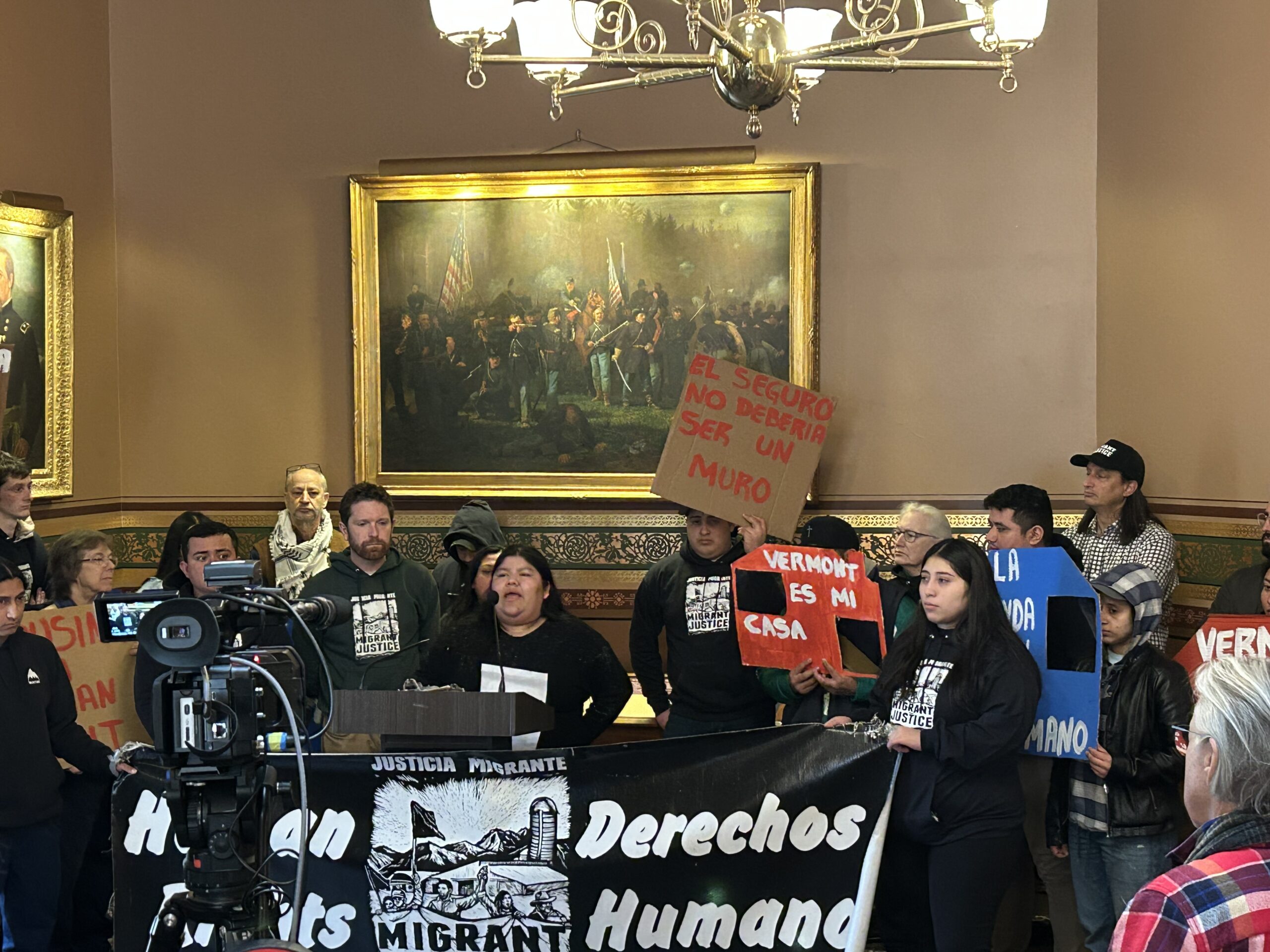
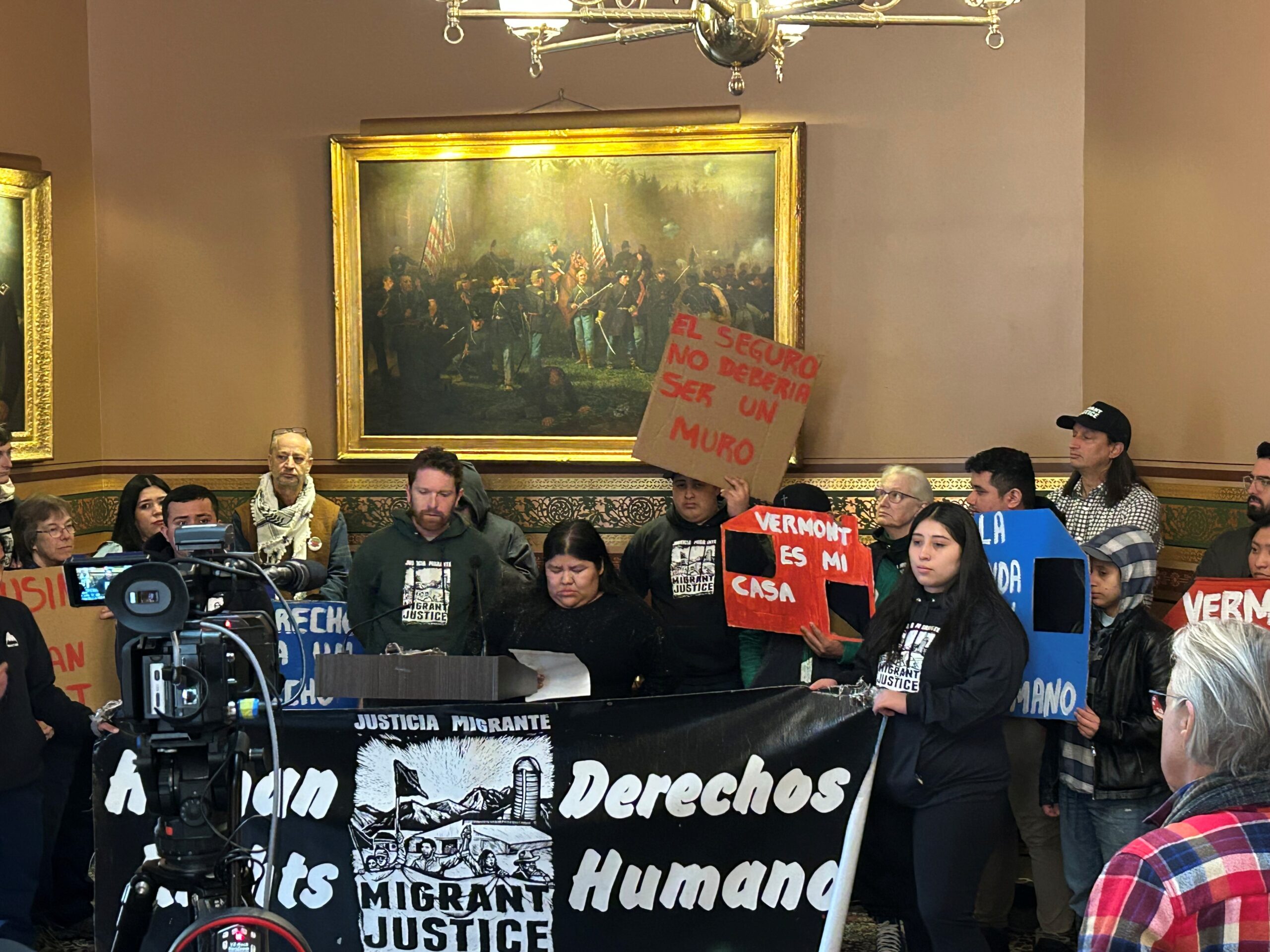
After years of advocacy and organizing, Migrant Justice and affiliate organizations worked alongside legislators to pass the “Housing Access for Immigrant Families” bill during the 2025 session. The act expands Fair Housing and Public Accommodation laws to include Citizenship & Immigration Status as a protected class, which makes it illegal to discriminate against someone because of their citizenship or immigration status in housing and in public spaces. Many community members and organizations around the state came together to advocate for this bill and were dedicated to seeing these protections come into fruition. The bill started in the “House Committee on General and Housing” with sponsorship from key legislators Rep. Leonora Dodge, Rep. Kevin Christie, and Rep. Esme Cole who introduced the bill, and gathered additional sponsorship from 40 legislators. This legislation is crucial for protecting people with varying immigration statuses as many exemplified their vulnerability to housing discrimination.
Throughout testimony, we heard from immigrants who described how in their search for stable and permanent housing they were met with discrimination and roadblocks when they could not provide a social security number on rental housing applications. This would lead to denial for housing and leave immigrant families with limited and often unhabitable living arrangements as their only options. Some of the conditions of the housing available to people without social security numbers were inhumane, over-capacity, and lacked privacy and dignity. Immigrants who were employed with steady income were still denied access to housing opportunities because they did not have social security numbers. Many Vermonters were understandably appalled after hearing these experiences and others were concerned about the burden these new protections would place on landlords. Immigrant family members who worked in the carpentry and construction fields argued that Vermont would not be able to increase housing development if the people building homes did not have a place to live themselves. This argument echoed throughout the legislature and was heard clearly.
landlords must accept different forms of identification to conduct criminal or background checks
prohibits landlords from requiring a Social Security Number on residential rental applications
forbids differential treatment on the basis of citizenship or immigration status
applicants cannot be denied for rental housing for not providing social security number
The law has important components to affirm that Citizenship or Immigration status is not a barrier to having equal opportunity in housing choice free from discrimination as fair housing is legally described. This bill was a major victory to be passed, and the act was enforceable as of July 1, 2025.
If you have experienced discrimination, please feel free to connect to the resources below.
By Meryl Hartmann CVOEO Statewide Housing Advocacy Programs, Intern
The Federal shutdown is over, but it may still take time to restart vital programs
On November 12th, Congress passed a temporary funding bill, known as a continuing resolution (CR) on to end the federal shutdown, funding some federal programs, including the Department of Housing and Urban Development (HUD) through January 30, 2026. This resolution is temporary, still leaving the FY26 spending bill for Transportation, Housing, and Urban Development (THUD), which funds HUD’s affordable housing, community development, and homelessness service programs currently in consideration until the proposed bills by the House and Senate have been reconciled and enacted into law.
The House bill proposed drastic cuts to several programs, while the Senate bill proposed increases to those same programs but not enough to support all Housing Choice Vouchers (HCVs) or Emergency Housing Vouchers (EHVs), differing in billions of dollars of governed funding. For current or prospective HUD tenants, understanding your rights and what to expect during this time is crucial as these spending bills are being reviewed by the federal government.
Major Shake-Up in Homeless Policy
The proposed changes to homelessness policy, detailed in a Fiscal Year (FY) 2025 Continuum of Care (CoC) Notice of Funding Opportunity (NOFO), released by the Trump administration, on November 13th, could significantly impact nearly 170,000 previously homeless individuals by gutting long-term housing programs if enacted. This shift moves away from “Housing First” philosophy, which prioritizes immediate housing without preconditions, towards programs that mandate work and drug treatment, potentially leading to the loss of support for disabled individuals or those over the age of 50 who rely on CoC funds.
The plan, set to begin as early as January 2026, also includes a dramatic reduction in aid for permanent housing and introduces new two-year limits on Section 8 and other subsidized housing vouchers, emphasizing transitional housing instead of permanent solutions. The National Alliance to End Homelessness warns of a forceful shift in community apportionment in funds towards less long-term housing programs and solutions, towards more transitional or temporary shelters, housing, or new Support Services Only initiatives.
Shutdown Risks for HUD-Assisted Households-National Low Income Housing Coalition (NLIHC)
The National Low Income Housing Coalition (NLIHC) closely monitored the shutdown’s impact on HUD programs and the communities they serve. It is important to stay informed and know where to seek help if needed.
Here is what HUD tenants need to know now!
Protection Against Rent Increase or Evictions: HUD voucher holders and public housing tenants are protected from rent increases, voucher termination, or evictions. As a voucher holder, you are only required to pay your predetermined portion of the rent.
Project-Based Section 8 (PBS8) Contracts: Most PBS8 owners have active HUD contracts extending beyond the end of the year, ensuring payments. HUD plans to have staff available to review and renew any contracts that may expire soon. Your lease should include the contact information for your PBS8 Contract Administrator or visit Vermont State Housing Authority staff directory. You are only required to pay your portion of the rent as a PBS8 tenant. Landlords may try to increase rent on tenants living in properties with expiring contracts. If this happens to you, continue to pay your portion of the rent and immediately reach out to an attorney for guidance.
Legal Assistance is Available: If a landlord attempts to increase your rent or evict you, contact an attorney immediately. Free legal help can be found at www.lsc.gov or www.LawHelp.org. When meeting with legal professionals, bring your current lease (if available), any expired rental agreements, and all notices from your landlord or property manager.
For Assistance in Vermont: Contact the Vermont Tenants Hotline with any questions about your rights and responsibilities, habitability issues, or other housing concerns. Our skilled advocates offer consultations, referrals, and navigation support. Call (802) 864-0099 or email vttenants@cvoeo.org.
Visit https://vtlawhelp.org/ for clear civil (non-criminal) legal information and free or low-cost legal help in Vermont. Use the Legal Help Tool (https://vtlawhelp.org/triage/vt_triage), Roadmaps (https://vtlawhelp.org/roadmaps), and VT Court Forms (https://vtlawhelp.org/vtcourtforms) to get guidance, fill out forms, and navigate common legal issues. You’ll also find legal rights information, health care help, community resources, forms, guides, and sample letters. For more assistance, visit the “How We Can Help” page to contact Legal Services Vermont or Vermont Legal Aid.
Take Action:
Email or call your Congress members’ offices to talk to them about the importance of affordable housing, homelessness, and community development resources to you, your family, your community, or your work. You can use NLIHC’s Take Action page to look up your member offices or call/send an email directly!
By Kahlia Livingston, Fair Housing Project Education & Outreach Coordinator
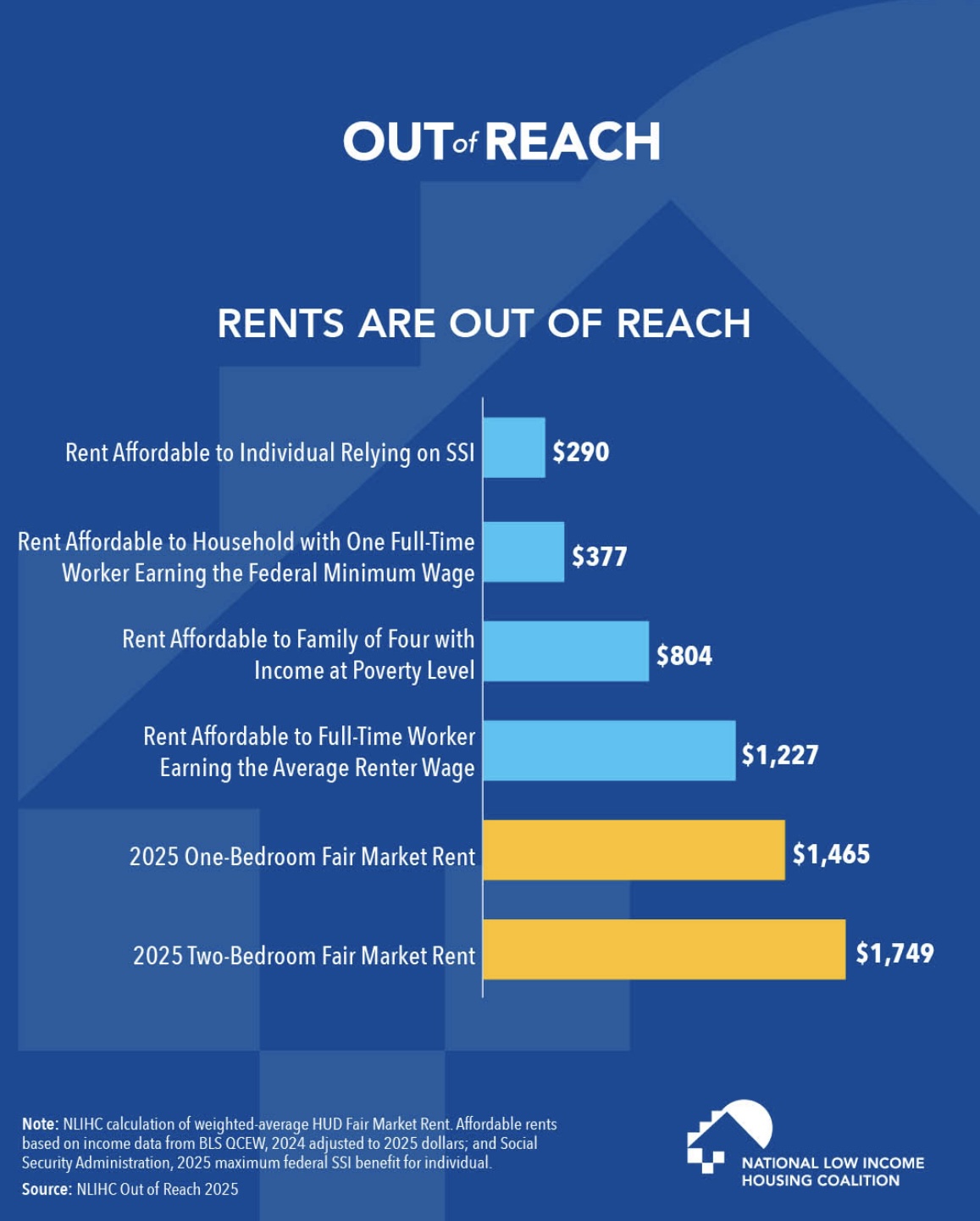
Recent data from the National Low Income Housing Coalition highlights significant housing costs burdens on Vermonters. These statistics show how housing costs have a greater impact on low-income households, many of which are people in protected classes. Protected classes are groups of people who are legally protected from discrimination based on who they are. When a seemingly neutral policy or action negatively impacts some people more than others, we also call this “disparate impact.”
Here are some specific data points:
Vermont Minimum Wage: $14.01
Rent amount that would be affordable for a Minimum Wage worker: $729
This means a Minimum Wage worker would need to work 67 hours/week to afford a modest 1-bedroom rental home at Fair Market Rent
1-Bedroom Housing Wage: $23.43 (This is the amount a person would need to earn to afford a Fair Market Rent unit)
2-Bedroom Housing Wage: $29.73
What story does this tell?
When a person spends most of their income on rent, they have less for other costs, such as food, childcare, transportation, recreation, etc. If someone’s income is very high and they spend 50% of it on housing, that still leaves a lot left over for other expenses. However, when a person’s income is low, 50% is a much smaller amount and doesn’t leave much.
When people have limitations or a crisis that affects their ability to work, take care of themselves or their families, or seek resources or adequate medical care, these housing costs burdens have a great impact on their livelihood, wellbeing, and their communities. The average Vermonter earns $17.67/hour, which would make $919/month an affordable rent. However, the average cost for a studio or one-bedroom “Market Price” apartment in Vermont is between $1,600-$1,800 per month, which is far beyond what is considered “Fair Market Rent.” This means the average Vermonter would have to work 1.7 full-time jobs to afford rent at fair market rate or 2.25 full-time jobs to afford rent at the average Market Price cost without having any income leftover for other expenses. Many people with membership in protected classes may have physical, mental, or emotional impairments, lack of time or flexibility in schedule, or family responsibilities. These conditions can make it harder to access jobs, higher education, or professional development and skill-building opportunities to increase their income and reduce or prevent housing and food insecurity. Many people in protected classes are elderly or have disabilities and have fixed incomes that cannot accommodate the increasing housing costs. This dynamic can create a cycle of poverty that can be difficult to improve without external support. Many rental units throughout Vermont exceed the Fair Market Rent amount.
And it’s not just the cost of housing that can limit members of protected classes. Moving is expensive and many people don’t have the opportunity or time to move into a new apartment every few years once their rent becomes too high. Some people don’t have access to transportation that can get them to and from a job or to an area with more affordable housing. Rising housing costs will ultimately lead to increased housing insecurity and add to the population of unhoused people.
A shortage of affordable housing is a public health crisis that affects everyone. The growing costs to access and sustain housing creates a burden on most people and those with low incomes and barriers are affected the most. It is crucial that we find solutions to address these costs for everyone and protect the most vulnerable. As you reflect on this data, consider the true cost of housing instability and how it impacts your community.
Want more Fair Housing information? Contact us to schedule a Fair Housing Training, “Know Your Rights” Fair Housing and Tenant Skills Workshop, or a community housing discussion: (802) 660-3456 ext 110, email: fhp@cvoeo.org.
Please join us in welcoming CVOEO’s Fall 2025 Housing Advocacy Programs interns, Riley Machanic and Meryl Hartmann.
Riley and Meryl were paired with CVOEO through the University of Vermont’s Communities of Practice course: Nonprofits and Social Change, which matches students to various Vermont nonprofit organizations based on their interests and majors. They are excited to be interning with CVOEO this semester and to contribute to the organization’s advocacy efforts through research, education, and outreach. At UVM, they recognize a need for education because so many students are first-time renters and don’t know their rights and responsibilities as tenants. In addition to individual projects, they will coordinate an educational drop-in workshop designed to engage current and future student renters in Burlington.
Hello! I’m Riley Machanic, a senior in Economics and a 3rd generation UVM student.
In my free time, I like to play chess and spend time with my 2 dogs. I was born here in Burlington and grew up in South Burlington. Needless to say, I have a lot of love for this place and I am so excited for this opportunity to get involved with CVOEO. As an economics major, I have a huge interest in the housing market, its role in Vermont’s economy, and how we got into this current situation. I wanted to intern with CVOEO because they’re fighting for Vermonters’ rights to fair and affordable housing. With the supply and demand of affordable housing so far out of equilibrium, finding an apartment can feel very overwhelming and daunting. CVOEO has so many amazing resources and tools that make housing more approachable and accessible.
This semester, I will be developing an evaluation tool to collect data and feedback on client outcomes and satisfaction regarding the efficacy of the Housing Advocacy Programs’ resources and workshops. Understanding how clients are absorbing and utilizing information is crucial to helping more people in the future.
Hi! Meryl Hartmann, a UVM senior pursuing a bachelor’s degree in Political Science with a minor in Law and Society.
I am originally from Woodbury, Conn., a small, tight-knit town in Litchfield County. Growing up, I often visited Vermont on trips to a family friend’s farm in Orwell, which fostered my early connection to the state. As a political science major, I remain attuned to the shifting political landscape and its challenges for the non-profit sector in this country. My commitment to human rights advocacy motivates me to contribute actively to CVOEO’s mission of serving the Vermont renter community through education, support, and outreach. I believe that all Vermonters should have equitable access to these supportive resources and fair housing. As a student renter in Burlington, I am passionate about raising awareness in the Vermont community about the issues that affect renters, as well as their rights and responsibilities.
My main project for this semester is designing materials in the form of research-based social media posts and blog posts to help renters better navigate the Vermont housing landscape, which can be overwhelming, especially for low-income tenants in today’s challenging climate.
By Kahlia Livingston, Fair Housing Project Education & Outreach Coordinator
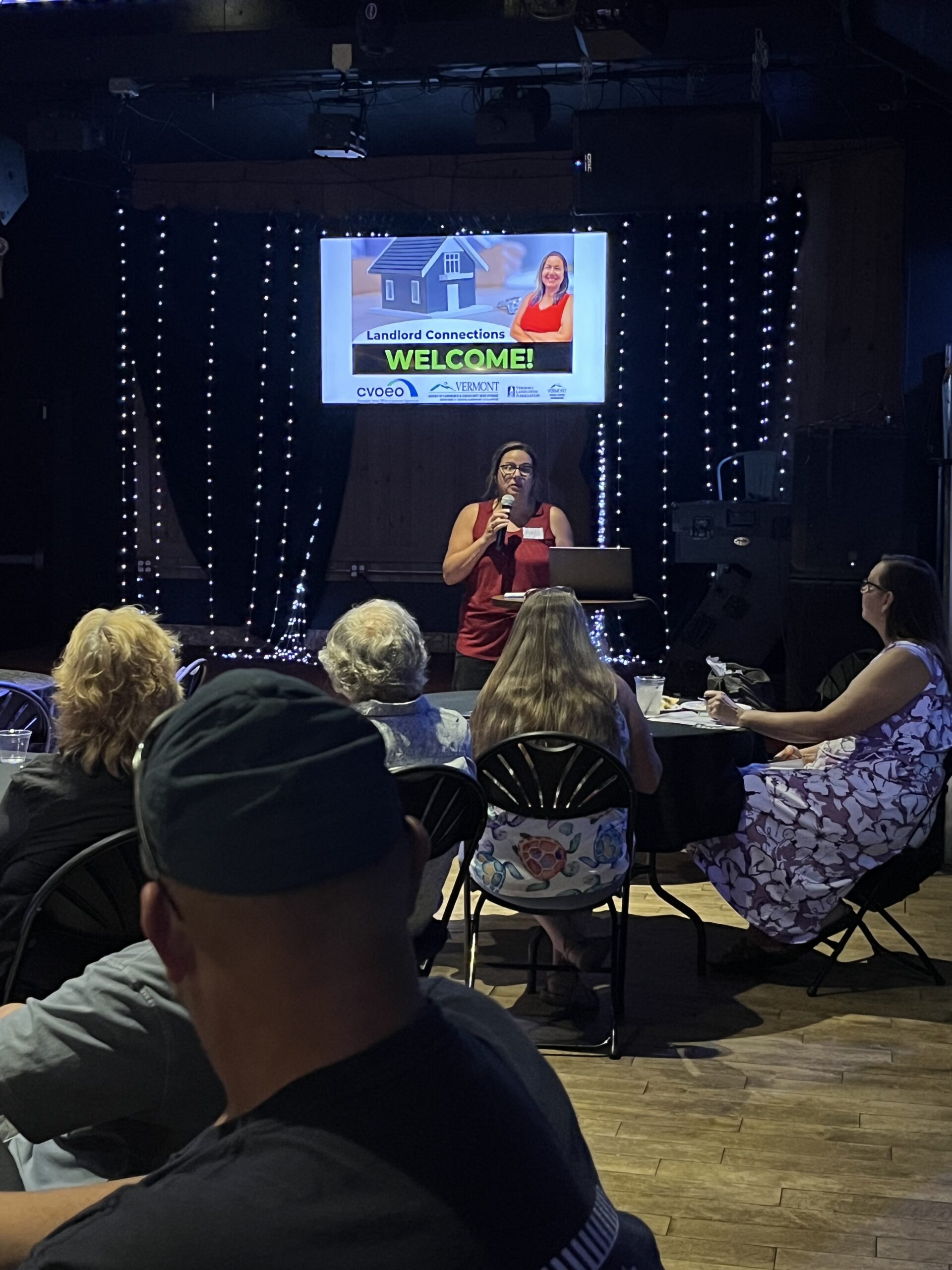
CVOEO’s Fair Housing Project recently held three Landlord Connections events to connect with landlords around the state and provide a space for networking, learning about housing provider concerns, and sharing housing resources available to improve housing conditions and help sustain tenancies. More than 70 housing providers met up in Middlebury, St. Albans, and Burlington for presentations and discussions with CVOEO’s Fair Housing Project and regional Community Action agencies, Vermont Department of Housing & Community Development, Vermont Human Rights Commission, Vermont Landlord Association, Supportive Services for Veteran Families, Burlington Lead Program, and others.
As many may know (and some may not), we are experiencing a worsening housing crisis throughout the nation that is a prominent concern in our great state. Vermont has a tight housing market with low rental vacancy rates in most counties as well as a shortage of affordable housing. Homeownership is a dream for many. However, this desire is not a one-size-fits-all for every Vermonter. Many people also enjoy the benefits that come with renting, which can include flexibility, fewer home maintenance responsibilities, and shorter commitments to an apartment or location. Since many people rely on rental housing and some prefer it, our communities need dedicated housing providers with specific qualities to help us improve the housing challenges that we are navigating. Low-income renters with membership in protected classes under fair housing laws tend to have barriers that can interfere with their access to and retention of affordable housing. These people are especially vulnerable to housing discrimination and insecurity.
Through our work with renters and housing providers, we have seen how clear and respectful communications can help foster positive relationships and successful tenancies.
What do we need in a housing provider?
Empathetic and Trauma-informed:Some landlords may not have lived experience of housing insecurity, houselessness, mental illness, having a disability or criminal background, being a survivor of sexual assault, abuse or stalking, (etc.) however, it is helpful for people providing housing to have knowledge, empathy, and tools for supporting these human conditions.
Cultural awareness and inclusivity: There are several of languages spoken by residents statewide with people from various cultures and countries enriching our Vermont communities. Housing providers should be knowledgeable and well-practiced in serving renters with different demographics than themselves or their families.
Good communications and customer service skills: Landlords are providing goods and services, so building rapport with renters is crucial to curating and maintaining a business that thrives.
Low to no profit-centered attitude: Renting is a business that generates income for the housing provider, but in what ways can renters benefit from the money they are investing in monthly rent payments? These costs add up and tend to leave renters with more losses than gains. Co-op housing can allow renters to gain equity in the homes they reside in as the housing market fluctuates. Oregon’s Limited Equity Co-op bill is a useful model that exemplifies how this form of housing benefits property owners and renters: “the project is founded on a shared ownership structure that combines a Community Land Trust with a Limited-Equity Co-op. The benefit of this cooperative model of housing is that it gives the residents more voice in their housing, greater financial stability and security, and a sense of pride as a part-owner of their own housing as well as responsibility for it” (HB 3232 Limited Equity Co-ops, Oregon Legislature). These properties also have a tax-exemption which can relieve financial burden on property owners and residents of the homes. Affordable housing benefits everyone. According to PolicyLink, if rents were affordable throughout the nation during the 2020 pandemic, we could’ve saw $141 Billion of disposable income spent in local communities to revitalize the economy (OUR HOMES, OUR FUTURE: Building the Power to Win Rent Control for Stable Communities, PolicyLink). Do we live in an economy run by capitalism? Yes. Should the human need for housing be driven and controlled by the need to make as much money as possible? …what do you think?
At the Landlord Connections events, housing providers discussed the many challenges they are facing, such as rising taxes and other costs, difficulty finding contractors for needed repairs, and communications with tenants. It was helpful to hear these concerns to better understand what is needed to improve the renting housing market and stock.
What do housing providers need?
Accessible resources for home rehab and habitability needs: Being a landlord is a business, and landlords should be able to cover their costs. However, this becomes problematic when the rising costs exceed tenants’ ability to pay or when rents are set to make the highest amount of profit. With an aging housing stock, housing providers need access to funds to bring dwellings up to code and habitable for long-term tenancies.
Informed & responsive tenants: Renters who know their rights and responsibilities are aware of the importance of their role as a tenant and can advocate for their needs and any concerns regarding the property. This can decrease issues in the home worsening and burdening both the tenant and landlord. CVOEO’s VT Tenants Program provides free Renters Workshops to improve renter education and skill building when navigating rental housing. This resource allows tenants to earn certificates that some housing providers view as an adequate credential when reviewing rental applications.
Communicative Renters: Effective communication between a renter and landlord is key. Establishing a written rental agreement that clarifies all expectations for the tenant and housing provider is necessary before a tenancy starts. There are resources in our community to help facilitate conversations. Requests for interpretation services can be submitted through AALV or CVOEO’s Office of Racial Equity and Community Inclusion (ORECI) and Burlington’s Community Justice Center can support with conflict mediation with the Conflict Assistance Program. Additionally, tenants’ flexibility in modalities for communication can be beneficial to communicate with housing provider efficiently and in a timely manner.
Ultimately, people should have accessible resources to live in their preferred housing. Whether people rent or own, fair housing law states that equal opportunity in housing choice is a right regardless of barriers or limitations. Housing providers should be well informed about resident needs and expected to develop healthy, professional, and proactive relationships with their tenants to support successful tenancies and the well-being of renters of their properties. The landlord-tenant relationship comes with complexity between the needs of all parties involved and it is crucial to meet people where there are and use best practices to meet such needs.
Want to learn more? Contact us to schedule a Fair Housing Training or “Know Your Rights” Fair Housing and Tenant Skills Workshop: (802) 660-3456 ext 110, email: fhp@cvoeo.org
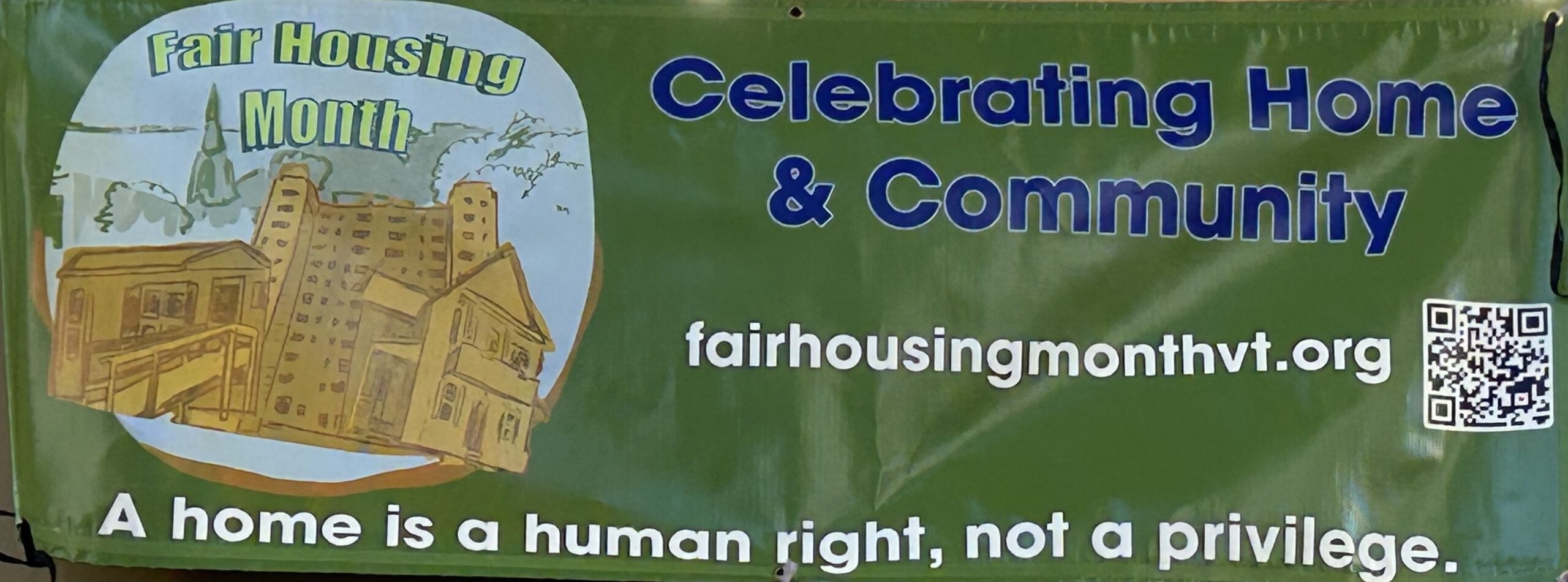
We’ve officially wrapped up another successful and impactful Fair Housing Month. During this time, we celebrated the progress we have made towards addressing historical discrimination in housing while also taking time to mourn the regression we have seen and gather with each other to discuss more ways to enforce fair housing laws, prevent illegal housing discrimination, and be vigilant in protecting our most vulnerable community members.
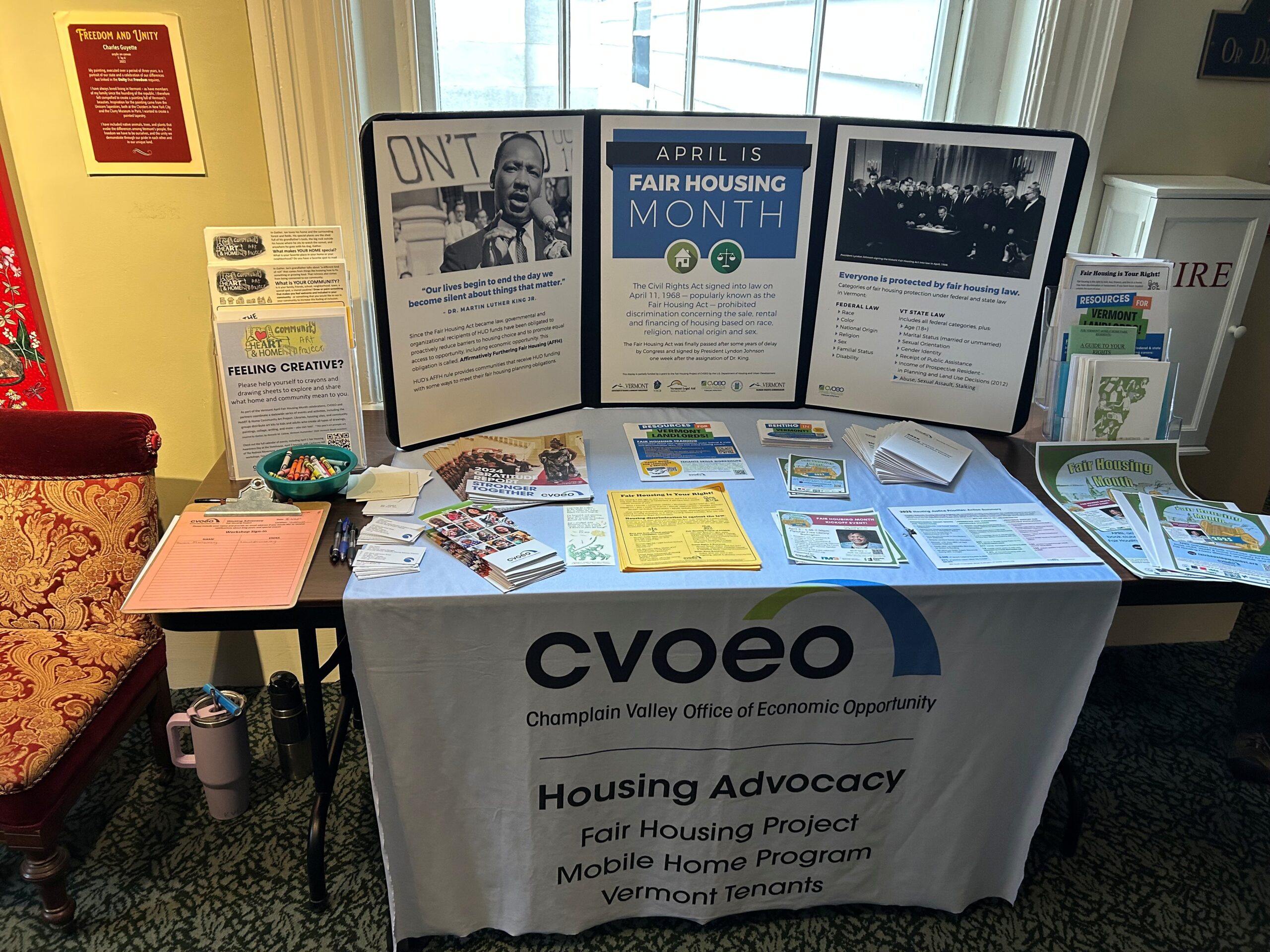
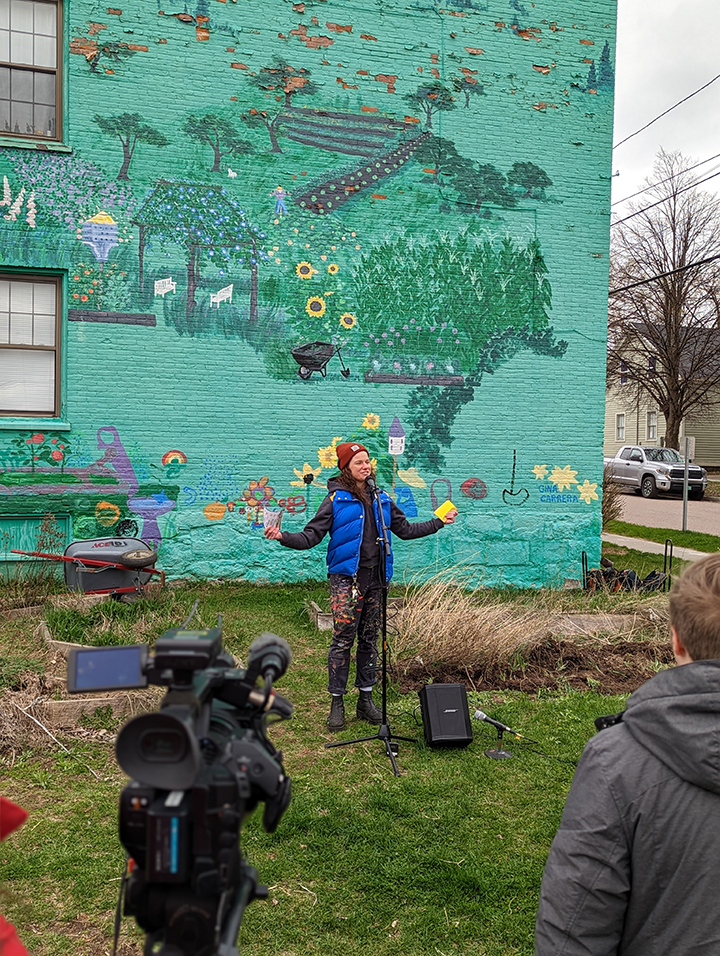
Although April is Fair Housing Month, people are impacted by illegal housing discrimination all year long and we must continuously do fair housing advocacy, enforcement, education and outreach to rectify the plight of those who have been disenfranchised, oppressed and traumatized by housing injustices. We started the month with a Fair Housing Awareness Day at the Vermont Statehouse in collaboration with the Vermont Human Rights Commission. Throughout the day, we shared fair housing resources and information about illegal housing discrimination and engaged in discussions about the reality of our housing landscape and its impact on Vermonters. A Revolutionary Press was onsite making bookmarks with hand-set type and on a hand-operated letterpress for legislators, statehouse staff, and visitors. Kahlia Livingston, Fair Housing Project Education & Outreach Coordinator and Jess Hyman Associate Director of CVOEO’s Housing Advocacy Programs delivered testimony alongside Big Hartman, Executive Director of the Vermont Human Rights Commission in front of the House Committee on General and Housing and Senate Committee on Economic Development, Housing and General Affairs. We explained why it is crucial for the State to increase funding for fair housing enforcement and pass future housing related policies through a fair housing lens emphasized the importance of the need for rent stabilization, protecting communities of people vulnerable to housing discrimination, and building affordable housing that is accessible; and we spoke on behalf of the Housing Access for Immigrant Families bill (H.169) to include “Immigration and Citizenship Status” as a protected class. The initial language of that bill made it unlawful to require social security numbers in rental applications as many immigrants face a barrier to accessing housing if they do not obtain a social security number. Advocates from Migrant Justice were present doing testimony and a press conference to encourage support if this bill. Students from Winooski and Colchester high schools joined the testimony to share personal stories about how the current statewide housing crisis affects their families. Following Fair Housing Awareness Day, Vermont’s governor, Phil Scott issued a statewide proclamation in support of fair housing laws and their enforcement. The Vermont Legislature further committed to Fair Housing Month in a concurrent resolution and the Town of Hinesburg and the Town of Burlington have also recognized the necessity of fair housing laws and pledged to carry out implementation. The 2025 Fair Housing Proclamations can be read here.
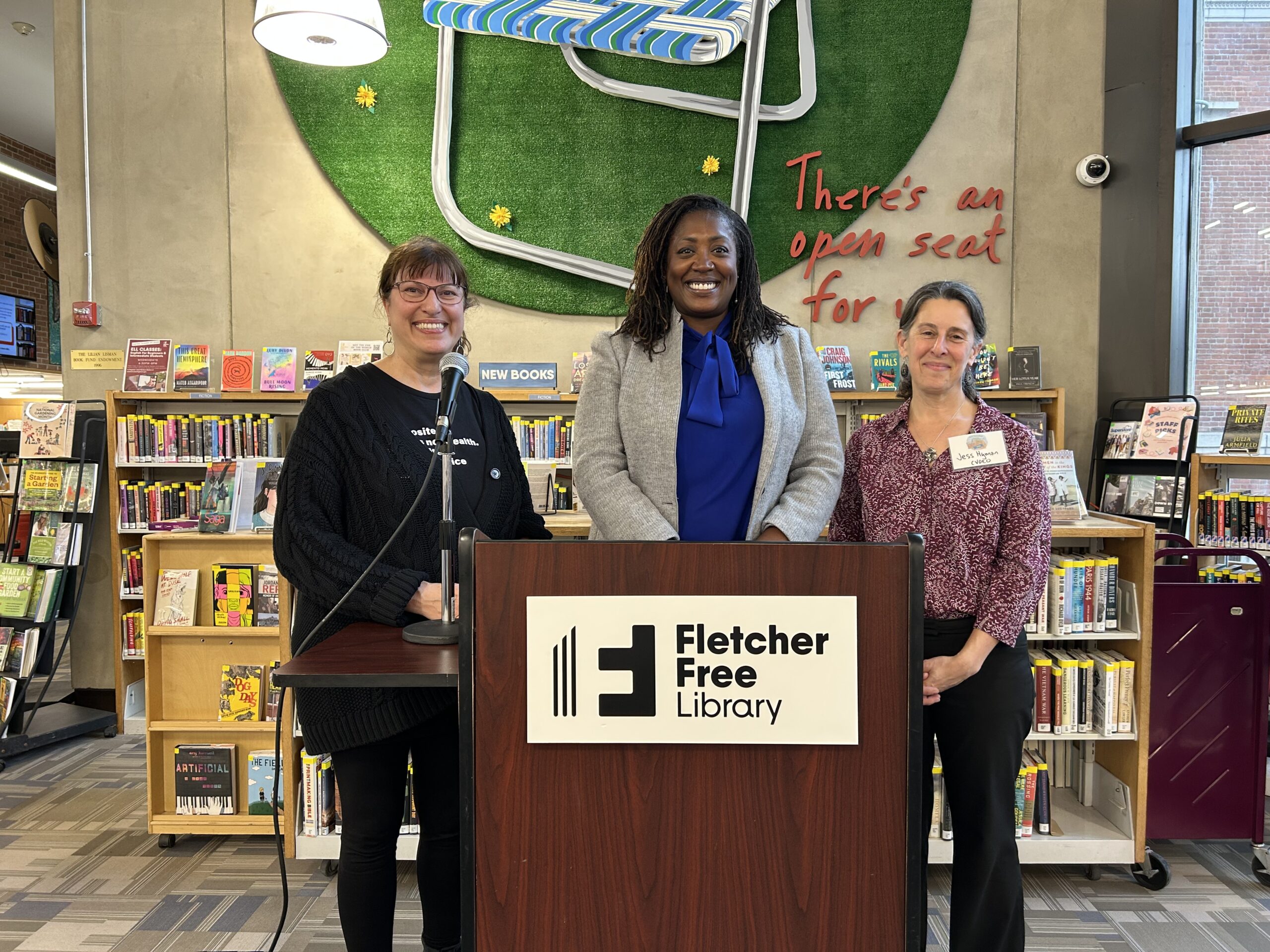
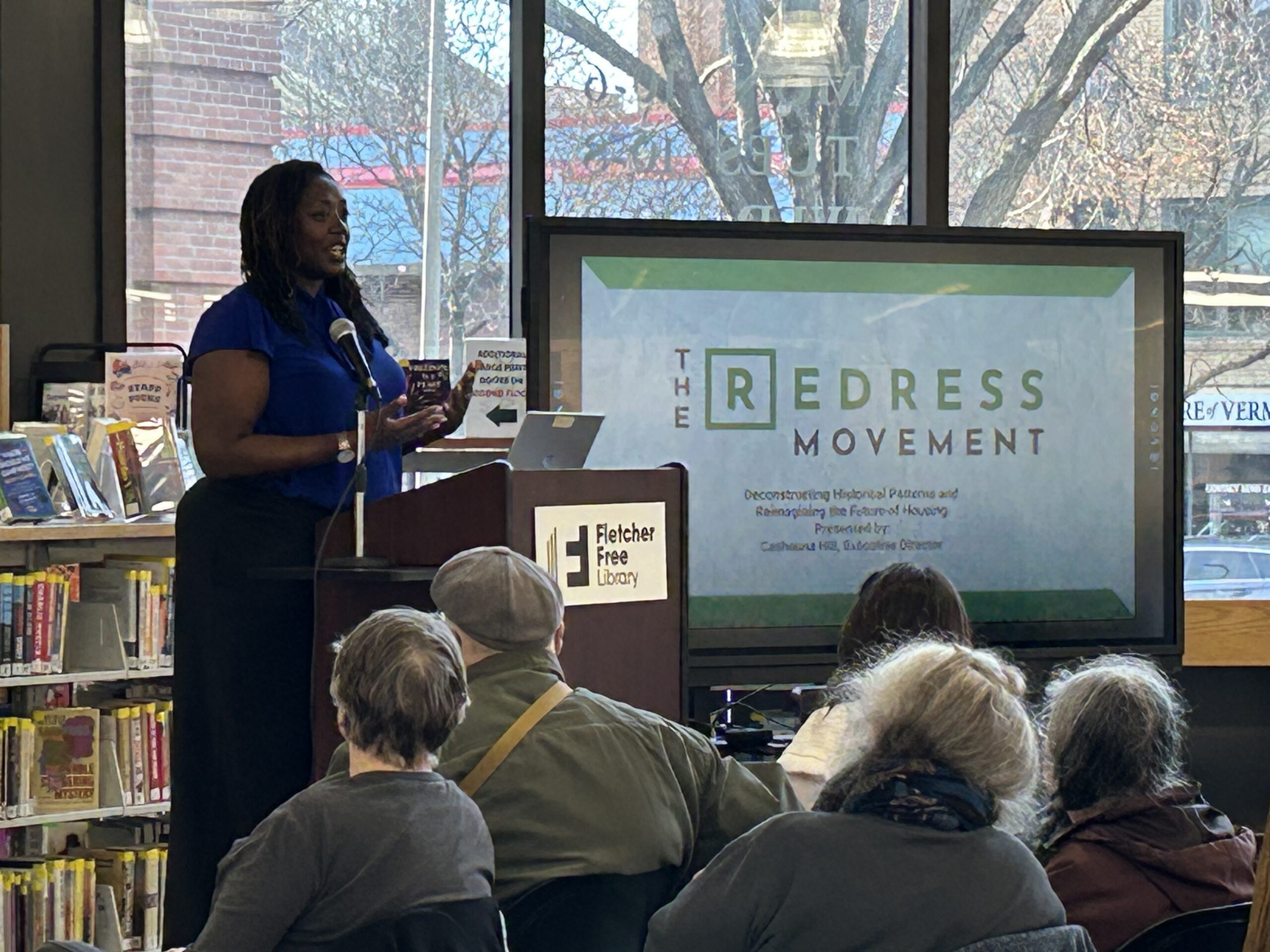
On April 3rd we hosted a kickoff event to celebrate Fair Housing Month with special guest Cashauna Hill, Executive Director of the Redress Movement. The evening featured a reception with refreshments and an opportunity to explore the inspiring “Voices of Homes” storytelling exhibit by Corrine Yonce who opened the event with a few words about the project. Following the reception, Cashauna delivered an engaging and inspiring keynote address and discussion. She presented information about her past and current work to advocate, educate, and litigate for the communities she serves to resolve harms from illegal housing discrimination. Cashauna shared historical and modern examples of housing segregation and breaches of fair housing laws then discussed the established settlements for these acts. Her dedication and contributions to housing justice were inspiring and motivating to our attendees as we mobilize and continue to navigate an ongoing housing crisis where discrimination is prevalent and increasing. This event was in partnership with the Northeast Vermont REALTOR® Association and the Fletcher Free Library and sponsored by the Land Access and Opportunity Board. The keynote address by Cashauna Hill is available to watch here: https://www.cctv.org/watch-tv/programs/fair-housing-month-kickoff-keynote-cashauna-hill
The Fair Housing Friday Webinar Series resumed this year with three new webinars featuring interviews with housing advocates around the state hosted by Kahlia Livingston. The series included an array of topics: we discussed barriers that tenants face and trends in the housing needs of renters, the most recent Housing Needs Assessment and what the projected needs tell us about Vermont housing, and what promotion and commitment to fair housing looks like through a homeownership perspective. The interview guests are dedicated housing educators and advocates from various organizations in Vermont that provide housing services. Watch those interviews here and read the descriptions below:
“What Do Tenants Need”: Vanessa Bonebo, Executive Staff Assistant of the Vermont Human Rights Commission and Karin Ames, Housing Education Coordinator at CVOEO discussed their experiences working as firsthand resources for tenants around the state dealing with housing barriers and illegal housing discrimination. They both do amazing work that is critical to addressing the harms and trauma that stems from these egregious offenses.Click Here to Watch!
“Let’s Crunch the Numbers: Addressing the Vermont Housing Landscape” – Nate Lantieri, Research Coordinator for the Vermont Housing Finance Agency joined us to discuss the most recent Housing Needs Assessment that was published last year (2024). We examined what the collected data tells us about our statewide housing necessities. Click Here to Watch!
“Fair Housing in Homeownership” – Joined by Ana Mejia, Homeownership Specialist at the Windham & Windsor Housing Trust and Julie Curtin, Director of Homeownership at the Champlain Housing Trust who discussed homeownership programs available through their organizations. We examined the importance of accessible resources for homeownership and their efforts to rectify the harms of historical housing segregation and discrimination. Click Here to Watch!
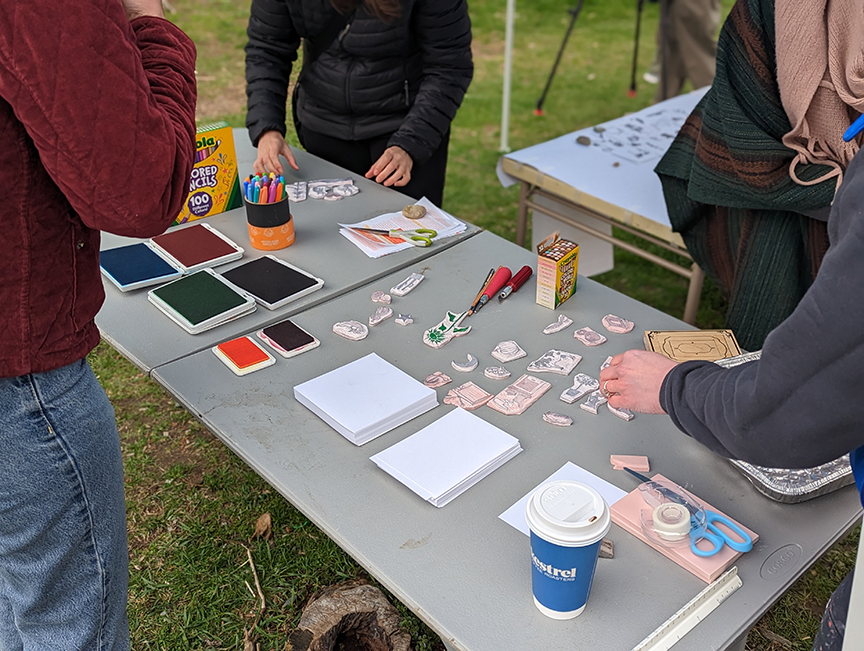
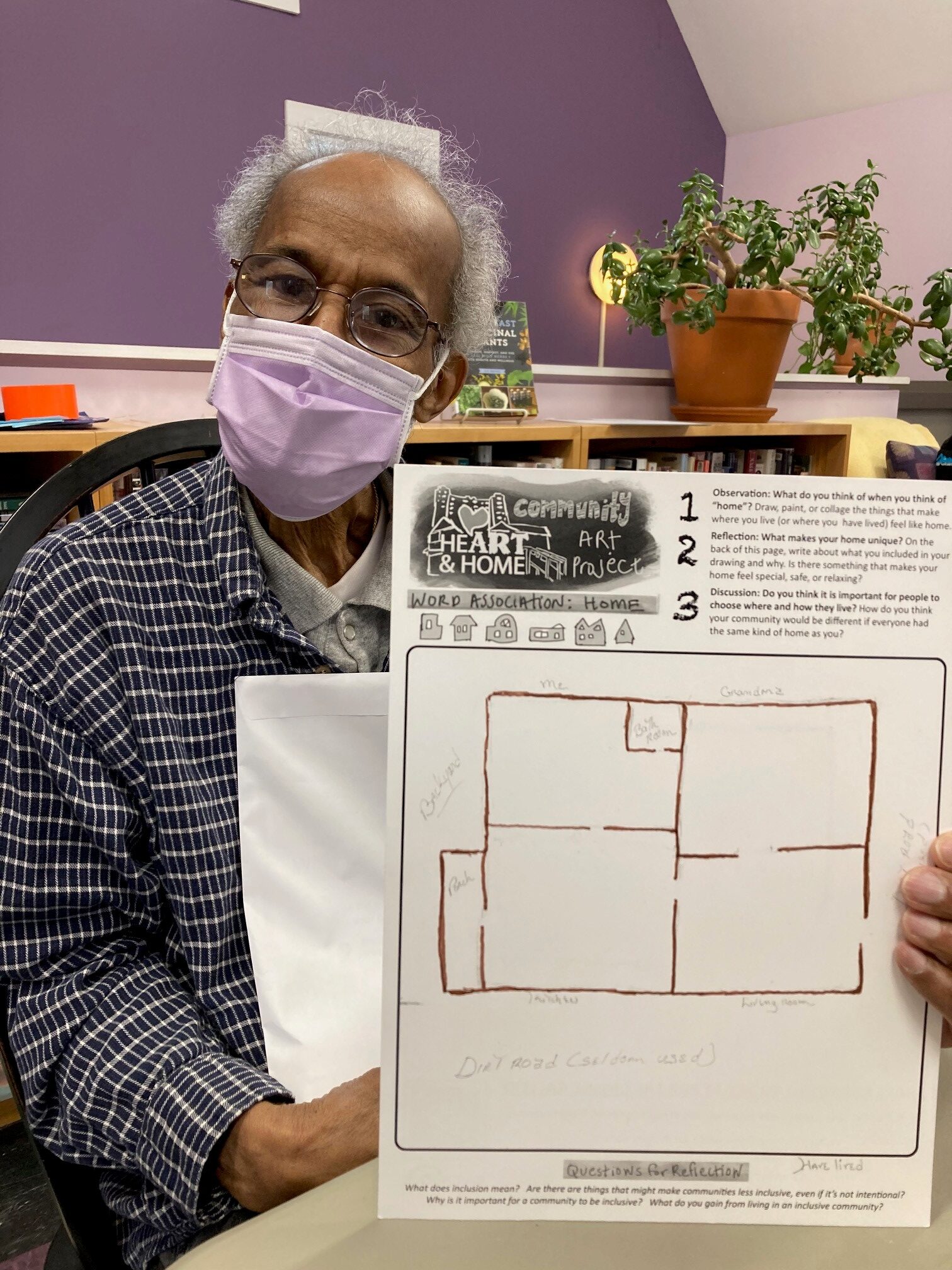
As this year’s fair housing month adjourns, we extend thanks to our partners, sponsors, webinar guests, residents of: Grand Way Commons, Decker Towers, and Wharf Lane, and all facilitators of fair housing month events and the participants who attended. We greatly appreciate everyone who requested Art Kits that include the HeART & Home prompts, and those of you who reached out to share your completed art pieces, and housing events to be included on the fairhousingmonthvt.org website. April was filled with comradery, education, advocacy, art-making, and joyful activities with residents all throughout the state. We hope that these events have increased awareness and passion to achieve housing justice and we’re looking forward to upcoming collaboration and fair housing efforts for the rest of the year. Stay updated with Fair Housing news and events by following our thriving communities social media pages on Facebook, and Instagram (@thrivingcommunitiesvt). Connect with us on social media or send us an email at fhp@cvoeo.org.
–Resources for people who are homeless (including unsafely housed ) or at risk ofbecoming homeless
Chapter 3: What is affordable housing:
-What options are there for people who need help paying for their housing, but are not currently homeless?
Chapter 4- Avenues for Advocacy
– What can you do about the affordable housing shortage?
Affordable rental housing (public housing), housing subsidies, mobile homes and homeownership programs.
When we talk about affordable housing, there is often confusion by what we mean. As we covered in Chapter 2 of Housing Demystified, people unfamiliar to the housing advocacy landscape may have some confusion about the difference between emergency housing options – such as shelters – and subsidized housing options, which offer more permanent, subsidized housing solutions. The important thing to remember as you read along is that affordable housing, like emergency housing, can look and be a lot of different things.
What is “affordable housing”?
ffordable housing is generally defined as housing where the resident is paying 30% or less of their household income on housing costs, but even this “rule” is not hard and fast. Most often when we talk about affordable housing, we are referring to subsidized rental housing. But affordable housing may also be “naturally occurring,” or developed privately without federal or state assistance. We will be focusing on intentionally developed affordable housing for this chapter.Some people use “subsidies,” or financial help, to assist in paying their rent. Subsidies can be attached to a particular building, so the “rental unit” or apartment is “subsidized” (project-based vouchers). Housing subsidies may be given to a tenant so that the tenant may use it for a rental of their choice (as is the case with a Housing Choice Voucher). Below we will cover both subsidized rental housing and tenant-based subsidies.
Types of Affordable Housing
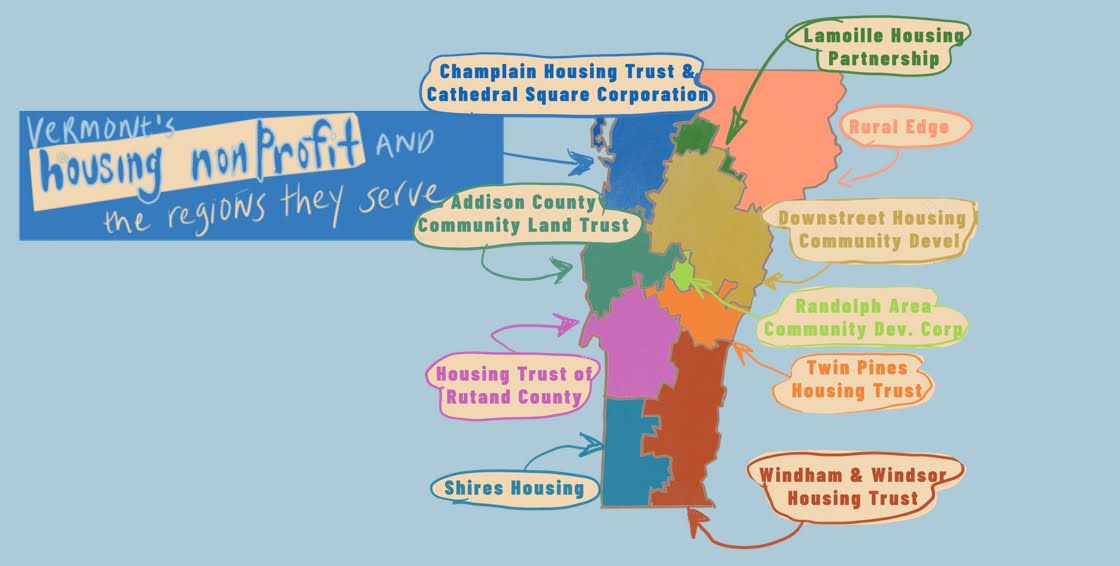
Nonprofit Housing Providers: These are nonprofit organizations across Vermont that receive a variety of funding sources – private and public – which allows them to partner with housing developers to create housing*. Many of these programs provide both rental housing and homeownership programs. Almost all affordable housing providers have a significant waitlist, so would not be a place to go if you are currently in a housing crisis. While the map below includes some of the larger housing nonprofits and the regions they serve, you can access a searchable list of all the affordable housing options in Vermont at HousingData.org
*Some affordable housing providers also develop housing. Affordable housing development is complex, almost always is built with multiple funding streams, and are often partnerships between two or more developers and/or funders
Eligibility to live in affordable rental housing is determined by income, and affordable housing providers may have different requirements for eligibility.
Even within the the category of non-profit affordable rental housing, there are different kinds of housing providers
Vermont hosts a few housing trusts, such asChamplain Housing TrustandWindham and Windsor Housing Trust (among others). Housing trust funds are established sources of funding for affordable housing construction created by governments in the United States. Housing developed by housing trusts are permanently affordable.
Some affordable housing providers have specialized programs. Of course, there are affordable senior housing providers likeCathedral Square, housing programs for veterans, housing for people in recovery, and for folks with mobility impairments.
Even within senior housing, there are options:
Independent Living means that while a person may need to live in a community catered to their specialized needs -such as with other people who are 55 and older, or with other people who have assistive devices to move through the world (like wheelchairs, ventilators, or hearing aids), or with other people who have unique mental or emotional needs- they can meet their basic needs on their own. Independent Living facilities mean just that- each renter can choose when they have their meals, how they schedule their day, when they leave and return to their home. They are also responsible for their basic needs, such as keeping their apartment tidy, removing their garbage, preparing their own meals if they aren’t attending group meals, and arranging their own transportation to appointments.
Assisted Living describes housing where the resident needs more intensive care, oversight and support. Assisted living facilities can provide nursing care, housekeeping, and prepared meals as needed. Assisted Living housing is more structured than Independent Living, and may have a more rigidity in how a tenant schedules their day.
Memory Care facilities are a form of residential long-term care that provides intensive, specialized care for people with memory issues. Communities typically feature secure environments where staff can closely monitor the health of the residents.
Housing subsidies – such as the Housing Choice Voucher (otherwise known as Section 8 Voucher), and more recently the Cares Voucher Program- provide financial support for rental housing that the tenant can choose themselves, providing the rent falls within individual program guidelines and meets housing quality standards. Tenants with housing subsidies can rent from private or non-profit landlords. Most often, one would apply for housing subsidies through their local housing authority or Vermont State Housing Authority.
It is important to note that in Vermont, our state Fair Housing Protected Classes includes receipt of public assistance. This means that in Vermont, it is illegal to discriminate against folks because they are using a housing subsidy, including Housing Choice Vouchers (or Section 8), to afford their living expenses.
Public Housing Authorities (or PHA) are a form of affordable rental housing, sometimes referred to as “public housing” because they are financed by public funding. Vermont has 8 regional Housing Authorities in Barre, Bennington, Brattleboro, Burlington, Montpelier, Rutland, Springfield, and Winooski, and one state housing authority. Housing Authorities provide affordable rental housing and Housing Choice (or Section 8) vouchers. Housing Authorities also provide project-based housing vouchers, or vouchers that are tied to specific properties.
Do you already have a housing agency or a site in mind you would like to work with? Reach out directly to that housing agency to ask about their availability and the length of their waitlist. Almost all housing agencies have waitlists, so it’s best to apply to several options if your housing needs may become urgent in the near future.
To find affordable rental housing, go to HousingData.org – select the region you are looking for, and on the side column you can select any needs you have for your housing.
Once you have a few options selected, check to see if you meet the eligibility guidelines. You can check to see if you meet their Income Limits by using this HUD Income Limit Checker. For properties with waitlists, call and ask to get on the waitlist, and ask how long they think it may be (they cannot know for sure). You should also ask if they know of availability at other properties.
Many affordable housing sites accept this Common Rental Application. If you are applying to more than one property, it may be helpful to have a few copies filled out in advance.
If you are facing barriers to finding housing, such as a past eviction, no landlord reference, or overcoming a criminal record, CVOEO’s Vermont Tenants’ Finding Housing Class goes over how to navigate these conversations and how to conduct an organized housing search.
Many people face barriers applying for affordable housing
The Finding Housing class may help navigate barriers to finding housing, but you don’t actually walk away from the class with housing options. Housing is limited and hard to find.
You may also notice it’s challenging to find affordable housing in Vermont if you aren’t able to do the following:
Speak English
Access to the internet, a computer, or a printer
Have a phone
Have a mailing address
Understand and navigate complex eligibility requirements and be an expert at their own income sources (for some people, that can be from a variety of subsidies which may or may not count toward income, including SSI, 3Squares, unemployment, ReachUp, and more)
Have the bandwidth to keep track of multiple housing opportunities
Understand rights under Fair Housing and Landlord-Tenant Law, and the confidence to enforce them
Still, having access to all those things does not ensure one’s access to housing. We are in a tight housing market. That means that the people who already face high barriers to housing access and who have historically been denied equal access to housing opportunities have an even harder time getting the housing they need.
Need help finding housing?
So what do you do if you need help looking for housing? It depends on what barriers, or challenges, make it hard to apply for housing. If you have a caseworker, you can ask them what assistance they can offer in your housing search. You can also call 211to ask what your best option might be. (211 can direct you to other resources as well, such as food, fuel assistance, transportation and more!)
Translation Services: Many housing providers offer translation and HUD requires that programs receiving federal funds provide “meaningful access” to Limited English Proficient (LEP) persons. In other words, if you or someone you know needs assistance understanding English to find and apply for housing, housing providers receiving federal funds should be able to offer extra support. And it doesn’t hurt to ask!
Disability:Vermont Center for Independent Living (VCIL) can help Vermonters with disabilities access housing, including offering housing support. Remember, disability can be broadly defined an mean a lot of different things. If the ways you think, communicate, process information or move substantially limits your “major life activities,” you should consider accessing resources through VCIL. Major life activities can include accessing housing, job opportunities, and getting meals.
Aging: We all age! And as we age, our abilities and needs change. Deciding when you need housing support and what that could look like can be hard. Our seniors came of age with different technologies than the ones we rely on today. Fortunately, Age Well Vermont has a hotline for seniors that you can call to talk about your options. You can call 800 642 5119.
Flight from domestic violence: Domestic Violence (DV) Organizations across Vermont support people fleeing domestic violence through their emergency hotlines, emergency housing programs, and assist program participants find stability through assisting with housing applications, cell phone access, clothing donation services, transportation access, legal services and more.
The Violence Against Women Act (VAWA) also offers additional support and protections to survivors of domestic violence. The Violence Against Women Act (VAWA) is a federal law that, in part, provides housing protections for people applying for or living in units subsidized by the federal government and who have experienced domestic violence, dating violence, sexual assault, or stalking, to help keep them safe and reduce their likelihood of experiencing homelessness. Under VAWA, someone who has experienced domestic violence, dating violence, sexual assault, and/or stalking:
Cannot be denied admission to or assistance under a HUD-subsidized or assisted unit or program because of the VAWA violence/abuse committed against them.
Cannot be evicted from a HUD-subsidized unit nor have their assistance terminated because of the VAWA violence/abuse committed against them.
Cannot be denied admission, evicted, or have their assistance terminated for reasons related to the VAWA violence/abuse, such as having an eviction record, criminal history, or bad credit history.
Must have the option to stay in their HUD-subsidized housing, even if there has been criminal activity directly related to the VAWA violence/abuse.
Can request an emergency transfer from the housing provider for safety reasons related to the VAWA violence/abuse committed against them.
Must be allowed to move with continued assistance, if the survivor has a Section 8 Housing Choice Voucher.
For more information on VAWA Housing Rights and to access the Self-certification form (Form HUD-5382), visit here.
Remember, anyone can experience domestic violence. DV is a pattern of violence or intimidating behaviors that someone uses to have power and control over an intimate partner. Domestic violence includes physical violence, but also can be emotional, financial or sexual abuse. If you or someone you know is facing unstable housing because of unsafe behaviors of their partner, reach out to one of these organizations.
To that end, most emergency housing programs provide assistance and case management to help people shift into stable housing. Of course, as we covered in Chapter 2, to access those resources, most often you must meet HUD’s definition of homeless or at risk of homelessness. That means there is a large population of people who either cannot access those resources without falling into a more precarious situation than they are already in, or they cannot access those resources because of the stigma associated with the term “homeless.”
Affordable Homeownership
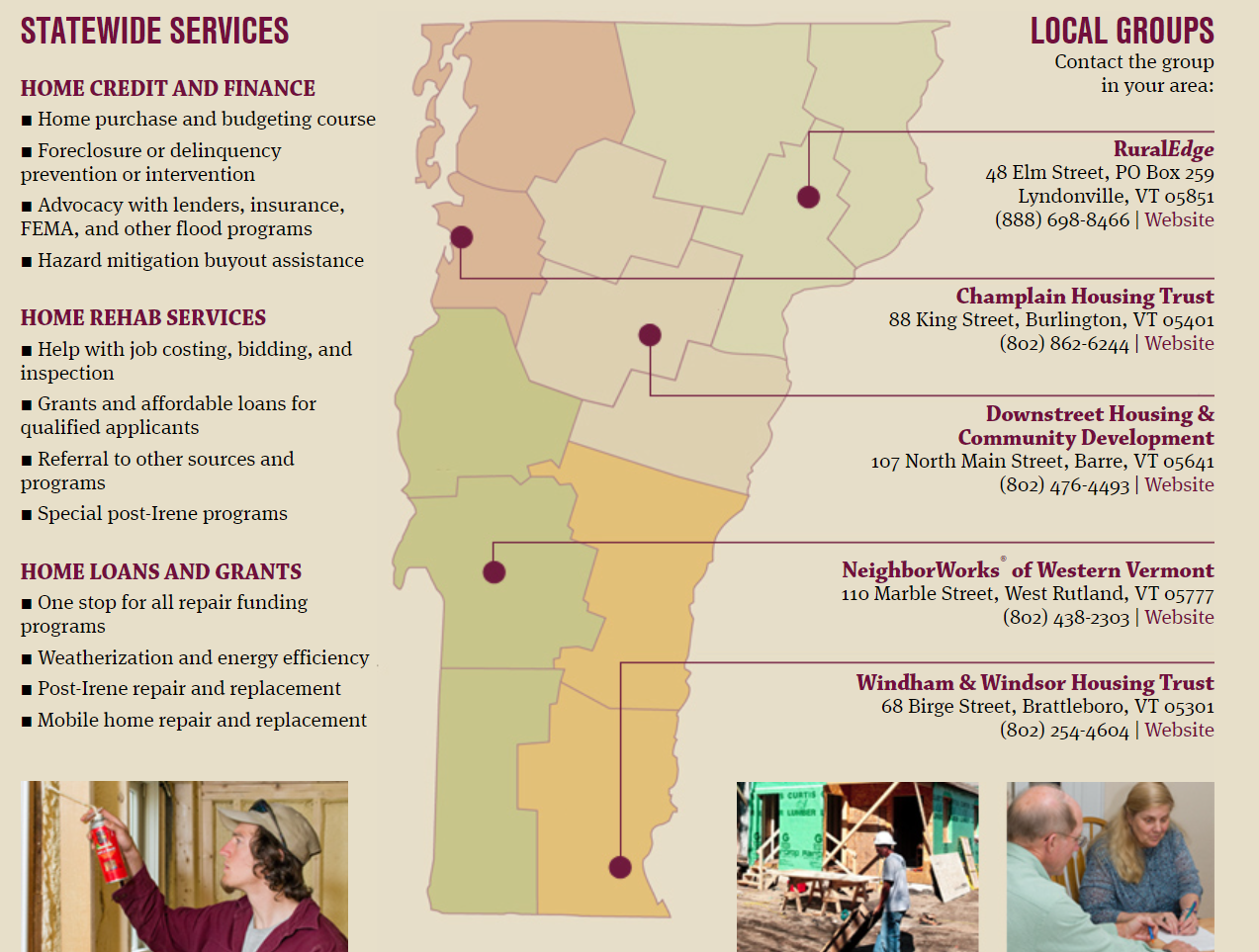
Vermont has various not-for-profit groups that help guide prospective homebuyers through the homeownership process. These groups provide classes and educational support on topics like home purchase budgeting, foreclosure prevention and mobile home repair.
There are several organizations serving the full state of Vermont which offer home buying support.
Vermont Housing and Finance Agency (VHFA): Vermont Housing and Finance Agency, or VHFA, provides homebuyer programs, including down payment and closing cost assistance. VHFA works with individuals and banks to help people within a certain income bracket purchase their home with fixed interests rates and sometimes down payment assistance. They have several unique mortgage loan programs targeting specific potential home buyers. Prospective home buyers access these programs through one of the banks that VHFA partners with.
U.S. Department of Agriculture Rural Housing (USDA): The U.S. Department of Agriculture Rural Housing program of Vermont also provides homebuyer programs, but specifically in rural communities. Rural communities can have unique needs that make affordable housing challenging. For instance, mobile home communities often grant residents the comfort of home ownership, but residents most often are renting the land their home is on, which can make their needs often overlooked when it comes to state housing policies. Rural communities often lack the infrastructure to support housing development, such as sewer systems, and may have limited access to Wi-Fi and cellular service. These barriers are things to consider when we participate in housing advocacy. Tune in for Chapter 4
Green Mountain Habitat for Humanity serves Lamoille, Chittenden, Franklin and Grand Isle counties. Habitat for Humanity is an organization people are often most familiar with when we talk about affordable home ownership. That is in part because it is a international organization, and there are fulfilling opportunities to volunteer in the home construction process. But Habitat for Humanity also has a unique housing model in that the people who participate in the Habitat program are asked to participate in building the house. This is referred to as sweat equity. Habitat homebuyers help build their own homes alongside volunteers and pay an affordable mortgage. Despite its name recognition and innovative model, the Green Mountain Habitat for Humanity has a limited scope of work. In 2023, the Green Mountain Habitat for Humanity has 7 projects planned, 5 single family homes and two duplexes.
Affordable Housing Funding
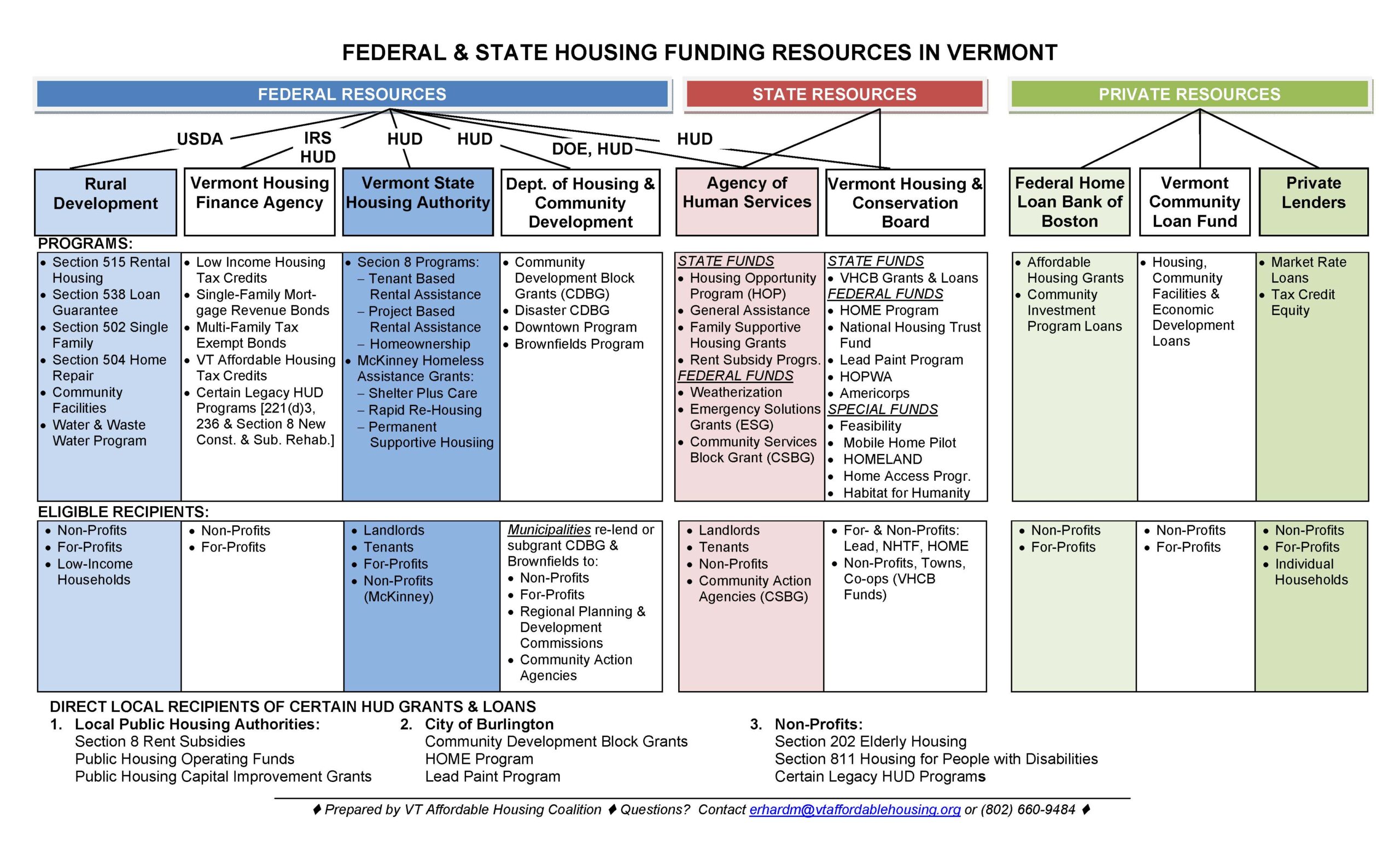
Affordable Housing can have very complex funding structures. The way a housing provider is funded will determine what the housing requirements are for the renter or buyer– that is a part of why affordable housing can have such complicated rules around eligibility. Affordable housing and homeownership programs can be funded by Federal, State, and private funding sources. Nowadays, most affordable housing is developed with a mix of all three.
This brings us to the next piece of the affordable housing landscape- affordable housing funders. As you can see from the chart above, our Vermont housing financiers can be designating funding from Federal, State, or private pots of money.
Vermont’s main affordable housing funding nonprofits are Vermont Housing and Conservation Board, Evernorth Housing, and Vermont Housing and Finance Agency.
Vermont Housing and Conservation Board (VHCB): The Vermont Housing and Conservation board is a unique and powerful resource we have here in Vermont. It was established in the 80’s in a direct response to the ways much-needed housing development was often pitted against land and historical preservation. The Vermont Housing and Conservation Trust Fund Act was enacted in June 1987 with the dual goals of creating affordable housing for Vermonters, and conserving and protecting Vermont’s agricultural land, forestland, historic properties, important natural areas, and recreational lands are of primary importance to the economic vitality and quality of life of the State. VHCB continues to allocate State and Federal funds to nonprofits, towns and co-ops.
Evernorth Housing: Formerly Housing Vermont, Evernorth Housing now serves communities in New Hampshire and Maine as well as Vermont. Evernorth brings together experienced professional staff to raise capital, invest in and build affordable housing, strengthen the economy, and improve the environment through energy efficiency. They work with community banks and large financial institutions to raise money to finance affordable housing. Here in Vermont, you’ll notice Evernorth often works with our regional affordable housing providers, listed in the section above.
Vermont Housing and Finance Agency (VHFA): Established by the state legislature in 1974, VHFA promotes affordable housing opportunities for Vermonters. Each state has a Housing Finance Agency. In addition to their home ownership programs, VHFA administers the Federal Low Income Housing Tax Credit Program (a Federal funding source) and the State Affordable Housing Tax Credit Program (revenue raised through the IRS). VHFA also provides financing, development and management support, subsidy administration and tax credits for approximately 8,800 affordable apartments statewide.
In addition, the USDA department of Rural Development, the Vermont State Housing Authority, and the Department of Housing and Community Development are state agencies responsible for allocated federal money.
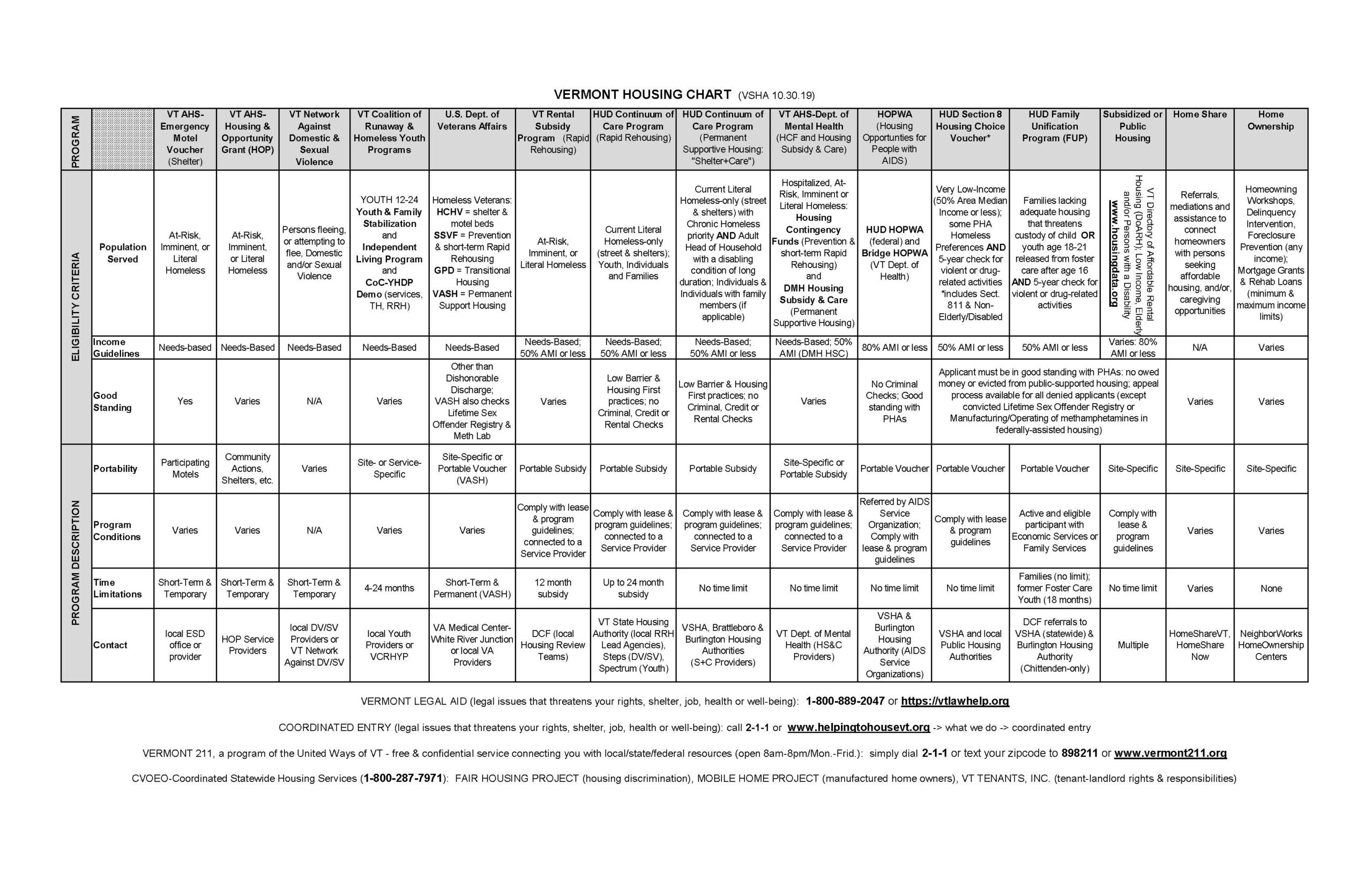
In some cases, such as Vermont State Housing Authority, Rural Development, and Agency of Human Services, a tenant may receive a subsidy directly from an organization that finances the development of affordable housing. But in most cases, a tenant or potential homebuyer works with either their regional affordable rental housing provider or their regional home ownership center. Now that we have shared an overview of affordable housing, here is the Vermont Housing Resource Chart, last published by the Vermont State Housing Authority in 2019 (click for details). It’s complex!
Three points of note: Notice the second column lists population served. This describes the specifications of who the housing is served.
Income guidelines: As we now know, income guidelines can be specific, can change over the years, and are often govern by the sources of funding the housing provider receives.
Portability: Recall that some housing subsidies can be travel with the tenant, and some are site-specific, meaning they stay with a unit of a building. In this column, you can see where these vouchers can be used or if they stay with a unit.
Next Up: Housing Advocacy
Affordable housing is complicated! But having a basic understanding of our affordable housing system is important to do the advocacy we urgently need. Don’t get discouraged if this is a lot to take in- it is for everyone, and many of us become more familiar with our regional infrastructure as we engage with our affordable housing network over time.
Stay tuned for the final chapter of Housing Demystified, Chapter 4, to be published this winter, 2023.
Affordable housing is complicated! But having a basic understanding of our affordable housing system is important to do the advocacy we urgently need. Don’t get discouraged if this is a lot to take in- it is for everyone, and many of us become more familiar with our regional infrastructure as we engage with our affordable housing network over time.
Stay tuned for the final chapter of Housing Demystified, Chapter 4, to be published at the end of Summer 2023.
CVOEO’s Fair Housing Project is excited to announce our newest initiative, the Striving for Equity Project.
Hello readers, Corrine here. I am thrilled and honored to introduce myself as the new Striving for Equity Project Manager at CVOEO’s Fair Housing Project.
I joined CVOEO’s Fair Housing Project at the tail end of 2019, but I have had the pleasure of working with CVOEO’s Fair Housing Project since my entry into housing advocacy back in 2015 at the Vermont Affordable Housing Coalition. Together with program director Jess Hyman, and other staff, volunteers and partners, we have immensely expanded the Fair Housing Project’s education and outreach activities and ensured that housing equity and choice is an integral part of CVOEO’s statewide Housing Advocacy Programs work.
If you are a frequent reader of our blog, you are probably familiar with the ways that Fair Housing Month education has expanded. Our workshops, often lead with Vermont Tenants, have evolved to new formats, including online and expanded curriculum, as well as translated live workshops. We were key players in developing the Housing Ready Toolbox in partnership with Vermont Housing Finance Agency and VT’s Department of Housing & Community Development, and have since started theHousing Demystifies series. In 2021, we spearheaded a year-long initiative to survey and support housing committees, and we overwhelmingly heard the need for more opportunities to connect as community-based housing advocates across the state, which inspired this new project.
Striving for Equity is a continuation and expansion of the Thriving Communities initiative, which seeks to increase awareness about the importance of inclusive, affordable housing and support Vermont municipalities in their efforts to Affirmatively Further Fair Housing. It is funded through a HUD Fair Housing Initiatives Program (FHIP) grant. Our ongoing Fair Housing activities will continue including consultation and referrals for people experiencing housing discrimination, fair housing trainings for housing and service providers and municipal officials, and know your rights workshops and outreach for community members.
A Brief Project Summary
As CVOEO’s Striving for Equity Project Manager, I will be spending this next year supporting local housing committees and promoting avenues for citizen housing advocacy so that across the state, we increase the amount of inclusive, affordable housing and meet our local housing needs. We recognize that in order to further equitable access to housing, the voices of the people who have been denied equal access to housing need to be centered in our development processes, but for many these processes may be hard to understand and access. I will look to each of you and our partners across the state to identify what barriers our community members face to engaging with their regional housing advocacy efforts, and to develop community-based housing advocacy resources. Our goal is to connect and support local housing committees, foster new connections with community-lead housing advocacy efforts, and enable them to access vital resources and foster meaningful connections with one another.
Of course, this work is a part of CVOEO’s Fair Housing Projects’ greater mission of furthering Fair Housing and equal opportunity in housing. As such, my focus will be in ensuring paths for the people most impacted by our housing shortage to make their needs heard, especially those who have historically been barred access to Fair Housing.
What to Expect
So how will we meet these goals? To clarify our project goals, we have simplified our outcomes and deliverables to fall under two project categories: developing a statewide advocacy toolkit to enable community-based housing advocacy efforts and supporting the development of a statewide housing committee network.
Outcomes (Or, What We are Working Towards):
Our goals for this project include:
Community members learn about housing-related issues and have the resources and support to take action on them.
Community members have tools and resources to overcome obstacles to upholding their fair housing rights.
Existing housing committees have access to fair housing and housing equity resources, planning tools for inclusive, affordable housing, and are better connected to each other for sharing successes, challenges, and best practices related to promoting equity and justice in housing.
Deliverables (Or, How We Will Get There)
To help us reach our goals, we will be developing a few key tools with feedback and input from the housing groups we work with. They include:
A user-friendly webpage with simple primers on various topics, including housing systems, social justice, housing equity, and community leadership and advocacy tools. This webpage will be accompanied by related outreach materials.
List of housing committees that receive fair technical assistance and support, and a report on progress related to the support they receive.
Housing committee gatherings to facilitate collaboration and knowledge sharing.
Timeline
July – August:
Since this is a year long project, we have an ambitious (but ever-adapting) timeline. We have already begun our community-based outreach, with our first housing committee convening on the calendar for Wednesday August 23rd, at 5pm.If you are a housing committee member, we hope to see you there! You can let us know you will be attending by filling out this short surveyand by registering here.These early conversations are going to set the rhythm for how often we meet, where and how we meet (regional? statewide? in person? virtual?), and what topics are most generative to fueling the work of our community housing advocates.
September – November
Starting this September, we will really start engaging community-based groups and housing committees to help develop and imagine what framework would be most useful for every day people to advocate for housing, and what tools we need to make sure are included in that. If you aren’t sure you are a “community-based group” doing housing advocacy, or you are interested in plugging into one, please reach out. We need more voices in the housing advocacy space, especially those who are most impacted by our current housing shortage. Let us help you find your footing in the movement.
December – February
We are, of course, going to continue our regular meetings with housing committees and community-based housing groups, providing trainings when appropriate, and connecting these teams to resources that will assist their mission. In December we will also start fabricating our outreach tools that will broaden the reach out the housing advocacy resource created through this work.
March – May
Our project wraps up June 1st, which means our final months of the project are dedicated to evaluating and revising the tools we create in this work.
Final words
I am genuinely looking forward to meeting each one of you and working together towards our shared mission. Please feel free to reach out to me at cyonce@cvoeo,org or 802 660 3456 X110. I am eager to hear your insights, suggestions, and ideas for making a lasting impact through this project.
Lastly, thank you as always for continuing your dedicated work to promote inclusive and Fair Housing. I am grateful to be a part of this rich, ingenuitive, and compassionate community, and always learn so much from you all when we work together.
-What options are there for people who need help paying for their housing, but are not currently homeless?
Chapter 4- Avenues for Advocacy
– What can you do about the affordable housing shortage?
Housing is a surprisingly complex topic. When we talk about housing and housing insecurity, we can be referring to different pieces of the housing landscape. For instance, an organization providing affordable housing is often distinct from an organization providing emergency shelter. But to connect to the proper resource, we need to first have a vocabulary for the different categories that exist within the field of housing advocacy and housing access.Generally, housing conversations fall into three categories:
Emergency Housing & Homelessness Assistance – Shelters, Community Action, General Assistance program
Advocacy, Development and Finance– Regional, State, and Federal avenues for advocacy, organizations providing housing advocacy, housing financiers and housing developers
Equity, inclusion & housing choice:
When we talk about housing access, we need to approach each resource from the lens of Equity, Inclusion, and Housing Choice. In Chapter 1 we highlighted why housing choice is important, but recognized many are not able to access their right to equal opportunity and choice in securing housing. In particular, we need to recognize that BIPOC renters are often excluded from equal opportunity to housing due to historically racist housing policies, and present day biases which continue in our housing practices.
Before we cover the differences between these housing programs, an important reminder: If you currently need help finding housing or paying your rent, contact your local Economic Services Department (ESD)(The number for the Statewide ESD call center is 1-800-479-6151) or call 2-1-1 after hours or on the weekends
If you have received an eviction notice, seek assistance immediately with Vermont Legal Aid.
Emergency Housing & Homelessness Assistance – Shelters, Community Action, General Assistance program
Often when we hear about housing limitations, we hear about it from the lens of homelessness. For people currently without housing or who have received an unexpected termination of tenancy notice, we have emergency housing programs. A wide variety of organizations including state government, local government and non-profit organizations assist persons at risk of homelessness or currently experiencing homelessness. The type of assistance varies based on your unique circumstances. Assistance can include emergency sheltering for individuals or families, food, job training, and assistance specifically for homeless veterans or folks fleeing domestic violence.
In the world of housing emergencies, the services can be split into two general categories based on the following question:
Category 1, Literally Homeless: an individual who lacks a fixed, regular and adequate nighttime residence
Category 2, Imminent Risk of Homelessness: an individual or family who will imminently lose their primary nighttime residence. “Imminently” means very soon, in this case specifically within 14 days of applying for homeless assistance.
Category 3, Homeless under other Federal Statutes: This is a complicated category, which includes unaccompanied youth who are younger than 25, or families with children who do not otherwise qualify as homeless under this definition but who:
have not had a lease, ownership interest, or occupancy agreement in permanent housing during the 60 days before they submit an application for homelessness assistance. For instance, a verbal agreement within that 60 day window might make people in this category ineligible to receive homelessness assistance.
Have experienced “persistent housing instability.” Persistent housing instability is further defined as two or more moves within the 60 days leading up to the application for assistance.
And lastly, the person(s) must also be expected to continue in this unstable state for an extended period of time due to special needs or barriers to qualify for this category
Category 4, Fleeing/ Attempting to Flee Domestic Violence: Any person or family who is fleeing or trying to flee a domestic violence situation, without an alternative place to live or the resources to get alternative housing fits into this category.
We learned in Chapter 1 , while covering the Point In Time count, that folks without housing are more than the people in shelters, cars, and campers. There can be overcrowding situations, couch surfing, and other circumstances that may change suddenly for anyone. Living in a precarious or unsafe housing situation, for some, may be easier than identifying with the term “homeless,” and facing the stigma often associated with houselessness. For those of us who are advocates, we are charged with the responsibility to shed light on the shortage and inequities in our housing landscape, which bar people from their basic right to housing for no fault of their own. It is important to remember that houselessness and housing precarity can come up in a lot of different ways, and it can change from one day to the next.
Shelters
Shelters are temporary housing options for people with immediate housing needs. This list covers shelters across the state. Shelters can sometimes be specific in who they serve- for instance, some shelters are for children and family, and some provide housing for people fleeing domestic violence. Shelter availability can fill up quickly, so it’s important to call 211 if seeking shelter.
General Assistance/ Emergency Assistance Program
You might wonder how 11 shelters can house the 2,780 Vermonters who experienced “literal homelessness” during the Point in Time Count last year (2022). Short answer- they can’t! That is why we also have what’s called the “General Assistance Program” and the “Emergency Assistance Program.” Administered by the Economic Services Division (ESD) within the Department for Children and Families (DCF), the General Assistance Program (GA) is an emergency financial assistance program providing the basic necessities of life when those needs cannot be met by any other assistance program within DCF. These state programs essentially allow people without housing, and who meet specific, state-designated requirements, to access emergency, temporary housing through a motel-voucher program for participating motels.
The eligibility for these programs change with each legislative session, and generally fall into three categories: Vulnerable Population, Catastrophic, and Adverse Weather. But even these programs can fill up. You can check the Housing Capacity by region for the GA program on DCF’s Website here. On the day I wrote this blog- a weekday in February of 2023 – the capacity for most GA Emergency Housing is “none” with some regions listed as “extremely limited.” Folks without cars may have to travel long hours on buses to find a place to sleep that night. Some people’s only option is to find the closest thing to shelter that they can- beneath the eaves of a building, in their car, an enclosed ATM machine, a public bathroom.
Community Action Agencies
Community Action Agencies and other Homelessness Prevention Centers provide the much needed support for people at risk of houselessness or exiting homelessness. Vermont has 5 Community Action Agencies (including CVOEO, where we are located):
Community Action Agencies are a very important piece of Vermont’s resources for financial stability. Established through the Economic Opportunity Act of 1964 and financed by state and private funding, these agencies provide programs and serves to Vermonters with low or moderate income. Programs and services include financial stability (including classes on credit and budgeting and coaching of micro businesses), Head Start and services for parents, community advocacy programs (such as the Housing Advocacy Program and Voices against Violence), resources for food access and food security,energy assistance programs (such as crisis fuel assistance and weatherization services), and housing assistance.
On Housing Assistance & Community Action Agencies:
Community Action teams providing housing assistance – a critical part of Vermont’s housing support services- work with individuals and families who are homeless or at-risk of homelessness. While housing insecurity can be complex, nuanced and deeply personal, to receive their services you must meet the federal definition of homelessness or at risk of homelessness. As we covered above, that definition is very specific and not very flexible. To access Community Action resources, you must be:
Importantly, Community Action Agencies do not provide emergency housing assistance. That is why we emphasize that people seeking emergency shelter contact your local Economic Services Department (ESD). (The number for the Statewide ESD call center is 1-800-479-6151) or call 2-1-1 after hours or on the weekends
Housing navigation is available to help secure affordable housing and, if eligible, to provide assistance for security deposits, rental assistance or rental arrearage.
What is a Continuum of Care? A “CoC” consists of a partnership of service & resource providers, housing developers, state agencies, and others in the homelessness or low-income service system in a geographic region. This is a network of organizations, which work together to:
CoCs monitor and address housing and service gaps through proactive solutions;
Conduct an annual homeless count;
Coordinate efforts with the statewide planning body.
The Continuum of Care Program is a HUD program “designed to promote community wide commitment to the goal of ending homelessness.” HUD recognizes two Vermont CoCs, which provide both planning initiatives to end homelessness, as well as funding to organizations working to end homeless.
Vermont Balance of State CoC: The Vermont Balance of State COC covers all of Vermont except Chittenden County. The two “applicants” to receive the CoC funds from HUD are the Vermont State Housing Authority and the Office of Economic Opportunity. The Vermont Coalition to End Homelessness (an organization we will talk about in greater detail in Chapter Four, as a part of our coverage on housing advocacy) is the “governing body” of the Balance of State CoC.
Underneath the umbrella of the Balance of State CoC are eleven local Continuum of Cares which serve the regions across Vermont, besides Chittenden County. These local CoCs do not provide funding. To learn more about CoC’s, you can visit the Vermont Coalition to End Homelessness’ website here
Chittenden County Homeless Alliance:Chittenden County has its own CoC, which is recognized by HUD, does provide funding, but is not overseen by the Balance of State CoC. Chittenden County is served by the Chittenden County Homeless Alliance, also know as CCHA, “the Alliance,” and the Chittenden CoC.
Chittenden County has the greatest housing shortage, the lowest vacancy rate, and the easiest access to resources through its higher density city-centers as well as its more robust bus line. For some in our state, this may be perceived as a sign that Chittenden County has a greater homelessness problem than the rest of the state. The reality is that many people receiving homelessness assistance in Chittenden County come from rural communities. This unequal distribution of resources is part of the reason our lowest income community members, our most vulnerable community members, and those of our neighbors who have been denied the right to homeownership and wealth accumulation are not able to have choice in where they live. In Chapter 4, we will take a deeper dive in why our housing resources are not equally distributed, and what we can do to address it.
What if I have an urgent rental-housing question, but I am not homeless or at risk of houselessness?
For immediate questions about your tenancy, you can call the CVOEO Vermont Tenants statewide hotline at (802) 864-0099 (interpretation available on request – please leave a message with name, phone number and the language needed). For more information about tenant and fair housing rights and responsibilities, CVOEO’s Housing Advocacy Program has a host of resources, including free on-demand and drop-in workshops, printed and digital educational material, and can always refer callers to the appropriate resource if our services do not meet yur need. (Translated resources are available here)
These services are part of the Housing Advocacy Program of CVOEO. We will be sharing information about CVOEO’s Housing Advocacy Program, including Vermont Tenants, the Mobile Home Program, and the Fair Housing Project, in greater depth in Chapter 4 (link) of Housing Demystified.
Emergency housing is a critical part of our state’s network of housing resources, but addressing our housing needs requires more than just emergency housing programs.
Tune in for Chapter 3 to learn more about affordable rental housing (public housing), housing subsidies, mobile homes and homeownership programs.
Each year, the network of Fair Housing Month partners grows, allowing this work to reach more people across the state. Almost 200 people participated in the CVOEO lead workshops, community conversations, Fair Housing Friday discussions, art events, and countless other educational activities, and hundreds more were engaged by partners across the state. We distributed more than 1,100 HeART & Home Art kits to invite reflection on the foundation that home provides to all of our lives, and how important it is to have agency in our home-space to accommodate our unique, individual ways of living.
These activities went far beyond the basics of fair housing and included discussion on ways to make our towns and cities more welcoming, issues related to housing access and homelessness, and how to address community housing needs.
Here are a couple of highlights that were recorded:
The Vocabulary of Home conversation at Contois Auditorium highlighted the importance of talking about affordable housing from the lens of “home,” and the voices of the people who live there. CVOEO’s Fair Housing Project joined Burlington’s Special Assistant to End Homelessness Sarah Russell at Contois Auditorium for a discussion on how we talk about housing and homelessness. Wearing both her “housing hat” and “artist hat,” CVOEO’s Fair Housing Project’s Corrine Yonce used images from her public art, lessons from the HeART & Home art responses, and anecdotes from residents in affordable housing to highlight the complexities in our housing language. You can watch that recording here.
We had another round of stellar Fair Housing Friday discussions, featuring voices of resident engagement coordinators, affordable housing residents, community artists, media makers and organizers, city planners, advocates– and more! These are out-of-the-box creative discussions about the state’s housing needs, avenues for directly involving the people living in affordable housing, and how we think about home and community as a state.You can find those recordings, along with a archive of past Fair Housing Fridays, here.
We want to give a special shout out to the Fair Housing Friday guest panelists:
Meaghan Tedder, of Evernorth Housing, Will Condry and Jennifer Herrera Condry of Juniper Creative Arts, Sal Millichamp, of Laurentide – thank you for sharing your insights on how we can engage the people we house in their shared and private spaces.
This was a rich conversation between community artists, resident service providers, and residents living in affordable housing, with specific insight on not just how to engage residents in the design of their home spaces, but how resident feedback can make our work as housing providers more efficient. You can find the recording here.
Jordyn Fitch & Maeve Littau of Junction Arts Media – thank you for sharing your documentary, your voice and your perspective on this topic! Your work documenting the housing landscape in Connecticut River Valley region comes a critical time to listen to the people most impact by our housing shortage.
Jordyn and Maeve’s shared unique perspective comes in the midst of a string of housing events hosted by Junction Arts and Media, including a documentary screening of Racist Trees and an art exhibit, Redlining Our Souls.Learn more here. You can catch their Fair Housing Friday discussion here.
To John Haffner of Vital Communities, and Meagan Tuttle & Sarah Morgan of the Burlington Office of City Planning, and Beth Whitlock representing Hinesburg Housing Committee – thank you for sharing how the ways we talk about housing can inform the ways communities think about and engage with housing, and for introducing tools to expand our housing vocabulary.
The panelists covered a lot of ground related to this topic, from the ways assumptions about “Vermont communities” may limit us from meeting our housing needs to the surprising ways Vermont downtown centers historically met many of the smart growth goals we strive for today. You can find the full recording here.
We also want to extend our deepest gratitude to our Fair Housing Month partners, including Vital Communities and the White River Valley Consortium for bringing Fair Housing education and HeART & Home art kits to welcome in new members of the Rochester community, and to the Home Creators Expo. We thank all the libraries who hosted workshops, art activities, and educational information, and the Vermont Department of Libraries for connecting us to these incredible resources across the state. Thank you to Junction Arts & Media, Randolph Area Community Development, RuralEdge, Vermont LegalAid, CEDO, ONE Arts, Vermont Human Rights Commission, the Vermont Department of Housing and Community Development, Burlington REIB and the Vermont Affordable Housing Coalition for helping us reach as many Vermonters as we can with our Fair Housing Month programming.
And a huge thank you to all of our sponsors: Champlain Housing Trust, Cathedral Square, Evernorth, Farrell Properties, Main Street Landing, Two Rivers-Ottauquechee Regional Commission, Pomerleau Real Estate, Redstone, Vermont State Housing Authority, Vermont Housing & Conservation Board, and Vermont Housing Finance Agency
The work is Far From Over
Finally, we remind ourselves that this work is far from over. Fair Housing Month activities wrapped up in advance of1,800 Vermonter facing imminent displacement, 600 of whom are children, many of whom have serious health requirements – like access to ventilation equipment and regular nursing needs – many of whom are fleeing domestic violence, and who disproportionately represent the members of our community traditionally denied equal opportunity to housing. Renters face rising rent costs despite wages not growing in proportion, in the midst of an unprecedented housing shortage. Black and Brown Vermonters continue to rely on rental housing at a far greater rate than white Vermonters, who are also privileged with greater access to home ownership. Renters are not afforded Just Cause eviction protections in most of the state, and more than half of renters are cost burdened by their rental cost, thus resigned to a sense of precarity. Our dire housing landscapes calls us to continue to have these conversations, which outline creative, innovative, and new ways to address a growing problem.