Category Archives: Uncategorized

Coalition Launched to Increase Housing in Chittenden County VT

South Burlington, VT – Dozens of Chittenden County leaders in the fields of housing, business, local and state government, and social services announced this morning a new campaign to increase the production of housing and setting a target of 3,500 new homes created in the next five years.

The new coalition, called Building Homes Together, was formed by the Champlain Housing Trust, Chittenden County Regional Planning Commission and Housing Vermont and released an initial list of nearly 100 community leaders supporting the effort.

“Working together we will accomplish this goal,” said Brenda Torpy, CEO of Champlain Housing Trust. “For the sake of our communities, our workers and local economy, we will educate and advocate together for more housing.”

“The housing shortage in Chittenden County has been well noted with unhealthy vacancy rates and high rents,” added Charlie Baker, Executive Director of the Chittenden County Regional Planning Commission. “Employers can’t find workers, and workers themselves spend more time in commutes and with a higher percentage of their paychecks on housing costs.”

Twenty percent of the 3,500 goal are targeted to be developed by nonprofit housing organizations. The remainder by private developers.

“This step-up in production will not just provide new homes and infrastructure for communities, it’ll be a boost to the economy and contribute to the tax base. Building homes together is a big win for all of us in Chittenden County,” said Nancy Owens, President of Housing Vermont.

The campaign will provide up-to-date data to the community on the need for and benefits of new housing, build cross-sector and public support for housing development, increasing access to capital, and supporting municipalities.

Individuals, businesses or organizations that wish to sign on and participate in the campaign are encouraged to by sending an email to Chris Donnelly at Champlain Housing Trust (chris@champlainhousingtrust.org). For more information, visit www.getahome.org/news/building-homes-together

Landmark Discrimination Case: Fair Housing Act Thwarts NIMBYs

I am sharing here in full an article about a U.S. Ninth Circuit Court of Appeals decision with significant fair housing and Affirmatively Furthering Fair Housing import for planning, zoning and permitting of residential housing development that was published April 28, 2016  in the legal issue blog site, “Manatt.” Especially check out the three basic “Practice Pointers” at the end of the article for the main take away.

https://www.manatt.com/real-estate-and-land-use/Landmark-Discrimination-Case-Fair-Housing-Act-Thwarts.aspx —-

—————————————————-

Real Estate and Land Use

Apr 28, 2016
Landmark Discrimination Case: Fair Housing Act Thwarts NIMBYs

Avenue 6E Investments, LLC v. City of Yuma (March 25, 2016)

Author: Michael M. Berger

Why It Matters: The Ninth Circuit Court of Appeals reversed a decision in favor of the City of Yuma, Arizona, and concluded instead that there was sufficient evidence to present to a jury that the City had rejected the developer’s application for an increase in zoning density for reasons of barely disguised animus toward the expected residents of the new development. The Court held that issues of disparate treatment and disparate impact under both the 14th Amendment’s Equal Protection Clause and the federal Fair Housing Act needed to be tried.

Facts: The plaintiffs/developers acquired 42 acres of undeveloped land with the intent of building a “moderately priced” housing project. They are known in the area as a developer of Hispanic neighborhoods. Although the General Plan allowed for homes on either 6,000- or 8,000-square-foot lots, a prior owner had it zoned for 8,000-square-foot lots. Unfortunately, the economy would no longer support lots of that size and the developers sought a rezoning to the smaller size which in turn would allow increased density. The City had done some studies, concluding that its population was racially divided, with most of the low-to-moderate-income housing in the areas populated by Hispanics. These developers wanted to develop their housing on the border of a predominantly white area.

The City’s General Plan acknowledged that racial segregation is wrong and that large-lot zoning raises housing costs and impairs the ability of the City to provide housing for moderate-income buyers. The Planning Commission approved the rezoning to smaller lots and recommended that the City Council do so as well. The City Council, however, was besieged with NIMBY complaints and thinly veiled anti-Hispanic charges, complaining that these particular developers were known to “cater to” the people responsible for the vast majority of major crimes.

Two other facts had some import. First, there were similarly priced and modelled homes available elsewhere in Yuma, a fact that the City thought absolved it of any claims of disparate impact. Second, a fact that proved difficult for the City to impress on the Court was that, in the preceding three years, this was the only rezoning request that had been rejected out of 76 applications.

The developers filed suit under the federal Civil Rights Act, 42 U.S.C. § 1983, for violation of the Equal Protection guarantee, as well as for disparate impact and treatment under the Fair Housing Act. The trial court entered summary judgment for the City on the sole ground that the adequate supply of similar housing elsewhere in the City automatically foreclosed any finding of disparate impact.

The Decision: The Court of Appeals reversed. When the opinion began with a paean to the Fair Housing Act and the way it “strikes at the heart of the persistent racism that so deeply troubles our Nation,” something that the provision of more affordable housing can help to cure, it was apparent that the conclusion was foregone: judgment reversed.

The Court of Appeals was unable to disregard the bright light of the fact that out of 76 applications, the only time the City had denied a zone change in the past three years was this one. There could be no explanation for the denial other than racism, particularly in light of some of the communications made by neighbors to the City Council about the presumed criminal proclivities of the anticipated residents of the new development. Nor would the Court have anything to do with the trial court’s idea that the presence of similar developments elsewhere in Yuma obviated the problem. Indeed, it merely emphasized the fact that the City was racially divided and at least some of its residents wanted things to remain that way.

There appeared to be no principled opposition to the requested zone change. As the Court of Appeals put it, the record was replete with “code words” and “veiled references” for the Hispanic influx that the neighbors anticipated, turning the development into a “low-cost, high-crime neighborhood.” The case had no chance on appeal.

Practice Pointers:

  • Neighbors frequently oppose projects in their neighborhoods that are intended to be occupied by lower-income families. Local governments often bow to this political pressure. This decision may well serve to justify these projects, even in the face of neighbor opposition.
  • Language similar to the “code words” used by neighbors in this case is common among project opponents opposing higher-density projects. Local agencies need to be mindful of the exposure that this kind of language may impose if the projects are disapproved by the local agency.
  • At the very least, local agencies need to include sufficient data and facts in the record to support their decision as not being based on discriminatory rhetoric.

Connecting the dots: Housing cost- community economic development – JOBS! Part 1

The insufficient supply of housing at a range of affordable prices, especially for rental housing, has important negative impacts on local economic development. Housing costs and availability impacts adequate workforce availability. The causes of high housing costs are multiple but a few factors are controllable by local municipalities, counties and regions with the understanding and political will. Exclusionary housing development zoning regulations for example fall into that category. Housing supply constraints affect local employment opportunities and wage dynamics especially in areas where the degree of zoning regulation barriers are more severe.

n1

It’s getting much tougher to find good jobs in areas with adequate affordable housing opportunities. Even when job markets improve, the absence of strong sustained real income growth means that for more and more communities, the relative cost of housing will continue to climb at the same time the availability of adequately affordable housing is decreasing.

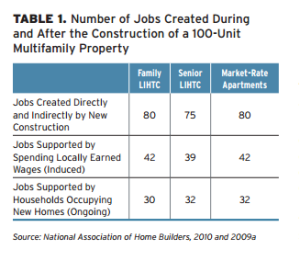
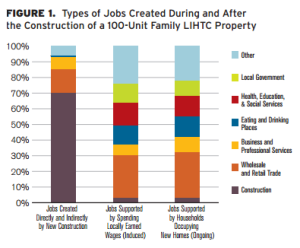
Research shows (see, “The Role of Affordable Housing in Creating Jobs and Stimulating Local Economic Development: A Review of the Literature” Center for Housing Policy) that adequate affordable housing in communities has benefits extending beyond its occupants to the community at large. Without a sufficient supply of affordable housing, employers and entire regional economies can be at a competitive disadvantage because of their increased difficulty attracting and retaining workers.

N2

The excellent study referenced above provides a clear discussion of this issue. The primary thesis of the study is that developing more affordable housing in communities creates jobs — both during construction and through new consumer spending after the homes have been occupied. The positive impacts of building affordable rental housing are on par with and in many respects exceed the impacts of developing comparable market-rate units.

The take away from this is that housing affordability, inclusive communities and vibrant economic development, are intertwined in substantial ways. Communities can positively change the dynamics with various policies including favoring appropriate density in zoning laws.


New Rental Development: nationally the cost is slanted upward

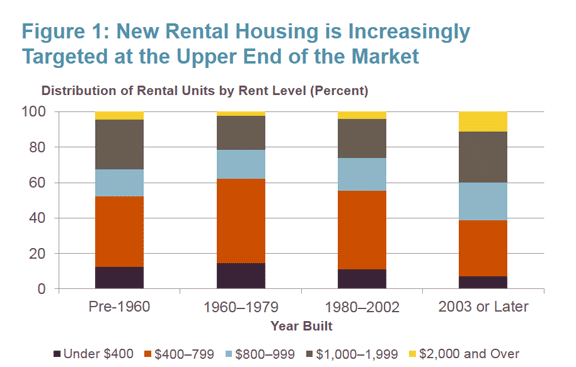
A higher percentage of people are renting their homes in the U.S. than has been the case for many decades. The market is responding with more rental housing development – but there is a big glitch – too much of that new rental housing now being developed is on the high end of the affordability spectrum.

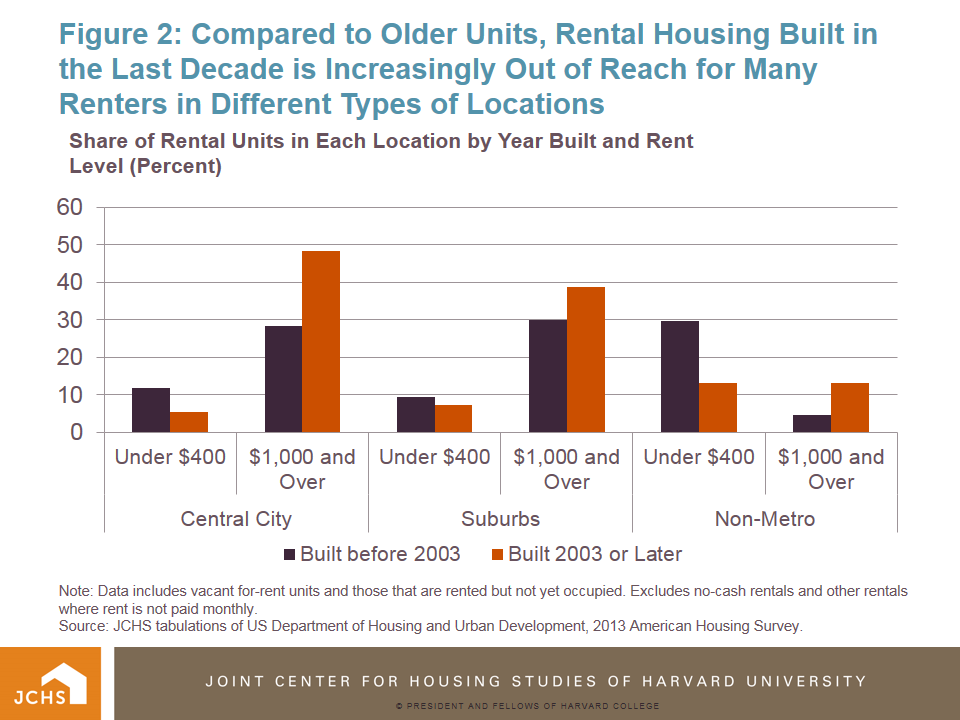
This article: “Surge in New Rental Construction Fails to Meet Need for Low-Cost Housing,”   by Irene Lew, at the Harvard Joint Center for Housing Studies, offers a thorough and informative analysis of the current situation – which is not a good one for moderate to low income people in our communities.

DownwardSlidingRentalAffordability…the housing affordability crisis has shown little signs of abating in recent years, as renter incomes continue to lag behind rising housing costs. Though there has been a ramp-up in rental housing construction, much of this new housing is intended for renters at the upper end of the income spectrum…

Note: Data includes vacant for-rent units and those that are rented but not yet occupied. Excludes no-cash rentals and other rentals where rent is not paid monthly. Source: JCHS tabulations of US Department of Housing and Urban Development, 2013 American Housing Survey.
Note: Data includes vacant for-rent units and those that are rented but not yet occupied. Excludes no-cash rentals and other rentals where rent is not paid monthly.
Source: JCHS tabulations of US Department of Housing and Urban Development, 2013 American Housing Survey.

Housing as a Vaccine

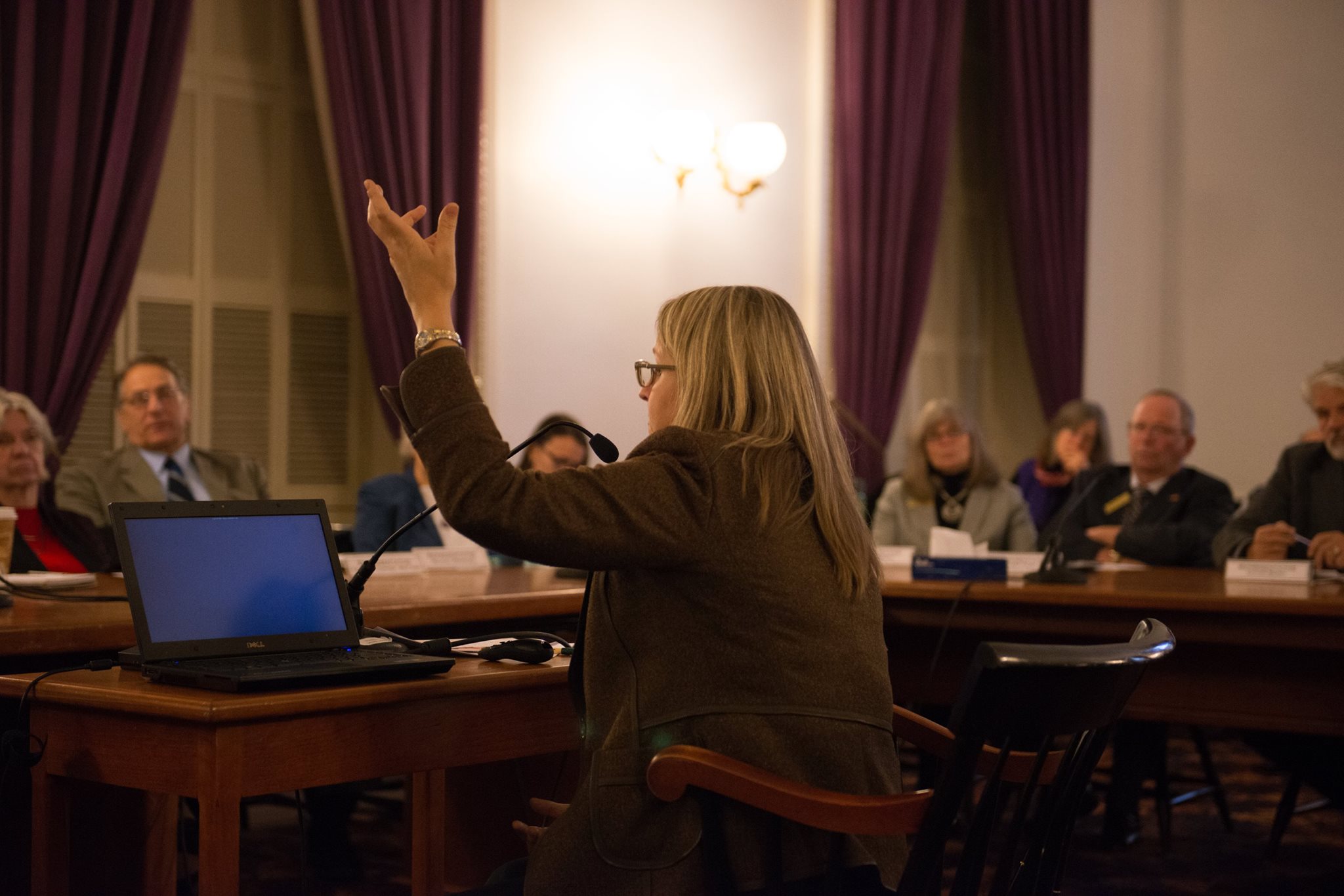
The 2016 Homelessness Awareness Day and Vigil was held at the Vermont State House in Montpelier on January 7th. Two House committees Housing, General and Military Affairs and Human Services had a joint hearing on homelessness, taking testimony on housing and homelessness issues. A number of other hearings regarding homelessness happened in the building during the course of the day.

sample

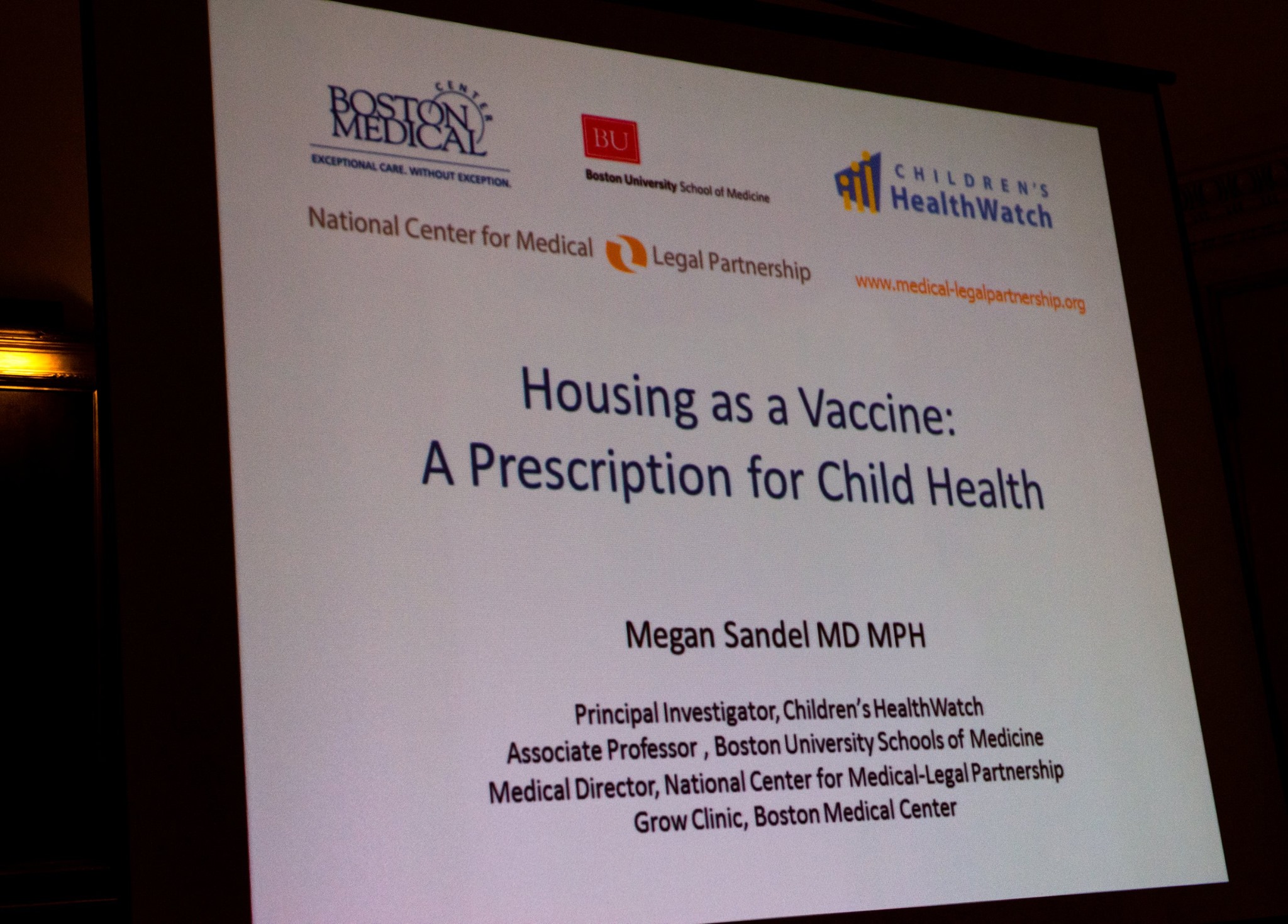
Opening the hearing was nationally recognized pediatrician Dr. Megan Sandel (principal investigator on Children’s Health Watch,  Associate professor at Boston University’s School of Medicine,  and Medical director, at  the National Center for Medical-Legal Partnership at Boston Medical Center), who has done path-breaking work on the effects of housing insecurity and homelessness on children. She gave a brilliant presentation on “Housing as a Vaccine: A Prescription for Child Health.”

At that hearing, Representatives and attending members of the public also heard from Vermont homeless service providers Linda Ryan (Director of Samaritan House) and Sara Kobylenski (Executive Director of Upper Valley Haven) on the latest trends and some recommended solutions to end or decrease homelessness in Vermont.

At Noon, community members, legislative leaders, administration officials, and advocates took the State House steps for a vigil to remember our friends and neighbors who died without homes, and to bring awareness of the struggles of those still searching for safe and secure housing. U.S. Senator Patrick Leahy and other legislative representatives and advocates joined and spoke at the vigil.

How can Housing be a Vaccine?

Dr. Megan presented data to support her thesis that housing can be protective for health. The quality, stability and affordability are important determinants to heath of all people. That means improving housing can provide multiple benefits. According to Dr. Megan, timing and duration of housing insecurity matter greatly to a child’s health. By increasing availability, affordability, and quality of housing, the health effect of housing insecurity can be decreased. Dr. Megan also provided specific evidence regarding housing quality and children’s health. For example, developmental issues, worsening asthma and other conditions have been tied to specific housing conditions such as pests, mold, tobacco smoke, lead exposure and so forth, and tied to long term effect with poor health outcomes.

sample 1

According to Children’s Health Watch, “unstable housing, hunger and health are linked” because evidence shows that being behind on rent is strongly associated with negative health outcomes such as high risk of child food insecurity, children and mothers who are more likely in fair or poor health, children who are more likely at risk for development delay, mothers who are more likely experiencing depressive symptoms. Research conducted by the National Housing Conference from Children’s Healthwatch illustrates that there is no safe level of homelessness. The timing (pre-natal, post-natal) and duration of homelessness (more or less than six month) compound the risk of harmful childhood health outcomes. The younger and longer a child experiences homelessness, the greater the cumulative toll of negative health outcomes, which can have lifelong effects on the child, the family, and the community.

Several community representatives spoke in support of increasing housing affordability by targeting more public funding to support housing affordability and housing stability and adding to state housing directed funds with a $2 per night fee on hotel, motel and inn stays.


With sadness – but with some hopefulness

Alas dear friends, December 31, will be the last official day of work at the FHP/Thriving Communities campaign for the wonderfully talented, informative, and entertaining Blogger and journalistic seeker of truth, Tim Johnson. Tim is one of a kind and is an irreplaceable human resource. We offer Tim our deepest felt thanks and all best wishes. Of course Tim will be missed greatly, both his personal presence in our office and his many professional  contributions to the cause of promoting Thriving Inclusive Communities in Vermont and as far and wide as our campaign is reaching beyond the state.

Our loss of funding from HUD, compounded by no forthcoming funding commitment from the Vermont Department of Housing and Community Development, is forcing CVOEO to eliminate not only Tim’s position but to substantially reduce the funded hours for my position as director at the Fair Housing Project. However, all is by no means gloom for the New Year ahead!

The hopeful part comes from the following:

  • The Thriving Communities: Building a Vibrant Inclusive Vermont campaign will continue with current, and perhaps new partner organization in the future!
  • The Fair Housing Project of CVOEO, lead organization for the Campaign will continue albeit with reduced staffing/capacity.
  • We are receiving some private and organizational contributions to the project budget and continue to welcome such generosity.
  • More people continue to be interested and involved in our Campaign’s variety of social media outreach and we will build upon that.
  • We will be planning and working toward another successful art and education oriented celebration of April – Fair Housing Month in 2016.

What you can do to help continue to build our campaign:

  • Read, write comments, and engage in discussion on this Blog page.
  • Write a guest blog for us to post!
  • Contribute money to the Campaign and suggest possible foundation or other sources of funding for us to pursue.
  • Get involved in every way possible helping promote inclusive, thriving communities, affordable housing and funding/public policies that make more affordable and better located housing possible.

Finally – HAPPY HOLIDAYS ALL!


Burlington’s unaffordability update

Yesterday was the due date for Burlington’s CAPER – that is, the Consolidated Annual Performance & Evaluation Report that the city has to file with HUD every year as a condition of receiving Community Development Block Grant (CDBG) and HOME funds. (HOME is a federal program that supports the rehabilitation, acquisition and construction of rental housing.)

burlingtonapt

If you want to know more about the allocation of these funds, which amount to several million dollars, and about the beneficiaries, you can go to the report, which covers July 1, 2014 to June 30 , 2015. Here, we’re just going to refer to  three graphics that apply to housing.

The first two may look familiar to you. They’re in Appendix A, Pages 53 and 54. Rental vacancy rates in Chittenden County have been exceedingly low for at least two decades, as shown on the first graph, and still are. That’s one reason rents are as high as they are.

The vacancy rate here here is typically below 2 percent. That’s below  the “Balanced rate” of 4 percent supposedly the threshold for a healthy rental market, and its well below the rates for the Northeast and the U.S.

As for the housing wage – that is, the amount a person has to earn to be able to afford to rent an dwelling of average cost — well, no big surprises here, either. The graph on Page 25 shows four pillars, left to right, represent the costs of renting apartments: efficiency, one-bedroom, two-bedroom and three-bedroom. As you can see, a minimum-wage worker is out of luck, as is a median-wage worker who wants anything bigger than an efficiency.

By definition, you can “afford” an apartment if you spend no more than 30 percent of your income on housing. For context: According to the 2015 edition of “Out of Reach,” put out by the National Low Income Housing Coalition, Vermont’s two-bedroom-apartment housing wage is $20.68 an hour, and the average wage for renters is $11.78.

OK, so how did Burlington fare for the year in its affordable housing program? It came up short, as you can see in the following table:

CR-20 – Affordable Housing 91.520(b)

Evaluation of the jurisdiction’s progress in providing affordable housing, including the number and types of families served, the number of extremely low-income, low-income, moderate-income, and middle-income persons served.


  One-Year Goal Actual
Number of Homeless households to be provided affordable housing units  

15


0

Number of Non-Homeless households to be provided affordable housing units  

76


46

Number of Special-Needs households to be provided affordable housing units  

0


0

Total 91 46


  One-Year Goal Actual
Number of households supported through Rental Assistance  

0


0

Number of households supported through The Production of New Units  

25


28

Number of households supported through Rehab of Existing Units  

6


6

Number of households supported through Acquisition of Existing Units  

60


12

Total 91 46

Granted, a single year is a rather arbitrary term to judge and overall program, given that affordable units might well be coming on line before or after. Such is the case here, the report notes, with the prospect of the Bright Street Co-op. You can read the city’s account of its affordable housing program on Pages 24-26, where the reader is assured that:

“Ensuring the availability of a continuum of housing, for all residents of Burlington, continues to be a top priority for the City.”


Parsing the disparate-impact ruling


Fair Housing Law cognoscenti will be happy to learn of new journal article by Robert G. Schwemm, acknowledged to be a principal academic authority in these matters. In a Columbia Law Review sidebar, Schwemm takes on the recent U.S. Supreme Court ruling on disparate impact and sorts through the ramifications, “What’s new and what’s not.”

supremecourt2

Even for non-cognoscenti this article can be useful, given that it’s a fairly breezy (for a law journal) way of catching up with fair housing developments.

The court’s opinion – which essentially upheld the longstanding theory that discrimination is legally actionable by virtue of its effect, not merely intent, was celebrated by fair housing advocates all over the country. The impact on Vermont remains to be seen, however, because disparate-impact arguments typically rely on statistics, and Vermont communities are so small that statistics are not always meaningful.

Still, Schwemm ‘s article makes several points worth Vermonters’ notice, among them:

–the established practices, since the mid ‘70s, of using disparate impact to challenge “exclusionary zoning and other land-use restrictions by local governments that blocked or limited housing proposals of particular value to racial minorities or persons with disabilities.”

–the additional protected classes that Vermont (and many other states) added in their own fair housing laws are specifically preserved under the federal Fair Housing Act. Those additional categories in Vermont include receipt of public assistance (e.g. Section 8), sexual orientation and gender identity. The implication is that, because of the Supreme Court decision, disparate-impact claims could be made successfully for people in these, state-specific categories as well. Assuming, that is, that the plaintiff could get the necessary numbers in order.


An affordable-housing outlier

A common refrain in the national “conversation” about the affordable housing crisis, or shortage, is that development of new multi-family rentals is, well, costly … even unaffordable, in some cases.

One standard cost we’ve seen bandied about is $200,000 per unit. That’s the figure set out in the Windham & Windsor Housing Trust’s treatise on this topic, “Why does it cost so much to construct affordable housing?”

The other day we stumbled across an article about a developer in Portland, Ore., who operates on a different model — tight scheduling, efficiency, no frills, and remarkably, all-private financing — without public subsidies. The result: a unit cost of around $70,000. Here’s a glimpse:

portland4

We can’t vouch for the economics of this, but the website of the developer — Home First Development — links to an article, “Building affordable units for less,” that offers a thumbnail accounting of the approach taken with a 27-unit apartment complex built for $1.89 million. This development is in east Portland, a few miles from downtown, so we presume the land was less costly than for a comparable site close in.

Another, more recent development, also in east Portland, comprises 78 one- and two-bedroom units that rent for $395 to $775 a month, according to the news story that sparked our interest. The cost of building that project? $5 million.

In each case, the developer began by estimating how much low-income tenants (e.g., $24,000 a year) could afford to pay for housing, then worked through the financing with that constraint.

Might such a model be replicable? You be the judge.


Mapping the rental-affordability shortage

The Urban Institute has a tidy synopsis of the rental-affordability crisis that we keep referring to, complete with an interactive national map with data at the county level. Key points in the narrative: the rental population is increasing, the availability of affordable units for poor people is declining, and the responsibility of the federal government to do something about remains paramount. (We might add that the penchant of national leaders is in decline.)

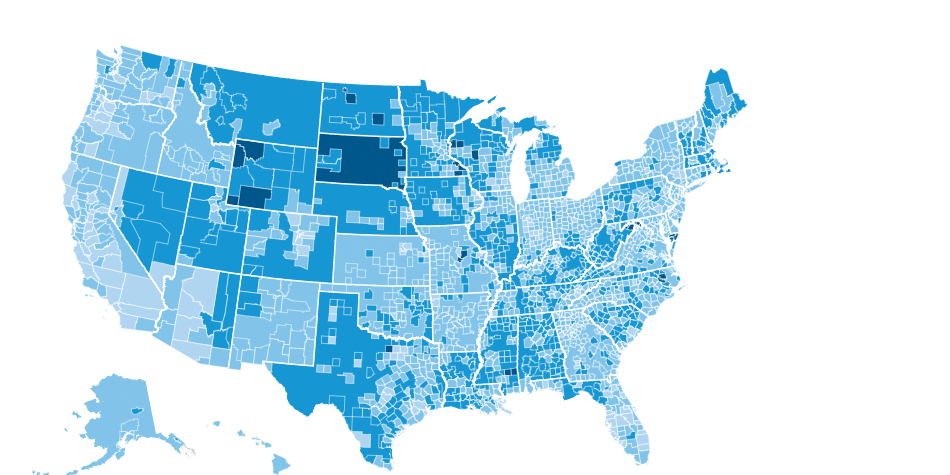
Nationwide, in 2013, there were just 28 affordable living units per 100 renter households of extremely low income, down from 37 in 2000. Here’s the national map:

crisis3

The darker counties have more units per low-income population. (Jones and Wayne counties in Mississippi are at or near the top, at 71. Click here for the interactive map.)

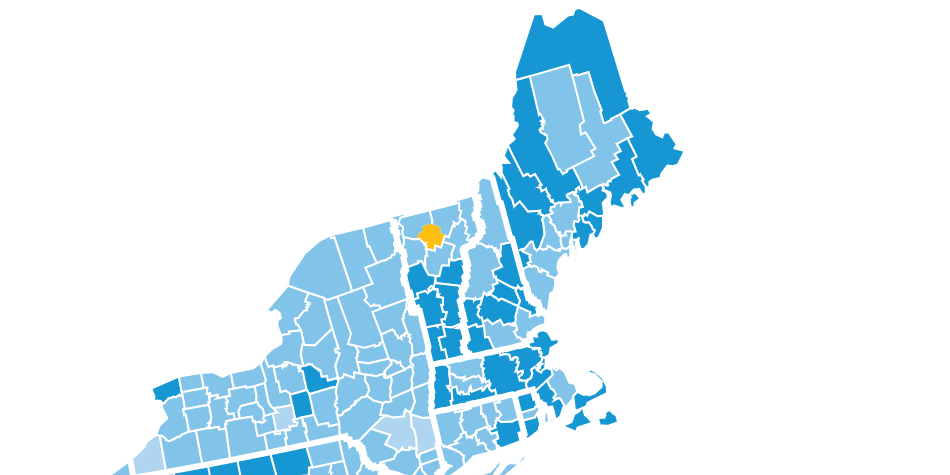
Vermont does a little better than the national average. Here’s the Northeast map, with Lamoille County highlighted:

crisis5

The figures for Vermont counties:

Caledonia, Lamoille, Orleans, Washington: 29 affordable units per 100 extremely low-income households.

Grand Isle: 32.

Chittenden, Franklin: 35.

Addison, Bennington, Rutland: 47.

Orange, Windham, Windsor: 49.

Those numbers may look impressive compared to some other states, but don’t forget that a majority of the extremely low income population is still out in the cold.