- Portland, Ore., has come up with a new funding source for affordable housing: tourists!
 The city council has voted to dedicate a share of the tax on Airbnb-type rentals to the city’s Housing Investment Fund — $1.2 million a year. That’s a drop in the bucket in a city where the affordable housing shortfall amounts to about 24,000 units, but it’s better than nothing.
 - Jackson Hole officialdom has agreed to consider a plan that would dial back commercial growth in favor of housing, with density bonuses offered for workforce housing. A citizen campaign bearing slogans like “Housing not hotels” apparently got a receptive hearing.
- The Republican leadership of Howell, N.J., is backing an affordable housing project despite, and in the face of, some unusually ugly civic opposition — in a state where support for affordable housing is typically associated with Democrats.
 This profile of courage, in the Atlantic, includes a fine summary of the tortuous (and torturous) fate of affordable housing in New Jersey after the landmark Mount Laurel decisions. Another example of how good intentions and a supportive legal infrastructure are not enough.
 - The “recapitalization” of Freddie Mac and Fannie Mae, as proposed by two economists, would direct a flood of new money to the states for affordable housing via the Housing Trust Fund and the Capital Magnet Fund.
 Vermont would get $4.6 million a year for affordable housing for 20 years under this scheme. Sounds great, but whether this proposal has any legs is an open question. Some members of Congress would just as soon do away with Freddie Mac and Fannie Mae altogether.
 - A community of 15 tiny houses is scheduled to open later this month in Seattle to provide transitional quarters for homeless people. Granted, this isn’t exactly cheerful news, but at least it’s different.

With sadness – but with some hopefulness
Alas dear friends, December 31, will be the last official day of work at the FHP/Thriving Communities campaign for the wonderfully talented, informative, and entertaining Blogger and journalistic seeker of truth, Tim Johnson. Tim is one of a kind and is an irreplaceable human resource. We offer Tim our deepest felt thanks and all best wishes. Of course Tim will be missed greatly, both his personal presence in our office and his many professional contributions to the cause of promoting Thriving Inclusive Communities in Vermont and as far and wide as our campaign is reaching beyond the state.
Our loss of funding from HUD, compounded by no forthcoming funding commitment from the Vermont Department of Housing and Community Development, is forcing CVOEO to eliminate not only Tim’s position but to substantially reduce the funded hours for my position as director at the Fair Housing Project. However, all is by no means gloom for the New Year ahead!
The hopeful part comes from the following:
- The Thriving Communities: Building a Vibrant Inclusive Vermont campaign will continue with current, and perhaps new partner organization in the future!
- The Fair Housing Project of CVOEO, lead organization for the Campaign will continue albeit with reduced staffing/capacity.
- We are receiving some private and organizational contributions to the project budget and continue to welcome such generosity.
- More people continue to be interested and involved in our Campaign’s variety of social media outreach and we will build upon that.
- We will be planning and working toward another successful art and education oriented celebration of April – Fair Housing Month in 2016.
What you can do to help continue to build our campaign:
- Read, write comments, and engage in discussion on this Blog page.
- Write a guest blog for us to post!
- Contribute money to the Campaign and suggest possible foundation or other sources of funding for us to pursue.
- Get involved in every way possible helping promote inclusive, thriving communities, affordable housing and funding/public policies that make more affordable and better located housing possible.
Finally – HAPPY HOLIDAYS ALL!
Nagging question
How does an affordable housing development affect surrounding property values?
There’s no simple answer to this question, in part because of the many variables that come into play– the siting, for example, and the nature of the neighborhood (blighted? well-to-do?), the scale of the development, the design, and so on. 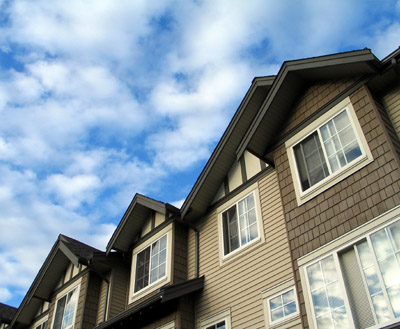
Not surprisingly, though, the question has spawned a large literature. A rather dated survey of the research, from the Furman Center at NYU, found that “the vast majority of studies have found that affordable housing does not depress neighboring property values, and may even raise them in some cases.” A “Field Guide to Effects of Low-Income Housing on Property Values,” put out by the National Association of Realtors and citing numerous references, updated last year, agrees: “Most studies indicate that affordable housing has no long term negative impact on surrounding home values.”
Indeed, that’s the standard pitch that affordable-housing advocates make in the face of NIMBY opposition: The notion that affordable housing drives down property values is a “myth.”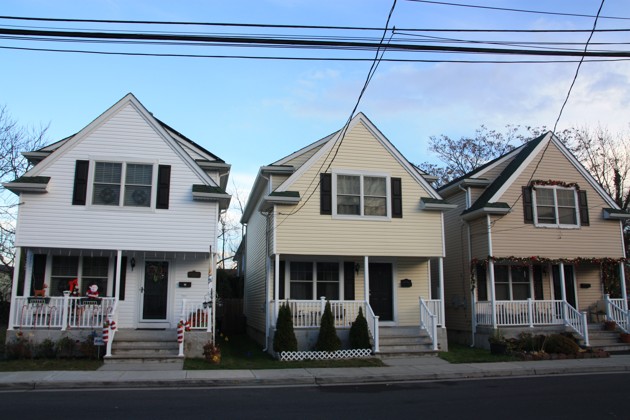
Then, along comes a study with an inconvenient conclusion, seemingly muddying the water. That would be “Who Wants Affordable Housing in their Backyard? An Equilibrium Analysis of Low Income Property Development,” by Stanford economists Rebecca Diamond and Tim McQuade. Their finding is that, within a 0.1-mile radius, Low Income Housing Tax Credit-financed developments raise property values over the long run in low-income neighborhoods but lower them in higher-income neighborhoods. They conclude: “Given the goals of many affordable housing polices is to decrease income and racial segregation in housing markets, these goals might be better achieved by investing in affordable housing in low income and high minority areas, which will then spark in-migration of high income and a more racially diverse set of residents.” 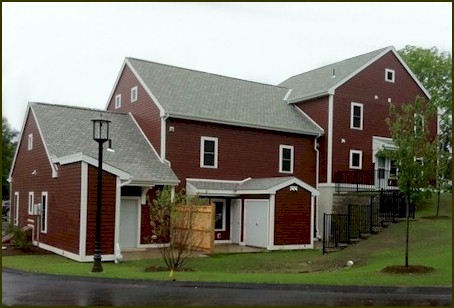
This conclusion runs contrary to the spirit of affirmatively furthering fair housing, which advocates a balanced approach for affordable housing investment: revitalizing blighted areas, on one hand, and desegregating higher-income areas, on the other. This dual approach also has the imprimatur of the U.S. Supreme Court, which effectively endorsed it in its ruling this summer upholding the disparate impact doctrine. (For our previous post on this, click here.) The court’s ruling favored a Texas plaintiff who argued that affordable housing projects should NOT be disproportionately sited in low-income minority neighborhoods.
While we await critiques of the Stanford study from the affordable-housing commentariat, we take note of various examples where affordable housing has not depressed property values in higher-income communities: Places such as Mount Laurel, N.J., epicenter of New Jersey’s fair/affordable housing movement, where a Princeton study found that values in surrounding neighborhoods were unaffected (for the New York Times account, click here). Or Weston or Wellesley, two of Massachusetts’ wealthiest communities, where a Tufts study found that mixed-income developments had no effect on surrounding property values, as reported via Shelterforce.
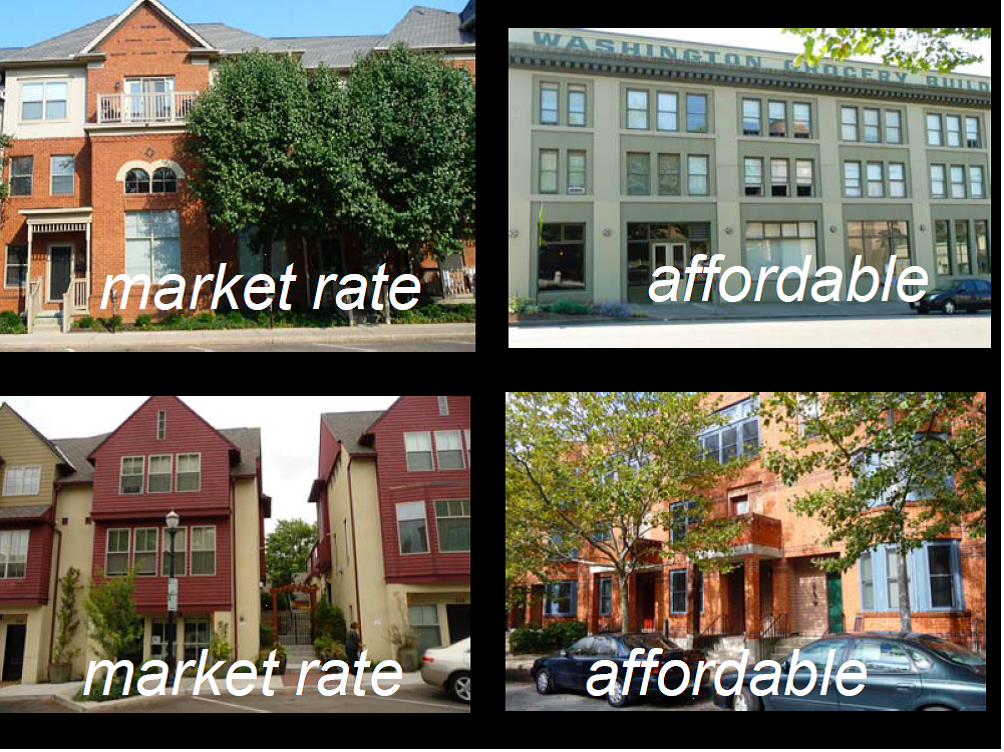
One factor that might well have a bearing, and that would not show up in the Census-tract-type data used by the Stanford researchers, is design. Affordable housing doesn’t have to look cheap or barracks-y. In fact, if the design is done well, affordable units can be hard to distinguish from market-rate units.
Planning consultant Julie Campoli demonstrates this in her “Thriving Communities” webinar/seminar presentation. She shows each of the following two slides of four photos each and asks viewers to guess which is affordable and which market-rate. We’re giving the answer away by showing the labeled versions here, but her point should be obvious.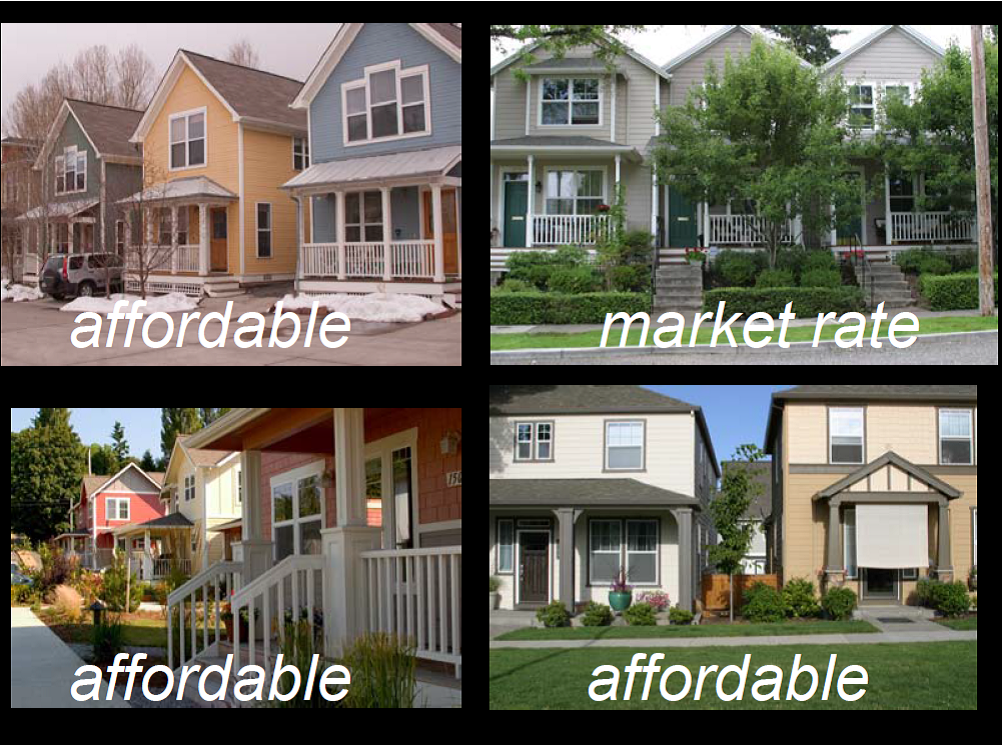
Renters’ agenda
The Center for American Progress has put out a report that nicely ties together, in summary fashion, the current status of fair housing and unaffordable housing. These are the mainstay, overlapping concerns of the “Thriving Communities” campaign. If you’re looking for a fairly brief (33 pages) treatment of where things stand, complete with an array of federal policy recommendations, “An Opportunity Agenda for Renters” is worth a look. 
The report touches on many of the topics we’ve mentioned in this blog — the persistence of racial and socioeconomic segregation, the barriers to mobility from impoverished to high-opportunity areas, the growing financial burdens on the growing class of renters in the face of woefully insufficient public subsidies.
One of the policy recommendations, naturally, is that the primary federal vehicle for creating or preserving affordable housing be expanded. That’s the Low Income Housing Tax Credit, which accounts for about 110,000 residential units a year, according to the report. But even if that program were increased by 50 percent, as called for by the Bipartisan Policy Center’s Housing Commission, the total number of units created or preserved would still be way too few, considering “the current shortage of 4.5 million units that are affordable to extremely low-income households.”
As things stand, the federal tax code benefits homeowners in several ways, and disproportionately the wealthier ones. The mortgage-interest tax deduction alone costs the government about $70 billion a year. By contrast, increasing funding of the Section 8 program to cover 3 million eligible low-income renters who are shut out of the program now would cost just $22 billion.
Here’s another proposal in renters’ favor: creating a federal renters’ tax credit. A modest tax credit benefiting the lowest income renters could cost a mere $5 billion.
Vermont’s renter rebate is better than nothing, but it still doesn’t go very far. In 2012, according to a 2014 report to the Legislature, 13,541 claimants (about one-fifth of the state’s renting households) received a total of $8.7 million in rebates, for an average of $641. That $641 was not enough to unburden the typical claimant.
“On average,” the report stated, “Vermont’s renter rebate program reduces gross rent as a percent of household income from 36.7 percent to 33.6 percent.” 
In other words, the average renter was living in an unaffordable place even after the rebate.
The economic damper
If a crisis isn’t mentioned in a presidential debate (as the national housing crisis was not, in either of the televised colloquies over the past week), does that mean it doesn’t exist?
Of course not. Whether the candidates are willing to discuss it or not, the affordable housing shortage remains a damper on economic vitality and job creation. Burlington’s latest housing market analysis (July 31) gets to this point right in the first paragraph:
“Burlington’s housing market is marked by an imbalance between supply and demand. … The rental housing imbalance translates into high housing costs (relative to income) and lower quality rental housing stock. … An imbalanced rental housing market also impedes economic growth since employers have trouble recruiting and retaining their workforce.”
The same can be said for many other communities in Vermont and beyond, as seen in these news bulletins from the last few days:
- Toyota Financial Services decided to pull out of Los Angeles and move to Plano, Texas, in part because of LA’s high housing costs and rent burdens.
- Well up the coast, in northwest Oregon, the lack of affordable housing “threatens the viability” of major cheese company that is subsidizing a housing task force in a county, beset by negligible development.

- In Key West, the Naval Air Station has trouble retaining civilian employees because of high housing costs. About half the base’s firefighter recruits wind up leaving after a few months’ training because they can’t afford to live there, according to the chief.
- In Travers City, Mich., the housing shortage repels new workers, in a kind of vicious cycle.
 “Builders can’t construct housing because they lack works and workers won’t relocate to the area because they can’t find housing,” The Traverse-City Record-Eagle laments.
 - Colorado, the rental market is so tight in some ski towns that some workers are living in their cars or in temporary shelters. Several hundred Vail Resort workers recently confronted another kind of indignity: they were informed that they’d have to share rooms in the employer’s housing complexes.




Capital ideas
This country’s shortage of affordable rental units runs into the millions, and Vermont’s is in the thousands. Where’s the money going to come from to build or rehab our way out of this hole? Government spending falls chronically and abysmally short, but there’s a glimmer of hope that a growing fraction of the massive need can come from an unlikely source: private investors. 
But first, consider the scale of the need. According to the recent Harvard report on rental housing, 11.4 million renter households are “severely burdened,” paying more than 50 percent of their income for housing. (An additional 9.9 million are simply “burdened,” paying more than 30 percent.)
In Vermont, 26 percent of the 75,000 renter households are severely burdened — that’s 19,500 households living in places that are far beyond their means. And in Burlington, 35 percent of the 9,500 renter households are in that position – about 3,300 households.
The federal government’s primary subsidy for affordable housing development is the Low Income Housing Tax Credit, which produces in about 100,000 affordable rental units a year. Then of course there’s the challenge of maintaining affordability for units whose tax credits expire, a challenge that Vermont’s housing nonprofits and state agencies contend with annually as they marshal limited public resources to preserve the affordability of what’s here. And even though they’ve been largely successful, what’s here isn’t anywhere near enough. Yes, the private market is turning out new rental housing to meet the growing population of renters, but the great majority of those new units are high-end.
A new report from the Urban Land Institute and NeighborWorks America, “Preserving Multifamily Workforce and Affordable Housing,” describes a range of new financing vehicles that seek to create or preserve affordable housing. Sixteen partnerships o investment companies – some new, some well-established — are profiled. One thing they have in common is that they offer returns to their investors– who include philanthropies, university endowments, pension funds and private individuals in the single digits, below what the typical real-estate investor might expect to receive. These entities include private equity funds and two real estate investment trusts (REITs) that focus on affordable multifamily developments.
The hook is that this investment sustains a social good: affordable housing. If “socially responsible investing” is popular among Vermont’s progressive monied class, why can’t affordable housing be one of their fiduciary causes? A creative financier might even find some way to enlist the UVM endowment or the state pension fund in support of affordable housing development.
The report also mentions another possible funding source for affordable housing — the EB-5 program, which pulls in big investments from foreigners (typically from East Asia) in exchange for green cards, and which we’ve harped on before. Yes, EB-5 is supposed to be a job-creation program, but it turns out that real estate development developments are among the most popular EB-5 projects, in part because the construction jobs count. (Check out this article, “Real Estate: Still the Darling of EB-5.”) True, affordable housing isn’t the typical EB-5 project, but it has been done – in San Francisco’s Hunter’s Point Shipyard, and in Seattle, near the Seahawks’ stadium. Next up, Miami.
How about Newport, Vt.?
Shameless begging…
OK – “Shameless begging?” I’m talking about me, Ted Wimpey, director of the CVOEO Fair Housing Project, and I am appealing to all friends of the Thriving Communities campaign and the Fair Housing Project of CVOEO; the primary organizing program for the Thriving Communities Campaign.
First, some not so good news: 1) The Fair Housing Project’s grant from HUD to “Affirmatively Furthering Fair Housing” in Vermont ends December 31, and due to changes in HUD’s funding priorities for fair housing programs we were not able to apply for another round of funding from HUD. 2) We have been informed that the State of Vermont will not be providing any funding for the Fair Housing Project or our campaign next year.
Now some better news: 1) We have received a challenge donation of $20,000 that will help us maintain the campaign as we seek other alternative funding sources. 2) We intend to keep the Thriving Communities campaign and the Fair Housing Project alive, albeit at a reduced staffing level, by all means possible.
OK, here comes the begging part:
Below is a very easy way to contribute (a tax deductible Holiday gift perhaps?) to the Fair Housing Project and the Thriving Communities campaign:
1) Go to the CVOEO donation web page – the link is below these instructions
(Note: the CHAMPLAIN VALLEY OFFICE OF ECONOMIC OPPORTUNITY INC has partnered with “Network for Good” to securely process your online credit card payment via Network for Good (tax ID 68-0480736). This transaction will appear on your credit card statement as “Network for Good.” This transaction is subject to Network for Good’s Privacy, Security & Disclosure Statement and the Charitable Solicitation Disclosure.)
2) Select from the |”How Much Would You Like to Donate Today?”| choices at the top of the page; any amount will help – more is even better than less 😉
3) Next choose donation frequency: |”ONE TIME“| or |”MONTHLY“|
4) Next scroll down to |”Payment Information“| and choose: |”Credit/Debt“| or |”PayPal“|
5) Then – IMPORTANTLY – scroll down to: |”If you have a special purpose for your donation, please let us know“| and from the drop-down list there please Choose the |”FAIR HOUSING PROJECT“| .
6) Click the |”DONATE NOW“| button!!
***CVOEO Donation Page “DONATE NOW”: click this Link****
We will be very grateful to you. THANK YOU!
Zoning’s link to unaffordability AND inequality
Rising income inequality has become a major public concern over the last few years. What some of us may not realize, though, is that zoning is one of the likely culprits.
Yes, zoning and other land-use restrictions can contribute to housing unaffordability, but also — by extension — to income inequality and diminishing productivity.
That’s the argument that Jason Furman, chairman of the president’s Council of Economic Advisors, brought to the Urban Institute in an address last month. His remarks had scholarly underpinnings, in the form of charts and footnotes.
Here’s a compressed version of what he said: Income inequality has increased over the last several decades, as have land-use restrictions in the more productive metropolitan areas. Meanwhile, labor mobility has declined — workers are less likely to switch jobs and move around the country for higher pay — and so have annual increases in productivity. The drop in mobility ( or “fluidity”) is not well understood, but one cause appears to be the high cost of housing in high-wage, productive cities (such as Boston or San Francisco) that many would-be employees can’t afford to move to.
“Zoning and other land-use restrictions, by restricting the supply of housing and so increasing its cost, may make it difficult for individuals to move to areas with better-paying jobs and higher-quality schools,” he said. (He acknowledged that some land-use restrictions can be beneficial, but that some can be harmfully excessive, in such forms as minimum lot sizes, off-street parking requirements, height limits, prohibitions on multifamily housing, and lengthy permitting processes.)
Hampered mobility diminishes economic growth, he said, citing the same recent study we referred to in a recent post.
Generally speaking, Furman said, zoning restrictions tend to favor well-to-do property owners, who defend these restrictions so as to safeguard their assets. Stringent zoning reduces housing supply, maintains high prices, reinforces wealthy enclaves, and effectively repels people of moderate or low income. The restrictiveness of land-use regulations correlates with the gap between construction costs and house prices — the bigger the gap, the more land costs figure into the those higher prices.
“The timing of tighter land use regulations may not have been a coincidence,” Furman said. “After a turbulent decade of the 1960s in the United States that saw racial tensions flare, with rioting in many urban areas around the country that damaged or destroyed both residential and commercial structures, thousands of high income, predominantly white families moved out of many cities, spurring the continued rise of racially and socioeconomically homogeneous communities. These communities were also strictly zoned, a choice which may very well have been a part of a conscious or unconscious attempt to maintain this homogeneity through the affordability channel.”
Nowadays, there’s an increased demand for multi-family housing, but this form of housing tends to be heavily regulated, he said, and one of the nation’s challenges is to reduce regulatory barriers to increasing the supply of this housing option. In fact, the Obama administration is promoting an initiative (the Multi-family Risk Sharing Mortgage) to shore up the “limited supply of credit” for multifamily developments.
What’s more, Obama’s FY16 budget includes $300 million for Local Housing Policy Grants — a competitive program, he said, designed to provide funds “to those localities and regional coalitions” that support “new zoning and land use regulations to create an expanded, more flexible and diverse housing supply.”
Hmm, any interest in Vermont?
Good news, mostly
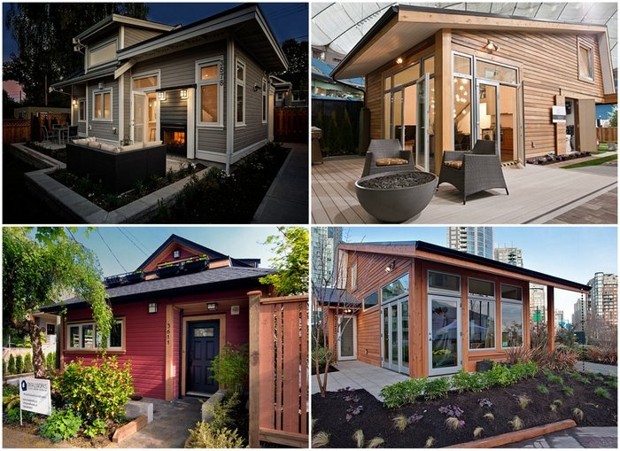
- Little backyard houses — aka “accessory dwelling units” — are springing up all over Vancouver.
 This is a partial remedy to the affordable rental shortage that afflicts municipalities all over North America, including Vermont. It also affords an optional living arrangement for older people who want to age in place. In Vancouver, these appendages are called “laneway houses,” and some of them are pretty handsome. There’s plenty of room for additions like this in Burlington, even if we don’t have alleys — and in plenty of other Vermont communities, too.
 - A “mobility program” in heavily segregated Baltimore moves families from high-poverty public housing complexes in the city to higher-rent, higher-opportunity suburbs. This is an initiative very much in the spirit of affirmatively furthering fair housing, but it serves a small fraction of the subsidy-eligible families in need and it operates largely under the radar, to minimize opposition. One obstacle: a shortage of affordable housing in suburban communities.
- Plattsburgh has a new 64-unit affordable housing complex, called Homestead on Ampersand.
 It’s just a couple of miles from the neighborhood where complaints about a proposal for a smaller affordable housing complex prevailed.
 - Columbus, Ohio, plans to transform a vacant downtown building into “workforce housing” – which in this case means housing for people who make $40,000 to $60,000 a year. The made-over building would feature micro units – apartments of 300 square feet or so and targeted, presumably, to single Millennials. We’ve touched on the micro movement before, which seems to be taking hold mostly in bigger metro areas (here’s a roundup with a national map; for a more substantial study of the phenomenon, click here). But it has also spread to Kalamazoo and, as we’ve noted, Syracuse, so there’s no reason it couldn’t work in an over-priced city like Burlington, where officialdom is forever wringing its hands about how young professionals have trouble finding affordable accommodations.

The Burlington College land deal
Burlington College’s intent to sell off much of its lakeside acreage drew opposition when it was announced two years ago. Now, as a development plan awaits City Council approval, the grumbling continues. Some of the grumblers apparently cling to an obsolete fantasy: namely, that most of the property could be spared development and conserved as greenspace. 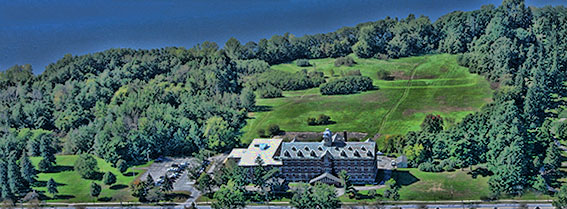
Thumbnail history: In 2011 the college bought 32 acres from the Catholic diocese for about $10 million, then came to the realization, after a couple years of stagnant enrollment, that it couldn’t afford the payments. To survive, the college would have to sell off a big chunk of the land, and it revealed its plan to do so to housing developer Eric Farrell a little over two years ago.
The deal wasn’t done, though, and there was a window of many months when someone else — someone like the Nature Conservancy, say, or a land trust — could have stepped forward to offer the $7 million or so that would have been necessary to buy the developable land for conservation purposes. No one did, though. That’s why the greenspace fantasy is obsolete.
Not developing the land was not an option, at least if Burlington College wass to stave off bankruptcy. And if the college were to go belly up, well, then ownership of the property would have reverted to creditors (principally a bank), leading to a development scenario perhaps less palatable than Farrell’s.
If there’s anything reasonably left to grumble about, it’s in the details of the agreement the City Council will review next week. Among those details, as we understand them: The city is acquiring 12 lakeside acres for $2 million to be maintained as parkland (a parcel, by the way that has been appraised at $2.9 million). Farrell will develop about 550 housing units on 16 acres, of which 160 will be affordable to families of income below 65 percent of the median, with other units targeted to people of moderate income, while the rest are market-rate; and 200 beds for students on a parcel the college will retain for its campus.
This much is clear: The city is in desperate need of more affordable housing, and it has its inclusionary zoning ordinance to thank for the affordable units in this scheme, and (2) This inclusive new neighborhood, as planned, will be one of exemplary economic diversity.