This week, the Fair Housing Project of CVOEO and the Thriving Communities campaign bring you a sampling of Vermont news related to fair housing, affordable homes, and inclusivity, as well as a plea for comments on a proposed federal policy change that could fundamentally reshape federal fair housing enforcement.
Read on… but first, a few questions for you:
- What types of articles and resources would you like to see in the Thriving Communities blog?
- Would you or your organization like to contribute to this blog?
The Thriving Communities blog reaches a diverse cohort of housing and service providers, planners, municipal officials, advocates, and community members who are committed to promoting affordability and inclusiveness as a mainstay of flourishing communities across Vermont and beyond. Send your suggestions and ideas to us at fhp@cvoeo.org. We’re looking forward to hearing from you!
CALL TO ACTION! Submit comments on proposed changes to the disparate impact rule
HUD’s proposed revisions to the disparate impact rule could fundamentally reshape federal fair housing enforcement and we encourage you to submit a comment – no matter how brief – in support of the existing rule without amendments.
Disparate impact refers to practices or policies that have an adverse impact on certain classes of people without discriminating against them in explicit terms, such as a landlord who only accepts people with full-time jobs, which bars disabled veterans and other people with disabilities who may not be able to work full-time, even though they can afford the apartment, or a housing authority that distributes housing tax credits, which are used to build low-income housing, in a way that consolidates construction in mostly immigrant areas.
The Supreme Court has recognized this form of bias as prohibited under the Fair Housing Act, but the proposed amendments would substantially raise the burden of proof for parties claiming discrimination. The changes would also result in special defenses for business practices that rely on statistics or algorithms, such as credit scoring, pricing, and automated underwriting systems. This could create a loophole for lenders and landlords using third-party vendors by shielding them from liability while making it more difficult to attribute the discrimination to the model or algorithm.
Please take a few minutes to submit a comment. You can sign on to the National Fair Housing Alliance (NFHA)’s letter, or better yet, write your own. The deadline Oct. 18 and the official submission form is here: https://www.federalregister.gov/documents/2019/08/19/2019-17542/huds-implementation-of-the-fair-housing-acts-disparate-impact-standard
More resources:
 The 2019 Housing & Conservation Conference: Building and Sustaining Healthy Communities, is Oct. 10 in Barre. The day will be filled with workshops, discussions, presentations and field trips to provide fresh perspectives around six themes that cross the boundaries between housing and conservation. A highlight of the day will be Dr. Tiffany Manuel‘s return to Vermont. Dr. Manuel gave a powerful presentation on messaging strategies to advance a strong affordable housing and community development agenda at last year’s Statewide Housing Conference. She joins Alfred Diaz-Infante and Todd Farrington, representing two housing and conservation organizations in the Salinas Valley of California, for a discussion on collaboration, diversity, impact, equity, and community engagement. Register now.
 Upper Valley commissions join forces in support of housing: Keys to the Valley is a new initiative of the Two Rivers-Ottauquechee Regional and Southern Windsor County Regional Planning Commissions of Vermont and the Upper Valley Lake Sunapee Regional Planning Commission of New Hampshire to increase the amount of safe and affordable places to live in the Tri-Commission region, which covers 67 communities on both sides of the Connecticut River. The “A Home For All” video on the Keys to the Valley website, created a few years ago by TRORC, does a nice job of connecting housing to the long-term sustainability and success of communities. Learn more here.
In other Upper Valley housing news, Vital Communities Workforce Housing initiative is holding a business breakfast Nov. 1, 7:30-9am, at Fireside Inn and Suites in Lebanon, N.H. with a focus on how businesses can support the creation of workforce housing. More info and registration link.
Laurentide Apartments opens in Burlington: Champlain Housing Trust’s 76-unit development at Cambrian Rise on North Avenue is now open. CHT and Housing Vermont will hold a ribbon-cutting 10-11am Monday, Oct. 7. Laurentide will soon be joined by Juniper House, Cathedral Square’s newest housing community for older adults. The ceremonial groundbreaking for the 70-unit development was Sept. 26. Read the VTDigger article here.
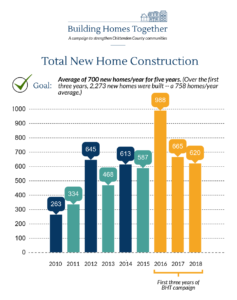
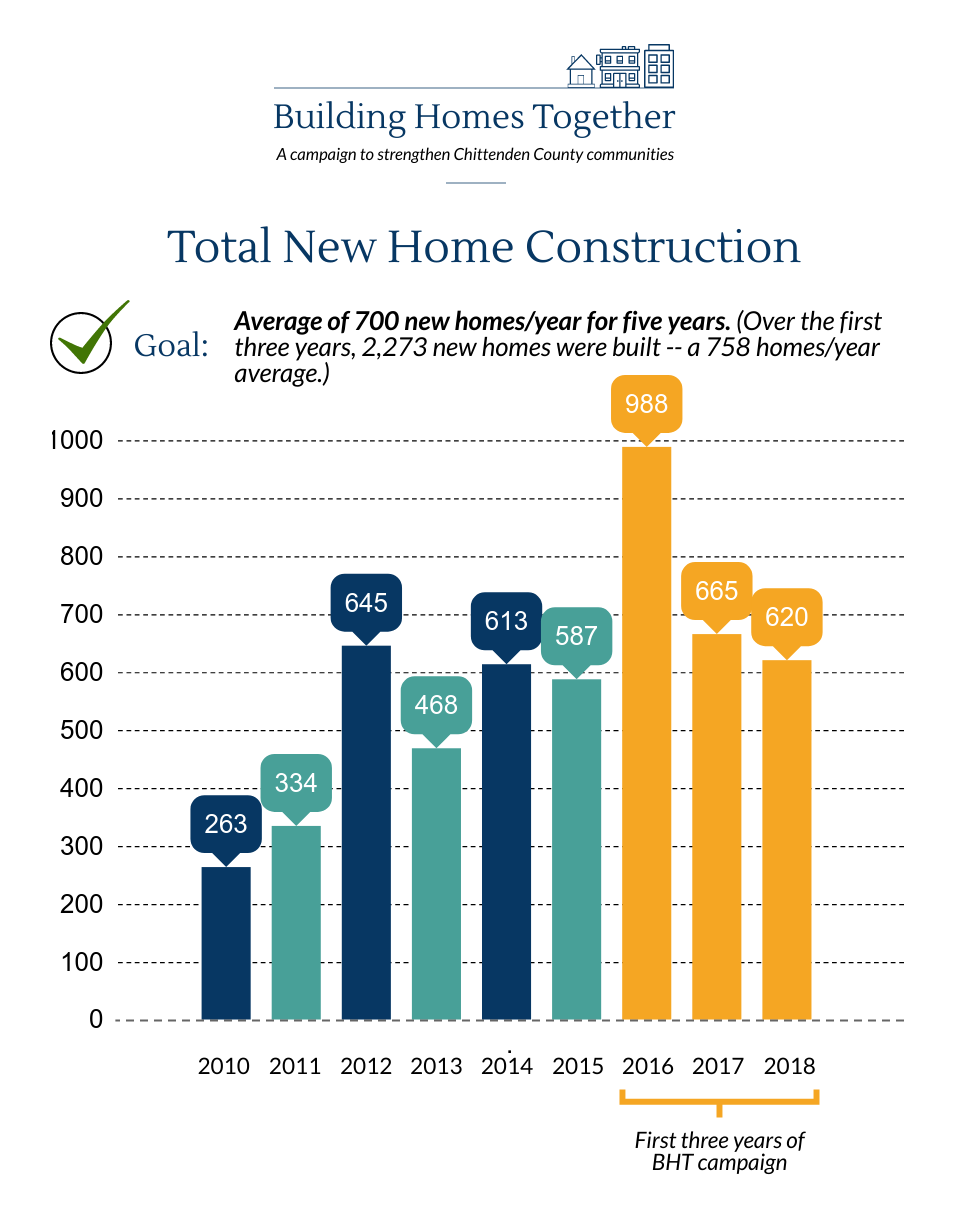
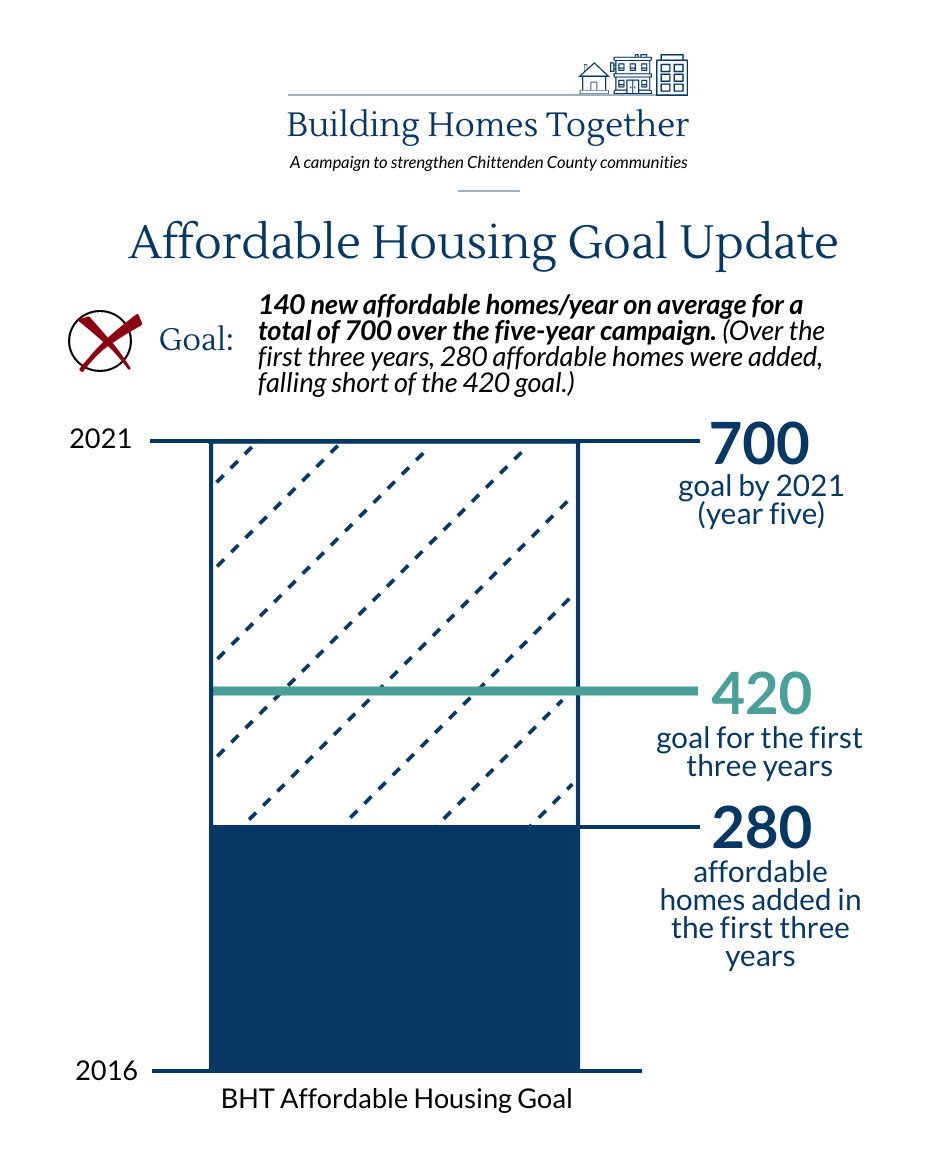
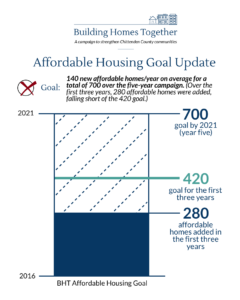 New homes being built, but affordability lags: Building Homes Together, a campaign to encourage housing production in Chittenden County is keeping apace of its overall production goals, but the gap between housing costs and wages is growing, according to housing leaders. There were 620 homes developed and ready for occupancy in 2018. Over the first three years of the campaign an average of 758 homes were built each year, which is ahead of the pace needed to meet the campaign’s goal of 3,500 homes over five years. However, only 280 of the 2,200 homes built in the last three years – 13% – are permanently affordable. Read more here.
BHA names new executive director: Burlington Housing, Vermont’s oldest and largest municipally chartered housing authority has hired Laura Zeliger as its new executive director, replacing Allyson Laackman. Zeliger currently serves as the community and restorative justice director for the Vermont Department of Corrections. Please join us in welcoming Laura! Read more here.
Members of the Vermont Senate Committee on Economic Development, Housing and General Affairs have been traveling all over the state to hear from people about the state’s housing shortage. The next meeting is in St. Albans on Oct. 29 and there will also be hearings in December in Windham County and in early January in Chittenden County. Read more here.
For more events, check out the Vermont Affordable Housing Coalition calendar.
In case you missed it:
VPR’s Brave Little State asks “What are the causes of Vermont’s tight housing market — and why aren’t things getting better?”
⇒ Want to see your Vermont housing news featured in this periodic roundup?
Contact us at fhp@cvoeo.org
⇒ For more information about your fair housing rights and printable resources in multiple languages, visit www.cvoeo.org/fhp
 We are in an unprecedented moment, still deep into a health crisis that has magnified existing economic and health disparities and has destabilized our country, state, and communities. Meanwhile, there is a tremendous energy for civic engagement and people are finding ways to make positive change at the local level and to support their neighbors.