All posts by Kahlia Livingston

Expansion in Vermont Fair Housing Law Protections

By Kahlia Livingston, Fair Housing Project Education & Outreach Coordinator

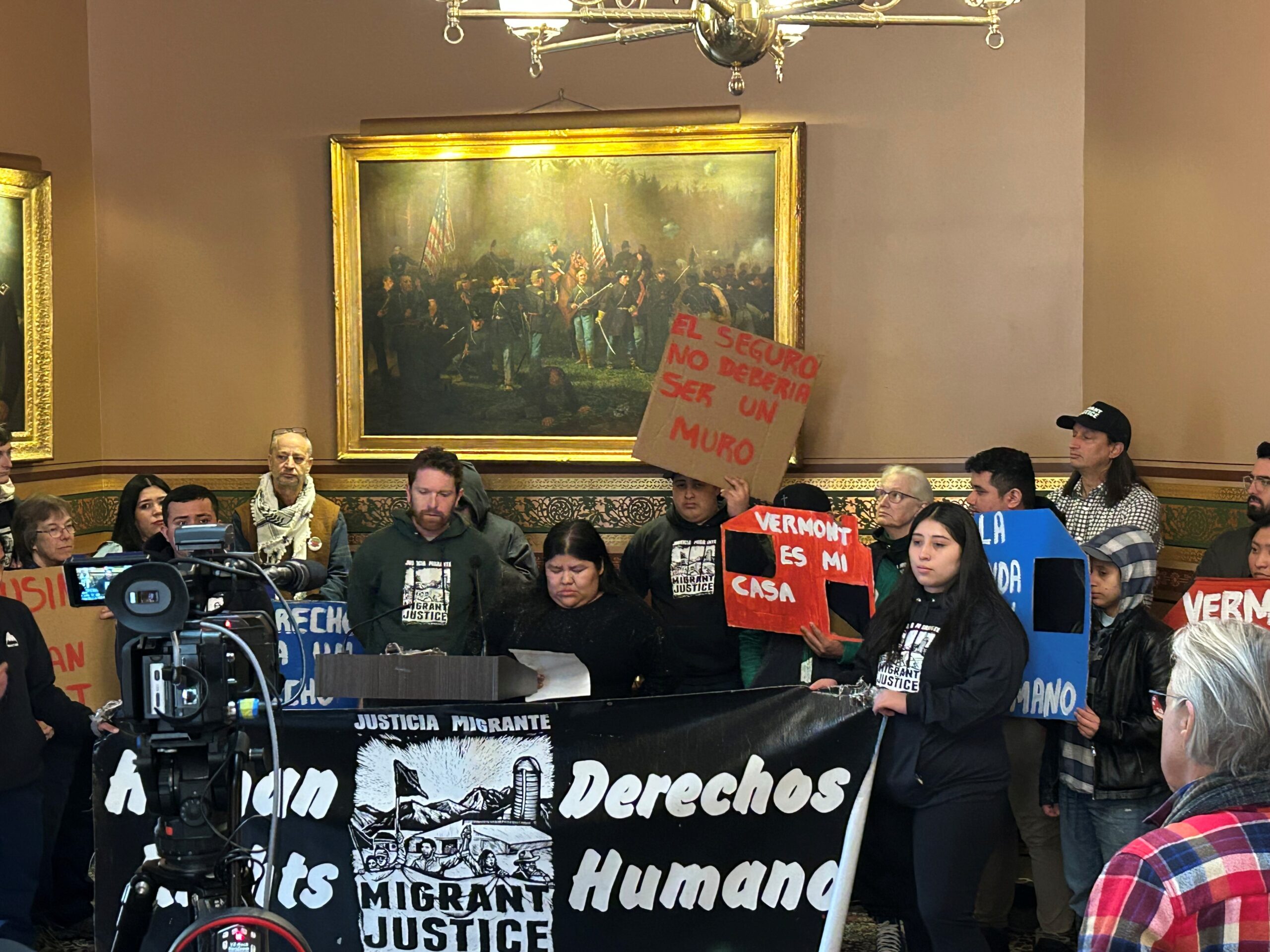
After years of advocacy and organizing, Migrant Justice and affiliate organizations worked alongside legislators to pass the “Housing Access for Immigrant Families” bill during the 2025 session. The act expands Fair Housing and Public Accommodation laws to include Citizenship & Immigration Status as a protected class, which makes it illegal to discriminate against someone because of their citizenship or immigration status in housing and in public spaces. Many community members and organizations around the state came together to advocate for this bill and were dedicated to seeing these protections come into fruition. The bill started in the “House Committee on General and Housing” with sponsorship from key legislators Rep. Leonora Dodge, Rep. Kevin Christie, and Rep. Esme Cole who introduced the bill, and gathered additional sponsorship from 40 legislators. This legislation is crucial for protecting people with varying immigration statuses as many exemplified their vulnerability to housing discrimination.
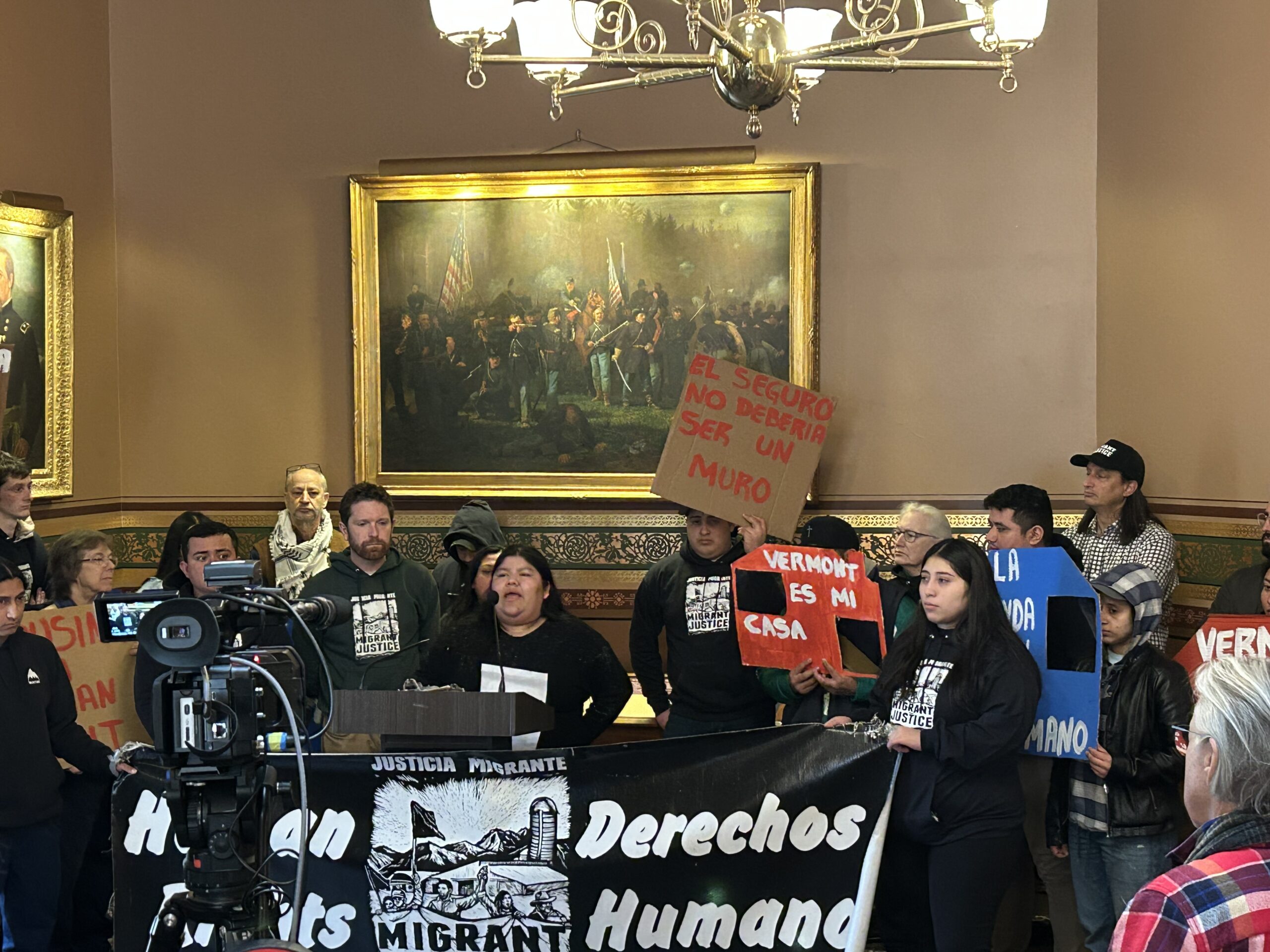
Throughout testimony, we heard from immigrants who described how in their search for stable and permanent housing they were met with discrimination and roadblocks when they could not provide a social security number on rental housing applications. This would lead to denial for housing and leave immigrant families with limited and often unhabitable living arrangements as their only options. Some of the conditions of the housing available to people without social security numbers were inhumane, over-capacity, and lacked privacy and dignity. Immigrants who were employed with steady income were still denied access to housing opportunities because they did not have social security numbers. Many Vermonters were understandably appalled after hearing these experiences and others were concerned about the burden these new protections would place on landlords. Immigrant family members who worked in the carpentry and construction fields argued that Vermont would not be able to increase housing development if the people building homes did not have a place to live themselves. This argument echoed throughout the legislature and was heard clearly.

Protections under Act 69:

  • landlords must accept different forms of identification to conduct criminal or background checks
  • prohibits landlords from requiring a Social Security Number on residential rental applications
  • forbids differential treatment on the basis of citizenship or immigration status
  • applicants cannot be denied for rental housing for not providing social security number

The law has important components to affirm that Citizenship or Immigration status is not a barrier to having equal opportunity in housing choice free from discrimination as fair housing is legally described. This bill was a major victory to be passed, and the act was enforceable as of July 1, 2025.

If you have experienced discrimination, please feel free to connect to the resources below.

  • CVOEO’s Fair Housing Project:

Schedule a FREE Fair Housing Consultation

fhp@cvoeo.org

802-660-3456 ext 110


  • Vermont Legal Aid:

Report Illegal Housing Discrimination

Fill out Legal Request Form

            OR

Call 1-800-889-2047 during these hours:

    • Monday: 8 – 1
    • Tuesday: 12:30 – 7
    • Wednesday: 8 – 1
    • Thursday: 12:30 – 7
    • Friday: 8 – 1


  • Vermont Human Rights Commission:

File a formal Fair Housing Complaint

            OR

Call 802-828-2480
Navigating Post Shutdown: Essential Information for HUD Tenants 

By Meryl Hartmann  
CVOEO Statewide Housing Advocacy Programs, Intern  

The Federal shutdown is over, but it may still take time to restart vital programs 

On November 12th, Congress passed a temporary funding bill, known as a continuing resolution (CR) on to end the federal shutdown, funding some federal programs, including the Department of Housing and Urban Development (HUD) through January 30, 2026. This resolution is temporary, still leaving the FY26 spending bill for Transportation, Housing, and Urban Development (THUD), which funds HUD’s affordable housing, community development, and homelessness service programs currently in consideration until the proposed bills by the House and Senate have been reconciled and enacted into law. 

The House bill proposed drastic cuts to several programs, while the Senate bill proposed increases to those same programs but not enough to support all Housing Choice Vouchers (HCVs) or Emergency Housing Vouchers (EHVs), differing in billions of dollars of governed funding. For current or prospective HUD tenants, understanding your rights and what to expect during this time is crucial as these spending bills are being reviewed by the federal government. 

Major Shake-Up in Homeless Policy 

The proposed changes to homelessness policy, detailed in a Fiscal Year (FY) 2025 Continuum of Care (CoC) Notice of Funding Opportunity (NOFO), released by the Trump administration, on November 13th, could significantly impact nearly 170,000 previously homeless individuals by gutting long-term housing programs if enacted. This shift moves away from “Housing First” philosophy, which prioritizes immediate housing without preconditions, towards programs that mandate work and drug treatment, potentially leading to the loss of support for disabled individuals or those over the age of 50 who rely on CoC funds.  

The plan, set to begin as early as January 2026, also includes a dramatic reduction in aid for permanent housing and introduces new two-year limits on Section 8 and other subsidized housing vouchers, emphasizing transitional housing instead of permanent solutions. The National Alliance to End Homelessness warns of a forceful shift in community apportionment in funds towards less long-term housing programs and solutions, towards more transitional or temporary shelters, housing, or new Support Services Only initiatives. 

Shutdown Risks for HUD-Assisted Households-National Low Income Housing Coalition (NLIHC) 

The National Low Income Housing Coalition (NLIHC) closely monitored the shutdown’s impact on HUD programs and the communities they serve. It is important to stay informed and know where to seek help if needed. 

Here is what HUD tenants need to know now! 

Protection Against Rent Increase or Evictions: HUD voucher holders and public housing tenants are protected from rent increases, voucher termination, or evictions. As a voucher holder, you are only required to pay your predetermined portion of the rent. 

Project-Based Section 8 (PBS8) Contracts: Most PBS8 owners have active HUD contracts extending beyond the end of the year, ensuring payments. HUD plans to have staff available to review and renew any contracts that may expire soon. Your lease should include the contact information for your PBS8 Contract Administrator or visit Vermont State Housing Authority staff directory. You are only required to pay your portion of the rent as a PBS8 tenant. Landlords may try to increase rent on tenants living in properties with expiring contracts. If this happens to you, continue to pay your portion of the rent and immediately reach out to an attorney for guidance. 

Legal Assistance is Available: If a landlord attempts to increase your rent or evict you, contact an attorney immediately. Free legal help can be found at www.lsc.gov or www.LawHelp.org. When meeting with legal professionals, bring your current lease (if available), any expired rental agreements, and all notices from your landlord or property manager. 

For Assistance in Vermont: Contact the Vermont Tenants Hotline with any questions about your rights and responsibilities, habitability issues, or other housing concerns. Our skilled advocates offer consultations, referrals, and navigation support. Call (802) 864-0099 or email vttenants@cvoeo.org

Visit https://vtlawhelp.org/ for clear civil (non-criminal) legal information and free or low-cost legal help in Vermont. Use the Legal Help Tool (https://vtlawhelp.org/triage/vt_triage), Roadmaps (https://vtlawhelp.org/roadmaps), and VT Court Forms (https://vtlawhelp.org/vtcourtforms) to get guidance, fill out forms, and navigate common legal issues. You’ll also find legal rights information, health care help, community resources, forms, guides, and sample letters. For more assistance, visit the “How We Can Help” page to contact Legal Services Vermont or Vermont Legal Aid. 

Take Action: 

Email or call your Congress members’ offices to talk to them about the importance of affordable housing, homelessness, and community development resources to you, your family, your community, or your work. You can use NLIHC’s Take Action page to look up your member offices or call/send an email directly!   

Sources: 

https://www.nhlp.org/wp-content/uploads/NHLP_Tenant_Flyer_Gov_Shutdown.pdf?utm_source=NLIHC+All+Subscribers&utm_campaign=33ff9ca965-NLIHC_Statement_on_Partial_Shutdown&utm_medium=email&utm_term=0_-b3fee911cf-434909691&ct=t(NLIHC_Statement_on_Partial_Shutdown) 

https://www.nhlp.org/wp-content/uploads/NHLP_Memo_Gov_Shutdown.pdf 

https://nlihc.org/resource/government-shutdown-extends-second-week-after-failed-cr-votes-senate 

https://www.nytimes.com/2025/11/12/us/politics/trump-homeless-funding.html 

https://nlihc.org/resource/federal-government-reopened-congress-must-now-pass-fy26-hud-spending-bill-protect-vouchers#:~:text=Memo%20to%20Members-,Federal%20Government%20Reopened;%20Congress%20Must%20Now%20Pass%20FY26%20HUD%20Spending,is%20necessary%20to%20maintain%20assistance


Rising Housing Costs Lead to Rising Instability

By Kahlia Livingston, Fair Housing Project Education & Outreach Coordinator

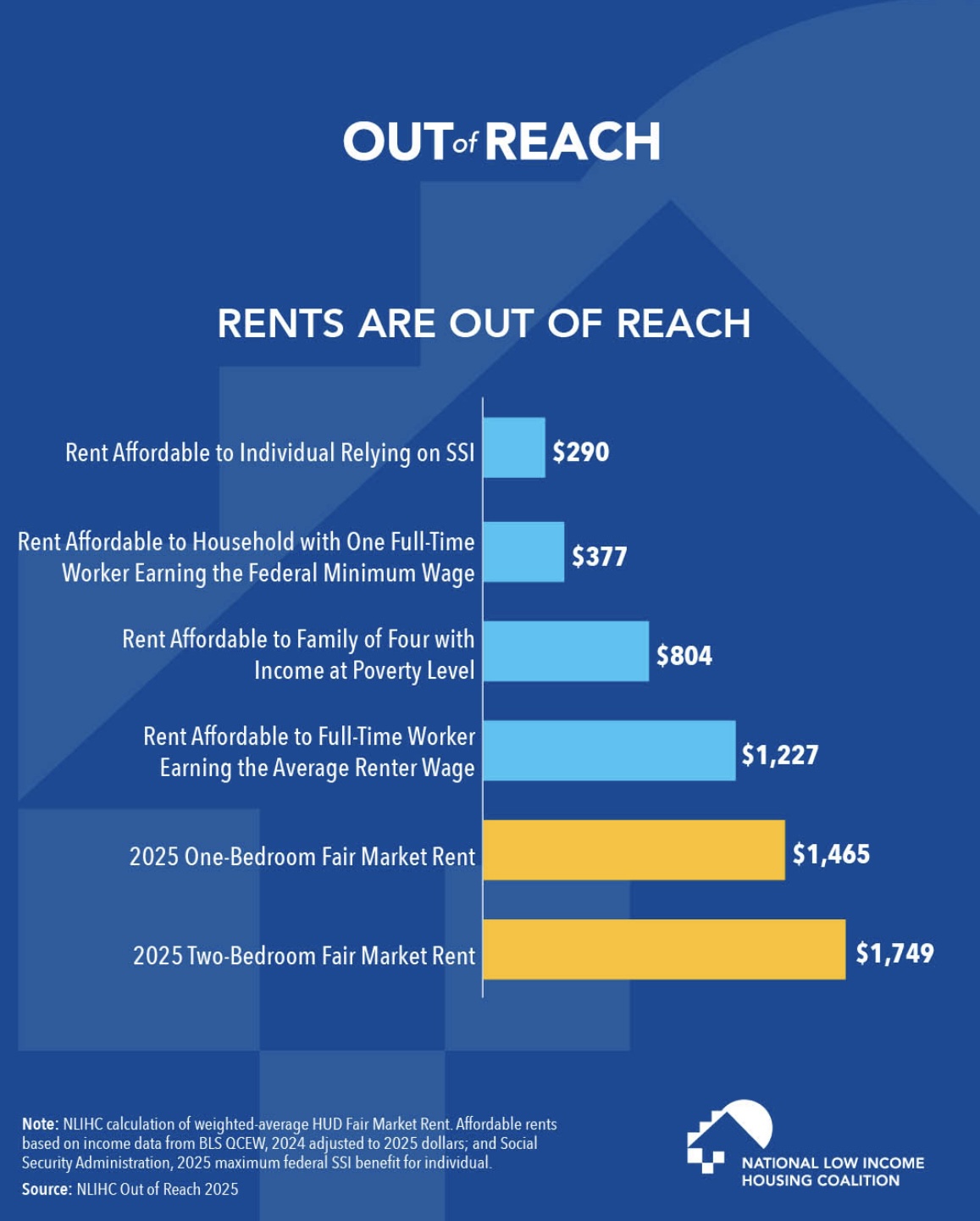
Recent data from the National Low Income Housing Coalition highlights significant housing costs burdens on Vermonters. These statistics show how housing costs have a greater impact on low-income households, many of which are people in protected classes. Protected classes are groups of people who are legally protected from discrimination based on who they are. When a seemingly neutral policy or action negatively impacts some people more than others, we also call this “disparate impact.”

Here are some specific data points:

  • Vermont Minimum Wage: $14.01
  • Rent amount that would be affordable for a Minimum Wage worker: $729
  • This means a Minimum Wage worker would need to work 67 hours/week to afford a modest 1-bedroom rental home at Fair Market Rent
  • Vermont Fair Market Rent (set by HUD): 1-bedroom $1,218; 2-bedroom, $1,546
  • 1-Bedroom Housing Wage: $23.43 (This is the amount a person would need to earn to afford a Fair Market Rent unit)
  • 2-Bedroom Housing Wage: $29.73

What story does this tell?

When a person spends most of their income on rent, they have less for other costs, such as food, childcare, transportation, recreation, etc. If someone’s income is very high and they spend 50% of it on housing, that still leaves a lot left over for other expenses. However, when a person’s income is low, 50% is a much smaller amount and doesn’t leave much.

When people have limitations or a crisis that affects their ability to work, take care of themselves or their families, or seek resources or adequate medical care, these housing costs burdens have a great impact on their livelihood, wellbeing, and their communities. The average Vermonter earns $17.67/hour, which would make $919/month an affordable rent. However, the average cost for a studio or one-bedroom “Market Price” apartment in Vermont is between $1,600-$1,800 per month, which is far beyond what is considered “Fair Market Rent.” This means the average Vermonter would have to work 1.7 full-time jobs to afford rent at fair market rate or 2.25 full-time jobs to afford rent at the average Market Price cost without having any income leftover for other expenses. Many people with membership in protected classes may have physical, mental, or emotional impairments, lack of time or flexibility in schedule, or family responsibilities. These conditions can make it harder to access jobs, higher education, or professional development and skill-building opportunities to increase their income and reduce or prevent housing and food insecurity. Many people in protected classes are elderly or have disabilities and have fixed incomes that cannot accommodate the increasing housing costs. This dynamic can create a cycle of poverty that can be difficult to improve without external support. Many rental units throughout Vermont exceed the Fair Market Rent amount.

And it’s not just the cost of housing that can limit members of protected classes.  Moving is expensive and many people don’t have the opportunity or time to move into a new apartment every few years once their rent becomes too high. Some people don’t have access to transportation that can get them to and from a job or to an area with more affordable housing. Rising housing costs will ultimately lead to increased housing insecurity and add to the population of unhoused people.

A shortage of affordable housing is a public health crisis that affects everyone. The growing costs to access and sustain housing creates a burden on most people and those with low incomes and barriers are affected the most. It is crucial that we find solutions to address these costs for everyone and protect the most vulnerable. As you reflect on this data, consider the true cost of housing instability and how it impacts your community.

Want more Fair Housing information? Contact us to schedule a Fair Housing Training, “Know Your Rights” Fair Housing and Tenant Skills Workshop, or a community housing discussion: (802) 660-3456 ext 110, email: fhp@cvoeo.org.

Statewide Landlord Connections Events

Seeking Compassionate & Trauma Informed Landlord, INQUIRE Below:

By Kahlia Livingston, Fair Housing Project Education & Outreach Coordinator

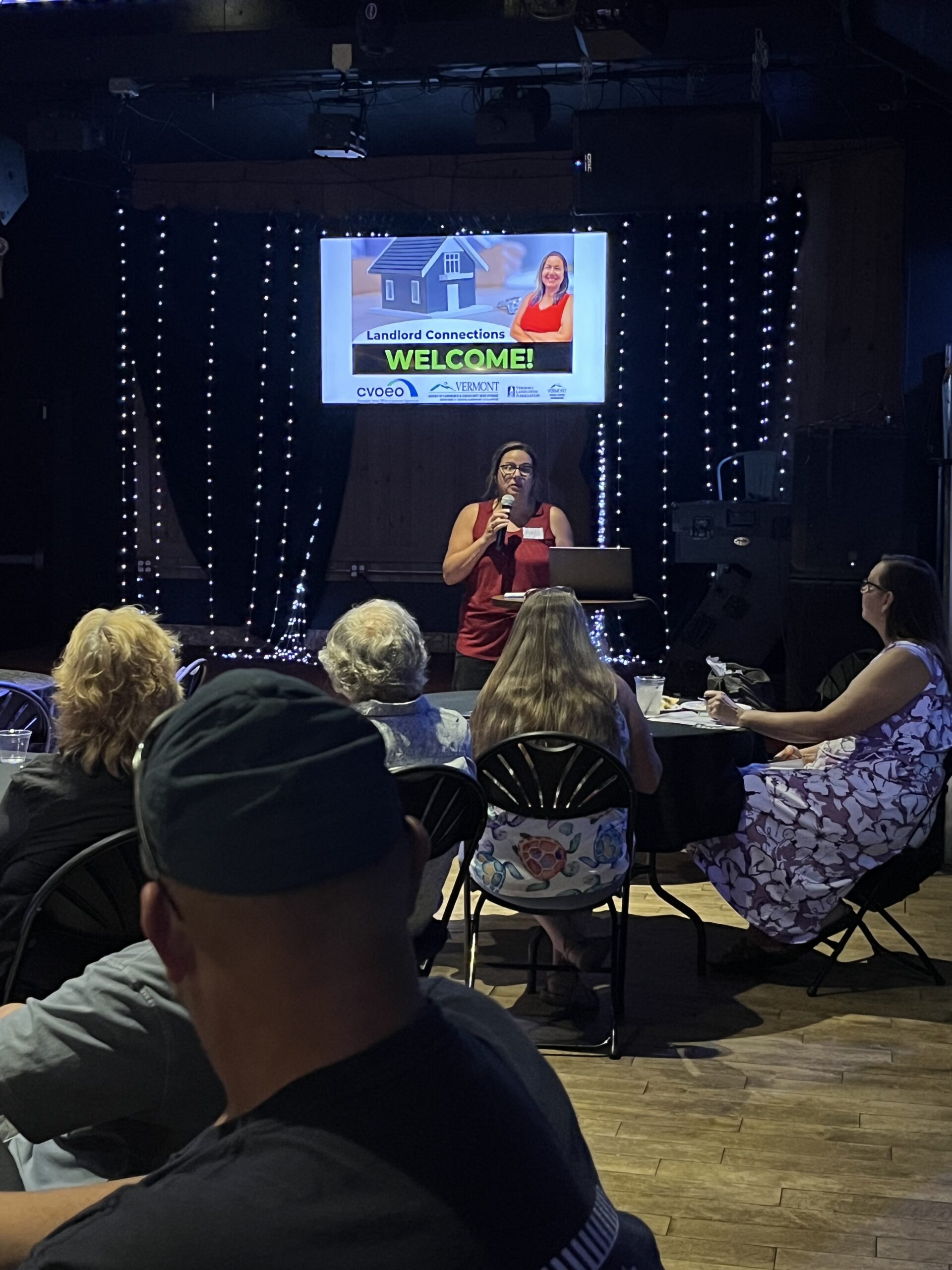
CVOEO’s Fair Housing Project recently held three Landlord Connections events to connect with landlords around the state and provide a space for networking, learning about housing provider concerns, and sharing housing resources available to improve housing conditions and help sustain tenancies. More than 70 housing providers met up in Middlebury, St. Albans, and Burlington for presentations and discussions with CVOEO’s Fair Housing Project and regional Community Action agencies, Vermont Department of Housing & Community Development, Vermont Human Rights Commission, Vermont Landlord Association, Supportive Services for Veteran Families, Burlington Lead Program, and others.

As many may know (and some may not), we are experiencing a worsening housing crisis throughout the nation that is a prominent concern in our great state. Vermont has a tight housing market with low rental vacancy rates in most counties as well as a shortage of affordable housing. Homeownership is a dream for many. However, this desire is not a one-size-fits-all for every Vermonter. Many people also enjoy the benefits that come with renting, which can include flexibility, fewer home maintenance responsibilities, and shorter commitments to an apartment or location. Since many people rely on rental housing and some prefer it, our communities need dedicated housing providers with specific qualities to help us improve the housing challenges that we are navigating. Low-income renters with membership in protected classes under fair housing laws tend to have barriers that can interfere with their access to and retention of affordable housing. These people are especially vulnerable to housing discrimination and insecurity.

Through our work with renters and housing providers, we have seen how clear and respectful communications can help foster positive relationships and successful tenancies.

What do we need in a housing provider?

  • Empathetic and Trauma-informed: Some landlords may not have lived experience of housing insecurity, houselessness, mental illness, having a disability or criminal background, being a survivor of sexual assault, abuse or stalking, (etc.) however, it is helpful for people providing housing to have knowledge, empathy, and tools for supporting these human conditions.
  • Cultural awareness and inclusivity: There are several of languages spoken by residents statewide with people from various cultures and countries enriching our Vermont communities. Housing providers should be knowledgeable and well-practiced in serving renters with different demographics than themselves or their families.
  • Good communications and customer service skills: Landlords are providing goods and services, so building rapport with renters is crucial to curating and maintaining a business that thrives.
  • Low to no profit-centered attitude: Renting is a business that generates income for the housing provider, but in what ways can renters benefit from the money they are investing in monthly rent payments? These costs add up and tend to leave renters with more losses than gains. Co-op housing can allow renters to gain equity in the homes they reside in as the housing market fluctuates. Oregon’s Limited Equity Co-op bill is a useful model that exemplifies how this form of housing benefits property owners and renters: “the project is founded on a shared ownership structure that combines a Community Land Trust with a Limited-Equity Co-op. The benefit of this cooperative model of housing is that it gives the residents more voice in their housing, greater financial stability and security, and a sense of pride as a part-owner of their own housing as well as responsibility for it” (HB 3232 Limited Equity Co-ops, Oregon Legislature). These properties also have a tax-exemption which can relieve financial burden on property owners and residents of the homes. Affordable housing benefits everyone. According to PolicyLink, if rents were affordable throughout the nation during the 2020 pandemic, we could’ve saw $141 Billion of disposable income spent in local communities to revitalize the economy (OUR HOMES, OUR FUTURE: Building the Power to Win Rent Control for Stable Communities, PolicyLink). Do we live in an economy run by capitalism? Yes. Should the human need for housing be driven and controlled by the need to make as much money as possible? …what do you think?

At the Landlord Connections events, housing providers discussed the many challenges they are facing, such as rising taxes and other costs, difficulty finding contractors for needed repairs, and communications with tenants. It was helpful to hear these concerns to better understand what is needed to improve the renting housing market and stock.

What do housing providers need?

  • Accessible resources for home rehab and habitability needs: Being a landlord is a business, and landlords should be able to cover their costs. However, this becomes problematic when the rising costs exceed tenants’ ability to pay or when rents are set to make the highest amount of profit. With an aging housing stock, housing providers need access to funds to bring dwellings up to code and habitable for long-term tenancies.
  • Informed & responsive tenants: Renters who know their rights and responsibilities are aware of the importance of their role as a tenant and can advocate for their needs and any concerns regarding the property. This can decrease issues in the home worsening and burdening both the tenant and landlord. CVOEO’s VT Tenants Program provides free Renters Workshops to improve renter education and skill building when navigating rental housing. This resource allows tenants to earn certificates that some housing providers view as an adequate credential when reviewing rental applications.
  • Communicative Renters: Effective communication between a renter and landlord is key. Establishing a written rental agreement that clarifies all expectations for the tenant and housing provider is necessary before a tenancy starts. There are resources in our community to help facilitate conversations. Requests for interpretation services can be submitted through AALV or CVOEO’s Office of Racial Equity and Community Inclusion (ORECI) and Burlington’s Community Justice Center can support with conflict mediation with the Conflict Assistance Program. Additionally, tenants’ flexibility in modalities for communication can be beneficial to communicate with housing provider efficiently and in a timely manner.

Ultimately, people should have accessible resources to live in their preferred housing. Whether people rent or own, fair housing law states that equal opportunity in housing choice is a right regardless of barriers or limitations. Housing providers should be well informed about resident needs and expected to develop healthy, professional, and proactive relationships with their tenants to support successful tenancies and the well-being of renters of their properties. The landlord-tenant relationship comes with complexity between the needs of all parties involved and it is crucial to meet people where there are and use best practices to meet such needs.

Want to learn more? Contact us to schedule a Fair Housing Training or “Know Your Rights” Fair Housing and Tenant Skills Workshop: (802) 660-3456 ext 110, email: fhp@cvoeo.org

2025 Fair Housing Month – Rolling the Credits

2025 Fair Housing Month – Rolling the Credits

Join us for the Fair Housing Exhibit Closing Reception on Thursday, May 29th from 6p-8p at Burlington City Hall: https://fairhousingmonthvt.org/event-calendar/city-hall-art-exhibit-closing-celebration-5-29-25

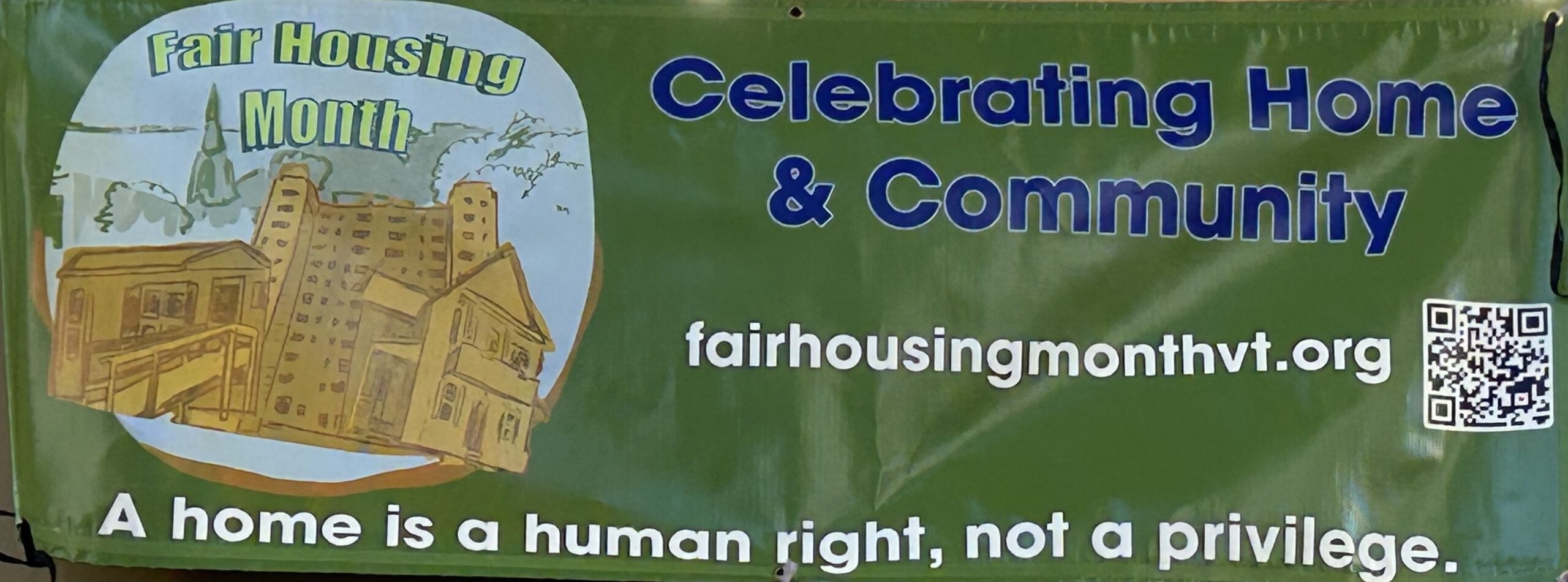
We’ve officially wrapped up another successful and impactful Fair Housing Month. During this time, we celebrated the progress we have made towards addressing historical discrimination in housing while also taking time to mourn the regression we have seen and gather with each other to discuss more ways to enforce fair housing laws, prevent illegal housing discrimination, and be vigilant in protecting our most vulnerable community members.

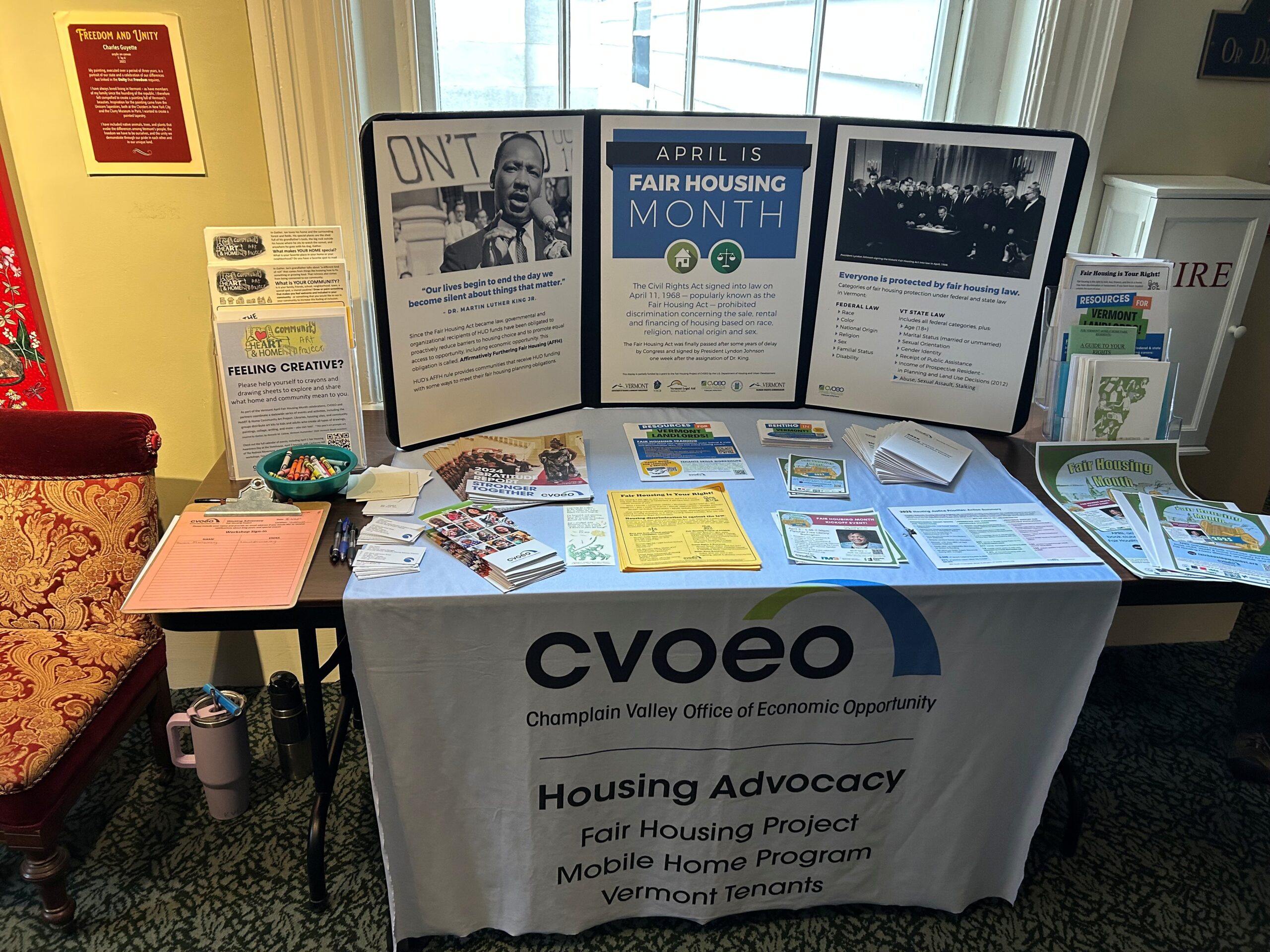
Although April is Fair Housing Month, people are impacted by illegal housing discrimination all year long and we must continuously do fair housing advocacy, enforcement, education and outreach to rectify the plight of those who have been disenfranchised, oppressed and traumatized by housing injustices. We started the month with a Fair Housing Awareness Day at the Vermont Statehouse in collaboration with the Vermont Human Rights Commission. Throughout the day, we shared fair housing resources and information about illegal housing discrimination and engaged in discussions about the reality of our housing landscape and its impact on Vermonters. A Revolutionary Press was onsite making bookmarks with hand-set type and on a hand-operated letterpress for legislators, statehouse staff, and visitors. Kahlia Livingston, Fair Housing Project Education & Outreach Coordinator and Jess Hyman Associate Director of CVOEO’s Housing Advocacy Programs delivered testimony alongside Big Hartman, Executive Director of the Vermont Human Rights Commission in front of the House Committee on General and Housing and Senate Committee on Economic Development, Housing and General Affairs. We explained why it is crucial for the State to increase  funding for fair housing enforcement and pass future housing related policies through a fair housing lens emphasized the importance of the need for rent stabilization, protecting communities of people vulnerable to housing discrimination, and building affordable housing that is accessible; and we spoke on behalf of the Housing Access for Immigrant Families bill (H.169) to include “Immigration and Citizenship Status” as a protected class. The initial language of that bill made it unlawful to require social security numbers in rental applications as many immigrants face a barrier to accessing housing if they do not obtain a social security number. Advocates from Migrant Justice were present doing testimony and a press conference to encourage support if this bill. Students from Winooski and Colchester high schools joined the testimony to share personal stories about how the current statewide housing crisis affects their families. Following Fair Housing Awareness Day, Vermont’s governor, Phil Scott issued a  statewide proclamation in support of fair housing laws and their enforcement. The Vermont Legislature further committed to Fair Housing Month in a concurrent resolution and the Town of Hinesburg and the Town of Burlington have also recognized the necessity of fair housing laws and pledged to carry out implementation. The 2025 Fair Housing Proclamations can be read here.

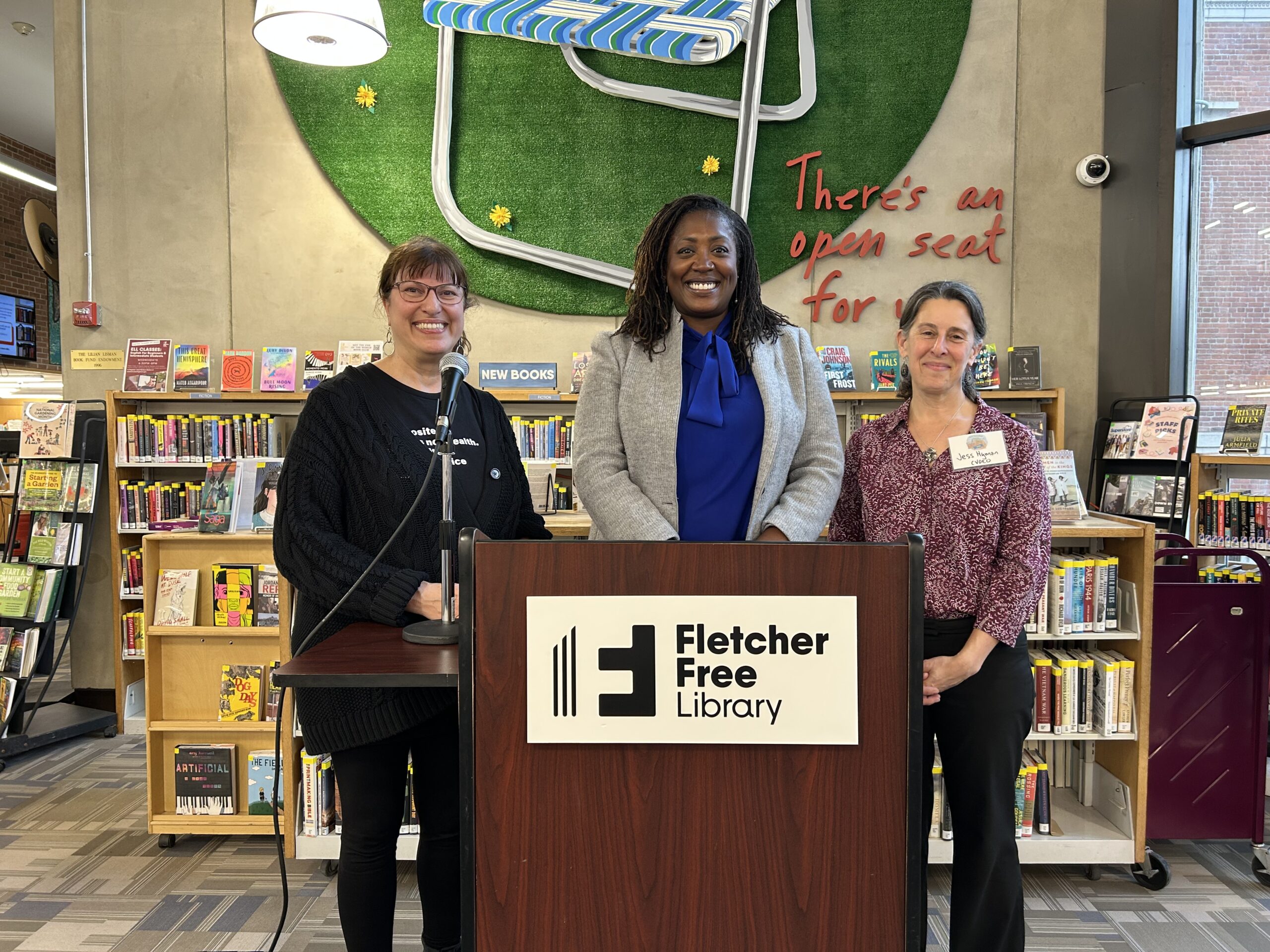
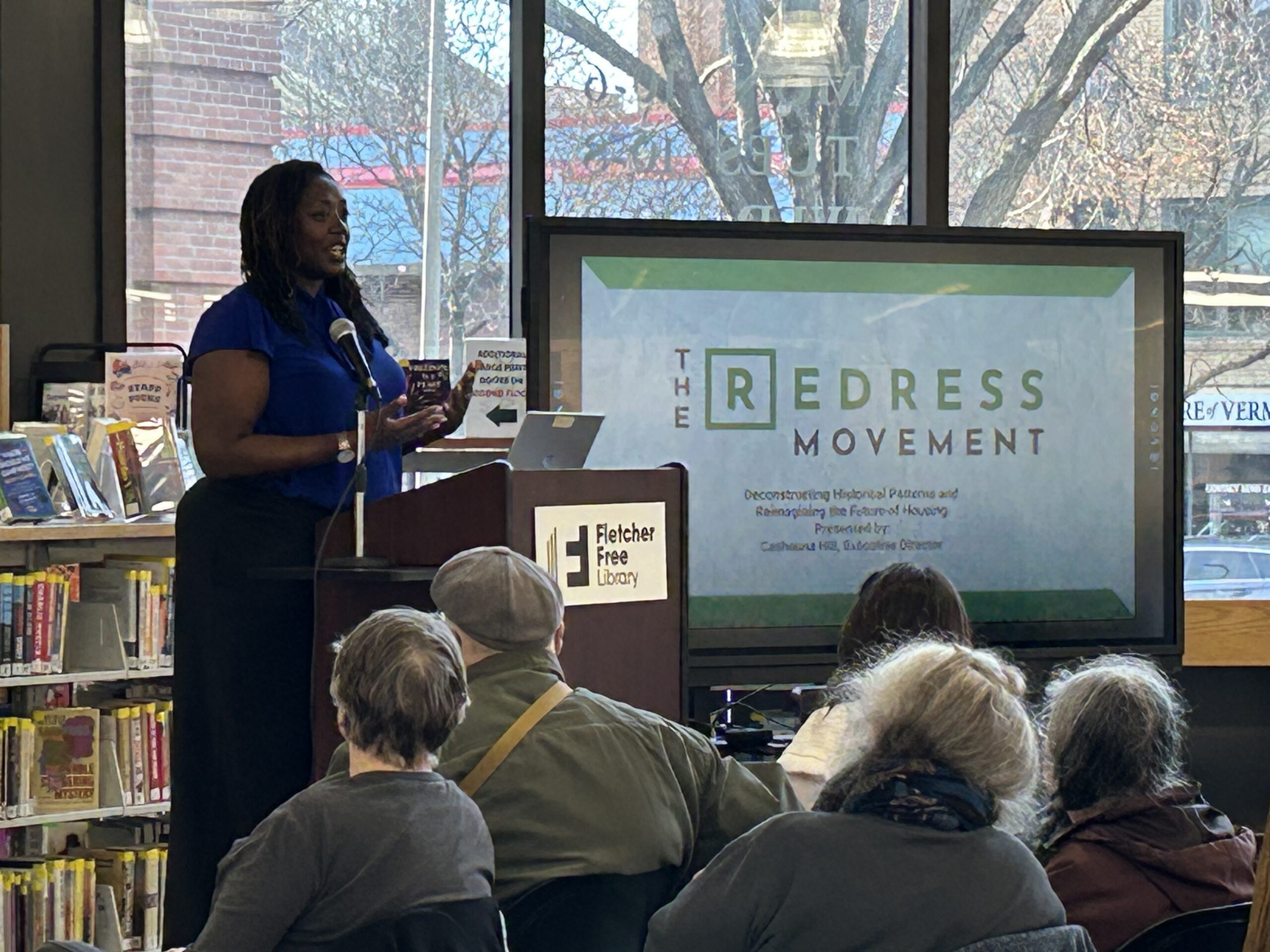
On April 3rd we hosted a kickoff event to celebrate Fair Housing Month with special guest Cashauna Hill, Executive Director of the Redress Movement. The evening featured a reception with refreshments and an opportunity to explore the inspiring “Voices of Homes” storytelling exhibit by Corrine Yonce who opened the event with a few words about the project. Following the reception, Cashauna delivered an engaging and inspiring keynote address and discussion. She presented information about her past and current work to advocate, educate, and litigate for the communities she serves to resolve harms from illegal housing discrimination. Cashauna shared historical and modern examples of housing segregation and breaches of fair housing laws then discussed the established settlements for these acts. Her dedication and contributions to housing justice were inspiring and motivating to our attendees as we mobilize and continue to navigate an ongoing housing crisis where discrimination is prevalent and increasing. This event was in partnership with the Northeast Vermont REALTOR® Association and the Fletcher Free Library and sponsored by the Land Access and Opportunity Board. The keynote address by Cashauna Hill is available to watch here:  https://www.cctv.org/watch-tv/programs/fair-housing-month-kickoff-keynote-cashauna-hill

The Fair Housing Friday Webinar Series resumed this year with three new webinars featuring interviews with housing advocates around the state hosted by Kahlia Livingston. The series included an array of topics: we discussed barriers that tenants face and trends in the housing needs of renters, the most recent Housing Needs Assessment and what the projected needs tell us about Vermont housing, and what promotion and commitment to fair housing looks like through a homeownership perspective. The interview guests are dedicated housing educators and advocates from various organizations in Vermont that provide housing services. Watch those interviews here and read the descriptions below:

  • “What Do Tenants Need”: Vanessa Bonebo, Executive Staff Assistant of the Vermont Human Rights Commission and Karin Ames, Housing Education Coordinator at CVOEO discussed their experiences working as firsthand resources for tenants around the state dealing with housing barriers and illegal housing discrimination. They both do amazing work that is critical to addressing the harms and trauma that stems from these egregious offenses. Click Here to Watch!
  • “Let’s Crunch the Numbers: Addressing the Vermont Housing Landscape” Nate Lantieri, Research Coordinator for the Vermont Housing Finance Agency joined us to discuss the most recent Housing Needs Assessment that was published last year (2024). We examined what the collected data tells us about our statewide housing necessities. Click Here to Watch!
  • “Fair Housing in Homeownership” – Joined by Ana Mejia, Homeownership Specialist at the Windham & Windsor Housing Trust and Julie Curtin, Director of Homeownership at the Champlain Housing Trust who discussed homeownership programs available through their organizations. We examined the importance of accessible resources for homeownership and their efforts to rectify the harms of historical housing segregation and discrimination. Click Here to Watch!

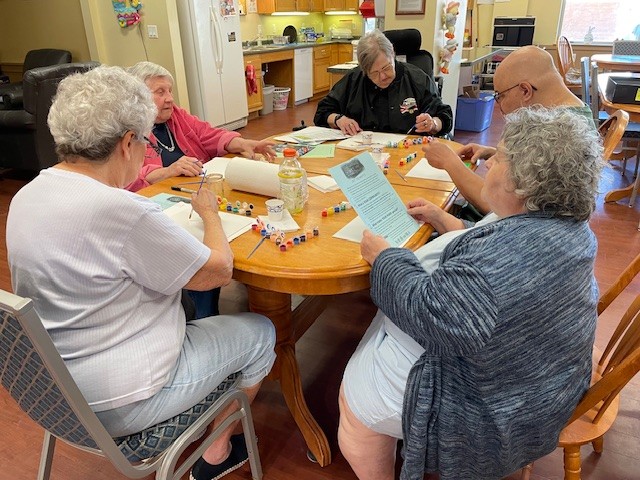
As this year’s fair housing month adjourns, we extend thanks to our partners, sponsors, webinar guests, residents of: Grand Way Commons, Decker Towers, and Wharf Lane, and all facilitators of fair housing month events and the participants who attended. We greatly appreciate everyone who requested Art Kits that include the HeART & Home prompts, and those of you who reached out to share your completed art pieces, and housing events to be included on the fairhousingmonthvt.org website. April was filled with comradery, education, advocacy, art-making, and joyful activities with residents all throughout the state. We hope that these events have increased awareness and passion to achieve housing justice and we’re looking forward to upcoming collaboration and fair housing efforts for the rest of the year. Stay updated with Fair Housing news and events by following our thriving communities social media pages on Facebook, and Instagram (@thrivingcommunitiesvt). Connect with us on social media or send us an email at fhp@cvoeo.org.

CVOEO coordinates April Fair Housing Month activities in collaboration with a statewide network of housing, community, and arts partners, including Vermont Human Rights Commission, Vermont Humanities, Housing & Homelessness Alliance of Vermont, Vermont Department of Housing and Community Development, Vermont Department of Libraries, Vermont Legal Aid, Chittenden County Regional Planning Commission, Fletcher Free Library, Vermont Folklife, Burlington City Arts, A Revolutionary Press, Young Writers Project, and Northwest Vermont REALTOR® Association.
2025 activities are made possible through the generous sponsorship of Champlain Housing Trust, Vermont Humanities, Burlington Office of Racial Equity, Inclusion & Belonging, Burlington Community & Economic Development Office, Land Access & Opportunity Board, Two Rivers-Ottauquechee Regional Commission, Vermont Housing Finance Agency, Redstone, Cathedral Square, Evernorth, Vermont Housing & Conservation Board, and Vermont State Housing Authority.