Seeking Compassionate & Trauma Informed Landlord, INQUIRE Below:
By Kahlia Livingston, Fair Housing Project Education & Outreach Coordinator
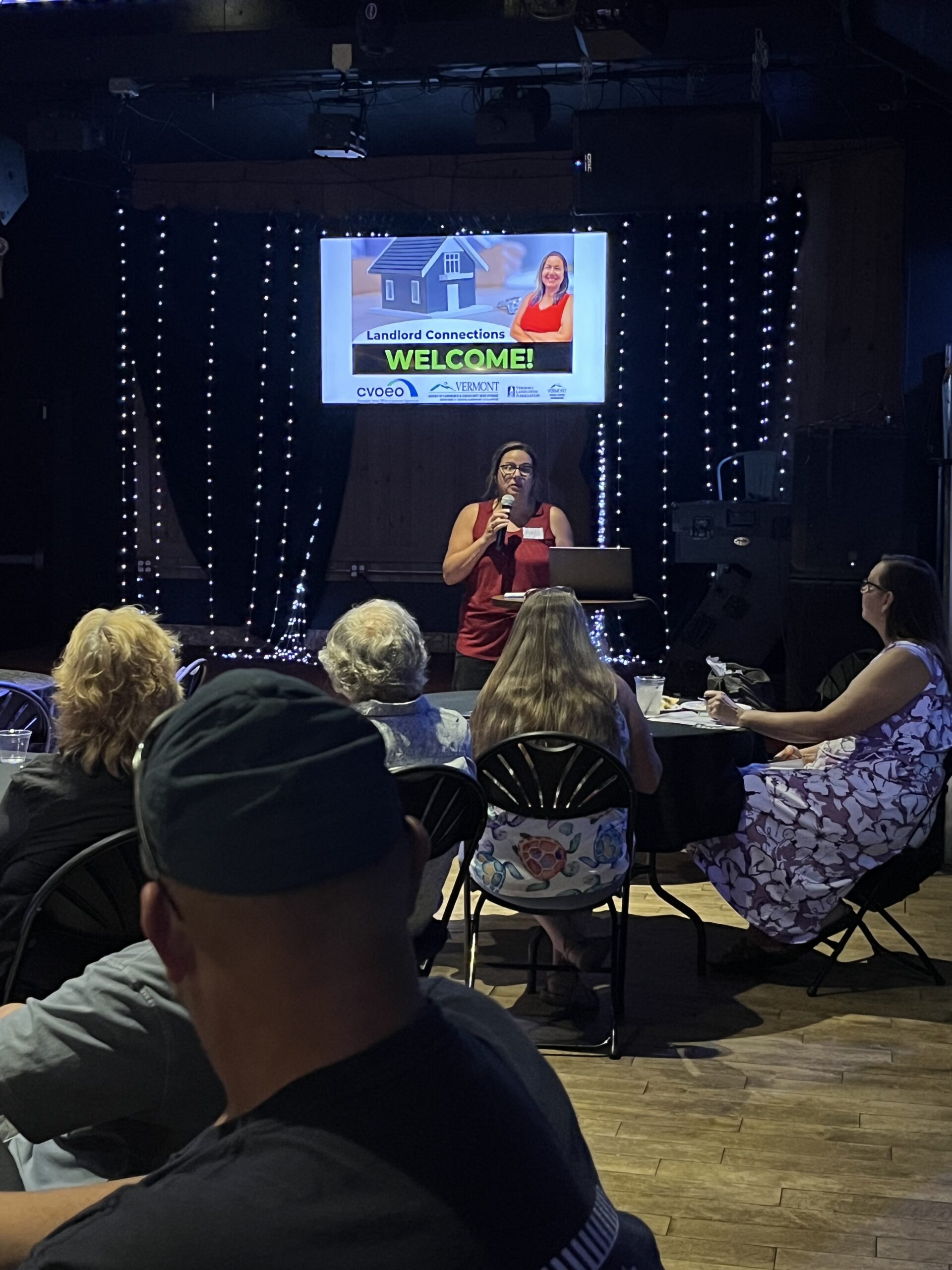
CVOEO’s Fair Housing Project recently held three Landlord Connections events to connect with landlords around the state and provide a space for networking, learning about housing provider concerns, and sharing housing resources available to improve housing conditions and help sustain tenancies. More than 70 housing providers met up in Middlebury, St. Albans, and Burlington for presentations and discussions with CVOEO’s Fair Housing Project and regional Community Action agencies, Vermont Department of Housing & Community Development, Vermont Human Rights Commission, Vermont Landlord Association, Supportive Services for Veteran Families, Burlington Lead Program, and others.
As many may know (and some may not), we are experiencing a worsening housing crisis throughout the nation that is a prominent concern in our great state. Vermont has a tight housing market with low rental vacancy rates in most counties as well as a shortage of affordable housing. Homeownership is a dream for many. However, this desire is not a one-size-fits-all for every Vermonter. Many people also enjoy the benefits that come with renting, which can include flexibility, fewer home maintenance responsibilities, and shorter commitments to an apartment or location. Since many people rely on rental housing and some prefer it, our communities need dedicated housing providers with specific qualities to help us improve the housing challenges that we are navigating. Low-income renters with membership in protected classes under fair housing laws tend to have barriers that can interfere with their access to and retention of affordable housing. These people are especially vulnerable to housing discrimination and insecurity.
Through our work with renters and housing providers, we have seen how clear and respectful communications can help foster positive relationships and successful tenancies.
What do we need in a housing provider?
- Empathetic and Trauma-informed: Some landlords may not have lived experience of housing insecurity, houselessness, mental illness, having a disability or criminal background, being a survivor of sexual assault, abuse or stalking, (etc.) however, it is helpful for people providing housing to have knowledge, empathy, and tools for supporting these human conditions.
- Cultural awareness and inclusivity: There are several of languages spoken by residents statewide with people from various cultures and countries enriching our Vermont communities. Housing providers should be knowledgeable and well-practiced in serving renters with different demographics than themselves or their families.
- Good communications and customer service skills: Landlords are providing goods and services, so building rapport with renters is crucial to curating and maintaining a business that thrives.
- Low to no profit-centered attitude: Renting is a business that generates income for the housing provider, but in what ways can renters benefit from the money they are investing in monthly rent payments? These costs add up and tend to leave renters with more losses than gains. Co-op housing can allow renters to gain equity in the homes they reside in as the housing market fluctuates. Oregon’s Limited Equity Co-op bill is a useful model that exemplifies how this form of housing benefits property owners and renters: “the project is founded on a shared ownership structure that combines a Community Land Trust with a Limited-Equity Co-op. The benefit of this cooperative model of housing is that it gives the residents more voice in their housing, greater financial stability and security, and a sense of pride as a part-owner of their own housing as well as responsibility for it” (HB 3232 Limited Equity Co-ops, Oregon Legislature). These properties also have a tax-exemption which can relieve financial burden on property owners and residents of the homes. Affordable housing benefits everyone. According to PolicyLink, if rents were affordable throughout the nation during the 2020 pandemic, we could’ve saw $141 Billion of disposable income spent in local communities to revitalize the economy (OUR HOMES, OUR FUTURE: Building the Power to Win Rent Control for Stable Communities, PolicyLink). Do we live in an economy run by capitalism? Yes. Should the human need for housing be driven and controlled by the need to make as much money as possible? …what do you think?
At the Landlord Connections events, housing providers discussed the many challenges they are facing, such as rising taxes and other costs, difficulty finding contractors for needed repairs, and communications with tenants. It was helpful to hear these concerns to better understand what is needed to improve the renting housing market and stock.
What do housing providers need?
- Accessible resources for home rehab and habitability needs: Being a landlord is a business, and landlords should be able to cover their costs. However, this becomes problematic when the rising costs exceed tenants’ ability to pay or when rents are set to make the highest amount of profit. With an aging housing stock, housing providers need access to funds to bring dwellings up to code and habitable for long-term tenancies.
- Informed & responsive tenants: Renters who know their rights and responsibilities are aware of the importance of their role as a tenant and can advocate for their needs and any concerns regarding the property. This can decrease issues in the home worsening and burdening both the tenant and landlord. CVOEO’s VT Tenants Program provides free Renters Workshops to improve renter education and skill building when navigating rental housing. This resource allows tenants to earn certificates that some housing providers view as an adequate credential when reviewing rental applications.
- Communicative Renters: Effective communication between a renter and landlord is key. Establishing a written rental agreement that clarifies all expectations for the tenant and housing provider is necessary before a tenancy starts. There are resources in our community to help facilitate conversations. Requests for interpretation services can be submitted through AALV or CVOEO’s Office of Racial Equity and Community Inclusion (ORECI) and Burlington’s Community Justice Center can support with conflict mediation with the Conflict Assistance Program. Additionally, tenants’ flexibility in modalities for communication can be beneficial to communicate with housing provider efficiently and in a timely manner.
Ultimately, people should have accessible resources to live in their preferred housing. Whether people rent or own, fair housing law states that equal opportunity in housing choice is a right regardless of barriers or limitations. Housing providers should be well informed about resident needs and expected to develop healthy, professional, and proactive relationships with their tenants to support successful tenancies and the well-being of renters of their properties. The landlord-tenant relationship comes with complexity between the needs of all parties involved and it is crucial to meet people where there are and use best practices to meet such needs.
Want to learn more? Contact us to schedule a Fair Housing Training or “Know Your Rights” Fair Housing and Tenant Skills Workshop: (802) 660-3456 ext 110, email: fhp@cvoeo.org
Sources:
- https://www.oregonlegislature.gov/nathanson/Documents/HB%203232%20LEC%20fix-East%20Blair%20Housing%20Co-op-publish%20(1).pdf
- https://www.policylink.org/resources/publications/our-homes-our-future
- https://www.cvoeo.org/calendar/renters-workshops-72
- https://www.aalv-vt.org/interpreter
- https://www.cvoeo.org/oreci-fee-for-service-program
- https://www.burlingtoncjc.org/conflict-assistance-program